Lossless Scaling Boosts Steam Deck Emulation Performance for Just $7
A $7 Steam app is doubling and quadrupling frame rates on Steam Deck emulators, no hardware upgrade needed — just a Decky plugin and a stable 30fps base.
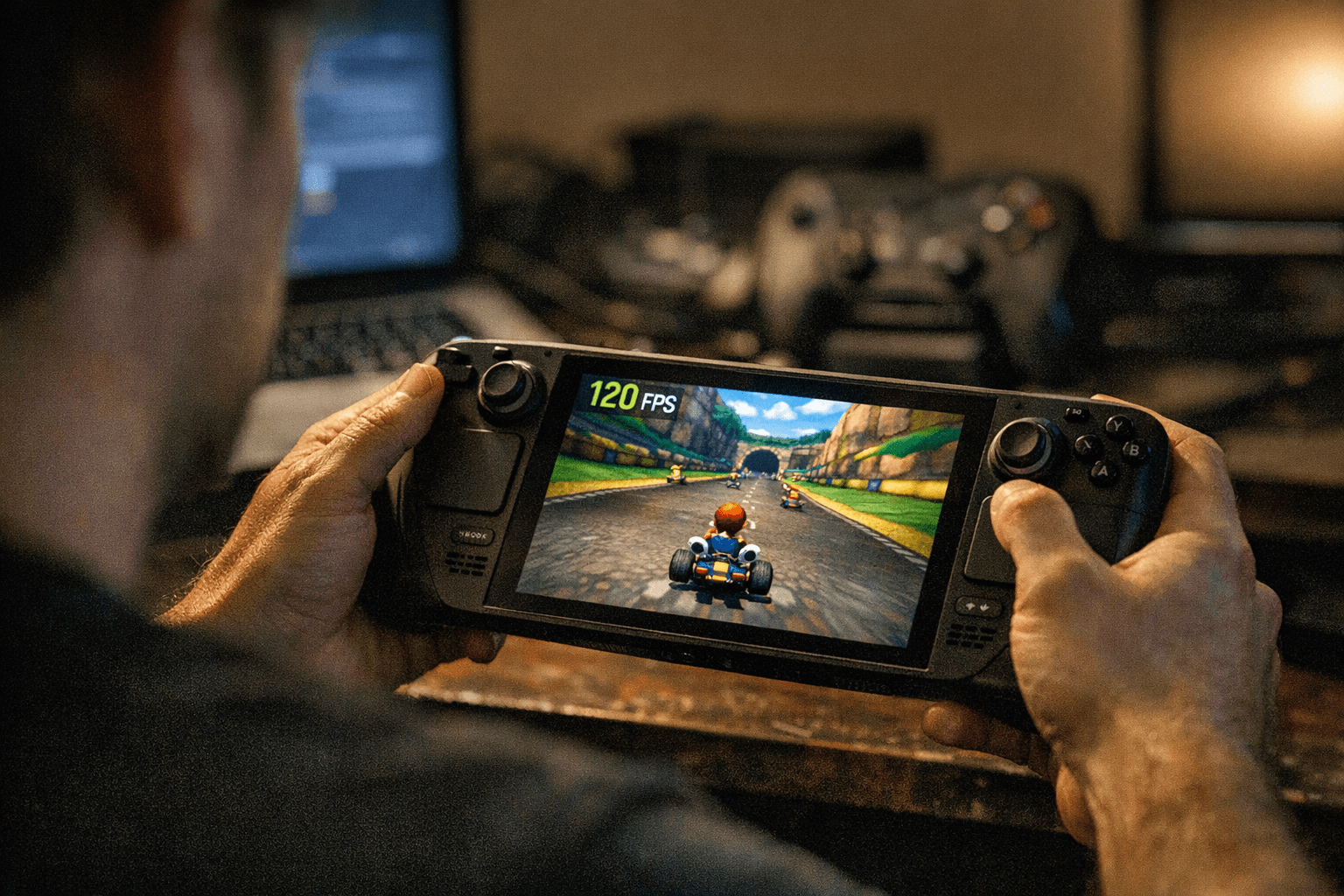
Seven dollars. That's what separates a sluggish PS3 emulation session on Steam Deck from one running at a smooth, playable 60fps. Lossless Scaling, a small utility long favored on Windows PCs for its frame generation tricks, has landed on SteamOS in a form that legitimately changes what demanding emulation looks like on Valve's handheld.
The key was an open-source Vulkan layer called lsfg-vk, which ported the app's frame generation feature to Linux. Previously, Lossless Scaling's LSFG technology was strictly a Windows affair. Once lsfg-vk arrived, community developers packaged it into a Decky Loader plugin called Decky LSFG-VK, now searchable directly in the Decky Plugin store. The $7 purchase of Lossless Scaling on Steam is still required to unlock frame generation, but the installation path is now straightforward: buy the app, install the Decky plugin, add a launch option, and you're running.
Retro Game Corps documented the real-world payoff for emulation specifically. The gains are not subtle. Testing across multiple emulators showed frame rates effectively doubling in titles running through RPCS3 for PS3 games and Switch emulators like Ryujinx, with the plugin's 2x, 3x, and 4x multiplier options offering meaningful headroom depending on how hard a title is hitting the hardware. One consistent benchmark showed a 720p low-settings session climbing from a measured 33fps average to 61fps with the scaler engaged. The plugin has also been reported to push demanding titles past 80fps where base performance allows.
The catch is real and worth knowing upfront: frame generation only works if you can first lock a stable 30fps floor. The algorithm interpolates between rendered frames to manufacture the in-between ones, so a choppy or unstable base rate produces ghosting, smearing, and the kind of artifacts that make things worse, not better. The sweet spot on Steam Deck is capping games at 30 or 40fps at 800p native resolution, then letting the x2 multiplier synthesize 60 or 80fps on top of that. For RPCS3 titles that historically struggled to hold 30fps on the Deck's AMD APU, that's often enough to make previously unplayable games feel genuinely solid.
LSFG 3.0, a full architectural rewrite released in January 2025, is what makes the current results possible. Compared to its predecessor, the 3.0 version cuts GPU load by 40 percent in x2 mode and over 45 percent at higher multipliers, while also reducing latency by 24 percent. Multipliers now go up to x20, though anything past x4 moves into territory where artifacts become hard to ignore on most titles. The machine learning model driving the interpolation was also retrained for fewer visual glitches. For emulation specifically, the consensus across testers is that older games with relatively static backgrounds and less motion blur hold up better under interpolation than fast, particle-heavy modern titles.
For anyone running EmuDeck on a Steam Deck and sitting on a library of PS3 games, Switch titles, or classic systems locked at 30fps, the practical math is hard to argue with. A $7 app and a free plugin can turn a marginal emulation experience into one that runs better than the original hardware ever did.
Know something we missed? Have a correction or additional information?
Submit a Tip