TrimUI Brick Pro grows the screen, keeps the same retro guts
The Brick Pro does not chase a faster chip. It fixes the Brick's cramped screen and battery, turning the same retro guts into a far better PS1 and GBA handheld.
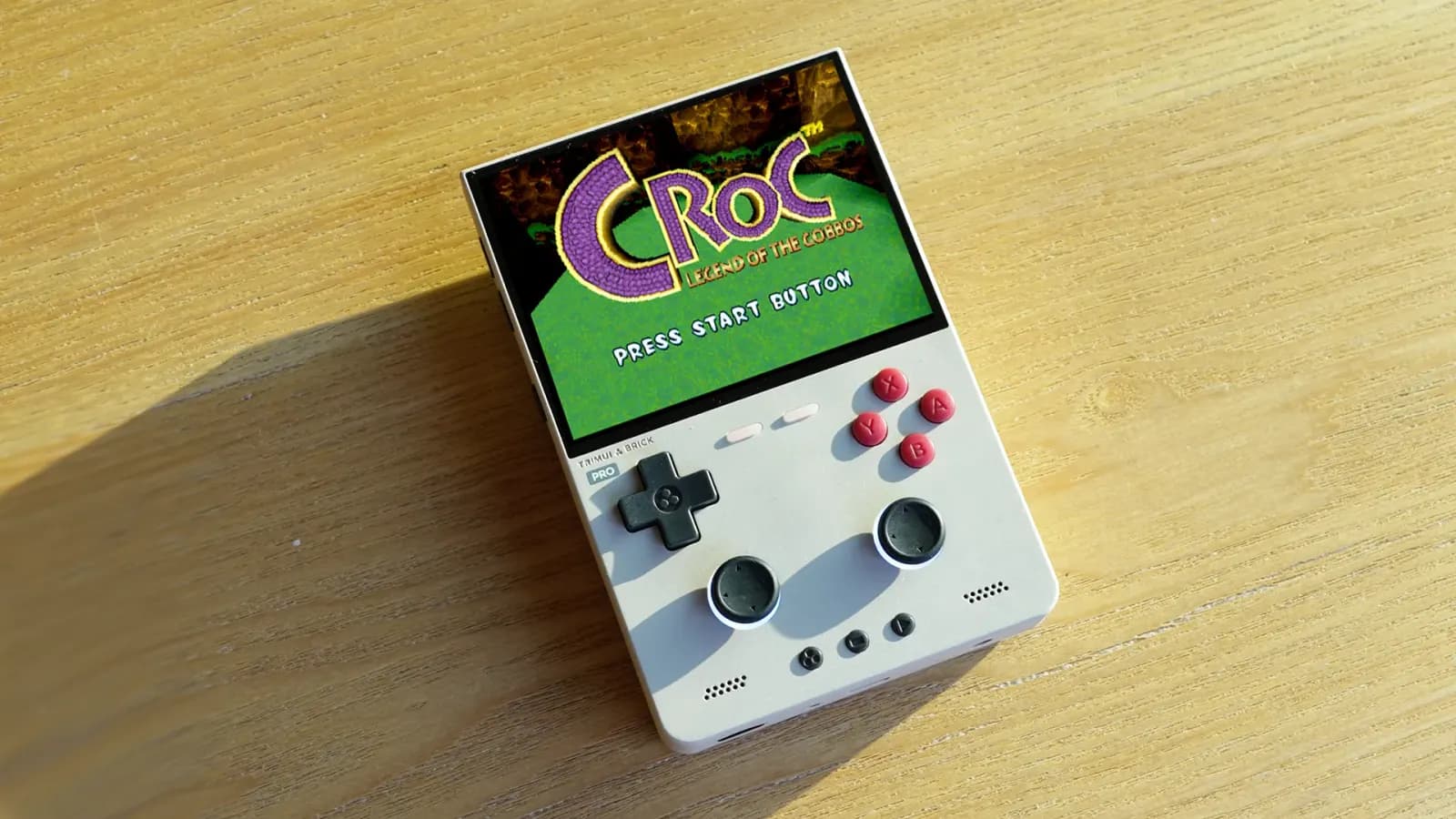
The TrimUI Brick Pro is not a power bump disguised as a new model. It keeps the same Allwinner A133P chip, GPU, 1GB of RAM, and Linux-based software stack as the original Brick, then spends its effort where emulation handhelds usually need it most: screen size, controls, battery life, and hand comfort.
That is why the Brick Pro feels like a real buyer’s decision piece rather than a spec-sheet refresh. TrimUI is asking the same basic question the original Brick raised, but with a better answer: if the hardware can already handle the same retro target range, what happens when you stop forcing it into a tiny shell?
What changed, and what did not
The original Brick was a 3.2-inch handheld with a 1024x768 IPS display and a 3000mAh battery. The Brick Pro grows to a 3.95-inch 1024x768 IPS panel and a 5000mAh battery, while keeping the same core silicon and software identity. TrimUI’s own listing also puts the Pro on 1GB LPDDR3, 8GB eMMC, dual Hall-effect joysticks, and dual USB-C ports.
That combination tells you exactly where the money went. TrimUI did not chase a new chipset or a new emulator ceiling; it built a larger, more usable version of the same idea. The result is a handheld that still sits in the same retro performance class, but feels less like a gadget you tolerate and more like one you can actually relax with.
The bigger screen matters most in real play
The 3.95-inch panel is the Brick Pro’s best feature, and it is the kind of upgrade you notice the second a menu loads. On the original Brick, the 3.2-inch screen was already sharp, but smaller systems could feel pinched once you started reading text, watching UI animations, or sitting inside RPG menus for more than a few minutes. The Pro’s extra size gives GBA, SNES, and PS1 games more breathing room without changing the resolution or the basic pixel-perfect appeal.
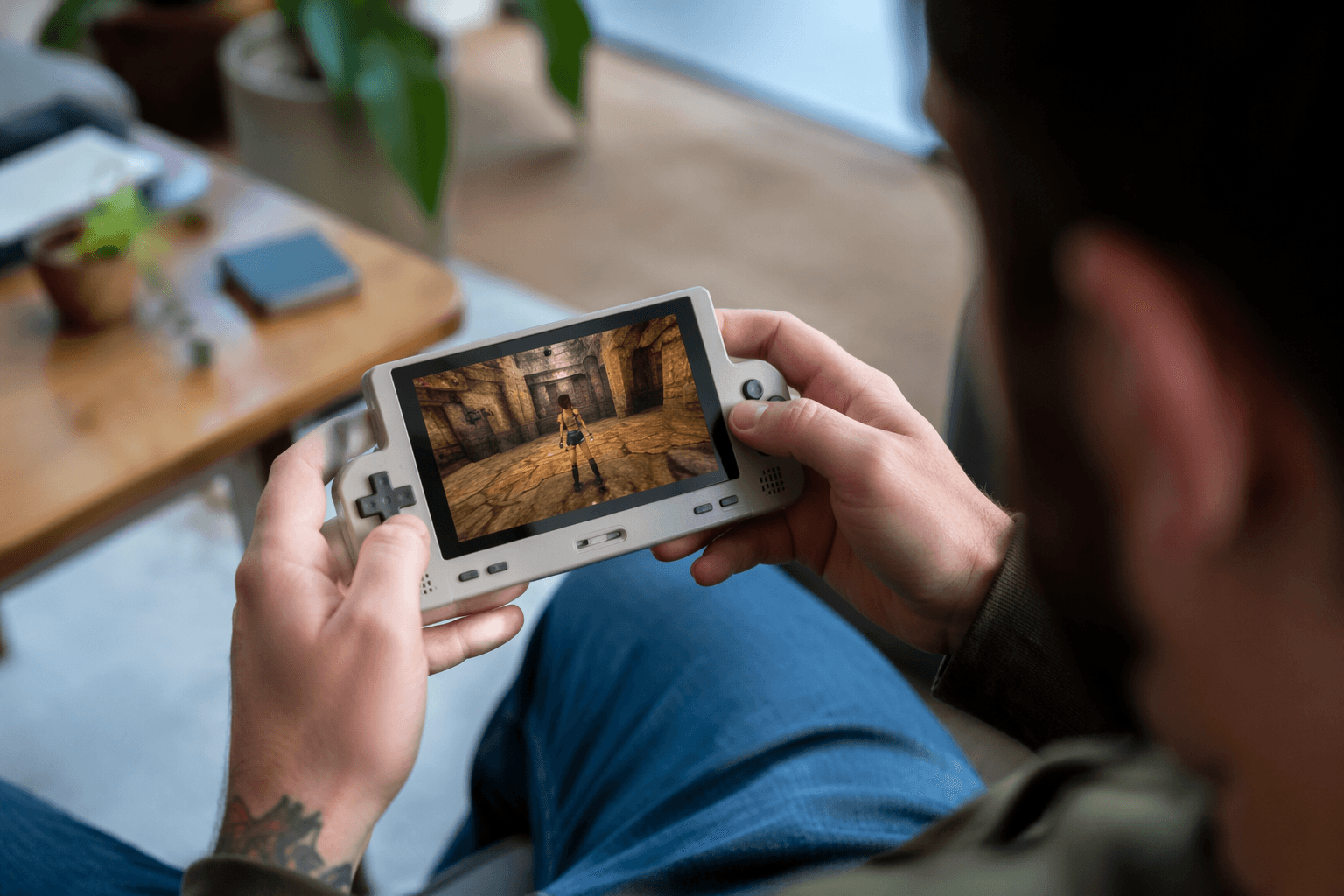
That matters more than it sounds. GBA games benefit from being easy to read at a glance, especially in text-heavy RPGs and strategy games. SNES looks cleaner when sprites and status bars have a little more space. PS1 is where the upgrade becomes obvious, because the larger display makes menus, HUD elements, and aspect-correct layouts easier to enjoy without feeling like you are peering into a postage stamp.
The original Brick could already emulate up to Dreamcast in theory, but the Pro makes that same promise easier to live with. When a device is this compact, screen size is not a cosmetic detail. It is the difference between “technically playable” and “I want to keep using this after the first hour.”
Battery, controls, and comfort are the other half of the upgrade
TrimUI rates the Brick Pro’s 5000mAh battery at roughly 5 to 10 hours depending on workload, with 10W charging support. That is a meaningful step up from the original Brick’s 3000mAh pack, especially if your sessions lean on save states, quick suspend-and-resume bursts, or longer evenings away from a charger. You do not buy a battery like this for benchmark bragging rights; you buy it so the handheld stops living on a charging cable.
The controls are just as important. The Brick Pro adds dual Hall-effect joysticks with LED backlighting, and that is a direct answer to one of the original Brick’s biggest limitations. Earlier Brick coverage made the point clearly: the A133P platform could reach far enough toward Dreamcast in theory, but the lack of analog controls made some games less comfortable than they should have been. The Pro fixes that omission and pairs it with a larger shell that is less cramped in the hands.
TrimUI also packs in the sort of little quality-of-life bits that matter during actual use: ambient lighting on the shoulder buttons, joystick light rings, a bottom reset and power-cutoff switch, built-in stereo speakers, a headphone jack, and Type-C video output to external displays at up to 1080p60. None of that changes the emulator ceiling, but all of it reduces friction when you are hopping between handheld play, desk use, and the occasional TV session.
Price and setup are where the decision gets practical
TrimUI opened pre-orders for the Brick Pro on June 14, 2026, and the base console is listed at $99.99. Some listings also mention a BPO10 coupon code that takes $10 off, while microSD-bundled versions sell for more. That puts the Brick Pro squarely in the sub-$100 class for the base unit, which is exactly where comfort-first handhelds live now.
The software side is familiar rather than flashy. TrimUI keeps the Linux approach, and the 8GB eMMC plus optional bundled SD card version means you can choose between a cheaper bare console and a setup that reduces first-day hassle. If you already know how the original Brick behaves, the Pro should feel immediately legible: same general ecosystem, same retro focus, less compromise in the hardware that surrounds it.
Retro Dodo’s 9.1 rating and emphasis on affordability and comfort line up with that read. This is not the handheld for chasing a bigger benchmark number. It is the handheld for the person who wanted the Brick to be a little less cramped, a little more comfortable, and a lot less fussy after the first hour.
Who should buy the Brick Pro, and who should keep the Brick
If your original Brick already works because you mostly play GBA, SNES, and other 8-bit or 16-bit systems, the Pro is a convenience upgrade, not a necessity. The smaller Brick is still sharp, still pocketable, and still has the same retro guts under the hood. If you care more about keeping the smallest possible vertical handheld in your bag, saving the money makes sense.
If you play more PS1, use save states constantly, want proper analog control for the games that need it, or just got tired of the Brick’s cramped feel, the Pro is the one to buy. The bigger screen, larger battery, and dual Hall-effect sticks do not change the emulation ceiling, but they change how long you want to stay in a game. That is the real upgrade here: the Brick Pro takes the same capable core and finally gives it room to breathe.
This article was produced by Prism’s automated news system from verified source data, official records, and press releases, then run through automated quality and moderation checks before publishing. The system is built and supervised by the people who set the standards it runs under. Read our full AI policy.
Did this article answer your question?