OpenAI’s Rust bet highlights growing demand for reliable AI infrastructure
OpenAI’s $600,000 Rust commitment is really a governance bet: safer systems, better maintainer support, and a louder signal for AI infrastructure.

OpenAI’s $600,000 commitment to Rust reads like a donation, but the real story is more operational than charitable. The Rust Foundation turned it into a Platinum membership, a board seat, and extra support for maintainers, which is the kind of infrastructure move that tells you where serious software budgets are going.
What OpenAI actually bought into
On June 17, the Rust Foundation said OpenAI had become a Platinum Member and would contribute a total of $600,000 to support the Rust Project and the broader Rust ecosystem. That money covers membership support and additional help for maintainer efforts across the language ecosystem, which matters more than the headline figure alone. OpenAI’s Platinum seat on the Foundation board will be represented by Predrag Gruevski, a long-time Rust community member and maintainer of cargo-semver-checks.
That board seat is the part worth noticing. The Rust Foundation says each Platinum Member gets a dedicated seat, so this is not a loose sponsorship with a logo on a slide deck. It is a governance-level commitment, which makes OpenAI’s move feel less like a PR flourish and more like a company placing a bet on the direction of the language itself.
Why AI infrastructure keeps pointing toward Rust
The reason this lands in the AI world is simple: model demos are only the front door. Behind them sit build systems, runtime services, deployment plumbing, networking layers, and maintenance workflows that have to stay up when the load spikes and the logs get ugly. Rust is attractive in those layers because its memory safety model reduces a class of crashes and security bugs, its performance is predictable, and its concurrency story fits the kind of highly parallel back-end work AI companies keep adding.
That combination matters when you are building systems that handle typed APIs, crash recovery, and networking stability instead of just running benchmarks on a laptop. Rust also tends to fit deployment ergonomics better than people expect once services move from prototype to production, especially when teams want tight control over failure modes and the OS defaults around a service. In AI infrastructure, that is where trust gets earned: not in the demo, but in the boring layers that keep the demo alive.
The funding story is bigger than one company
The Rust Foundation has been saying for a while that ecosystem support is not optional. In November 2025, it launched the Maintainers Fund to provide consistent, transparent, long-term support for the developers who make Rust possible. That puts OpenAI’s contribution into a broader pattern: the project is trying to fund the people who hold the language together, not just the code that sits on top of it.
The Foundation also frames its mission in broad operational terms: safety, security, sustainability, infrastructure, interoperability, and governance. Those are not decorative mission words. They are the exact categories that start to matter once a language gets pulled into critical systems, especially when companies want the software stack underneath AI products to behave more like infrastructure and less like a moving target.
The signal from NIST and from Meta-scale Rust
The OpenAI move did not happen in a vacuum. The Rust Foundation has already pointed to NIST’s addition of Rust as a safer coding tool as evidence that memory safety is getting recognized as a serious systems concern. That matters because it moves Rust out of the “developer preference” bucket and into the “institutional risk management” bucket.
The Foundation has also highlighted WhatsApp at Meta scale as an example of Rust reinforcing the idea that memory safety is foundational to modern security engineering. That is the kind of example AI companies pay attention to because it shows Rust in a real production environment, not a toy benchmark or a hobby project. Put those signals together and the OpenAI contribution looks less like a standalone headline and more like one more large organization deciding that safety and operational confidence are worth funding directly.
How to read the Let’s Get Rusty reaction
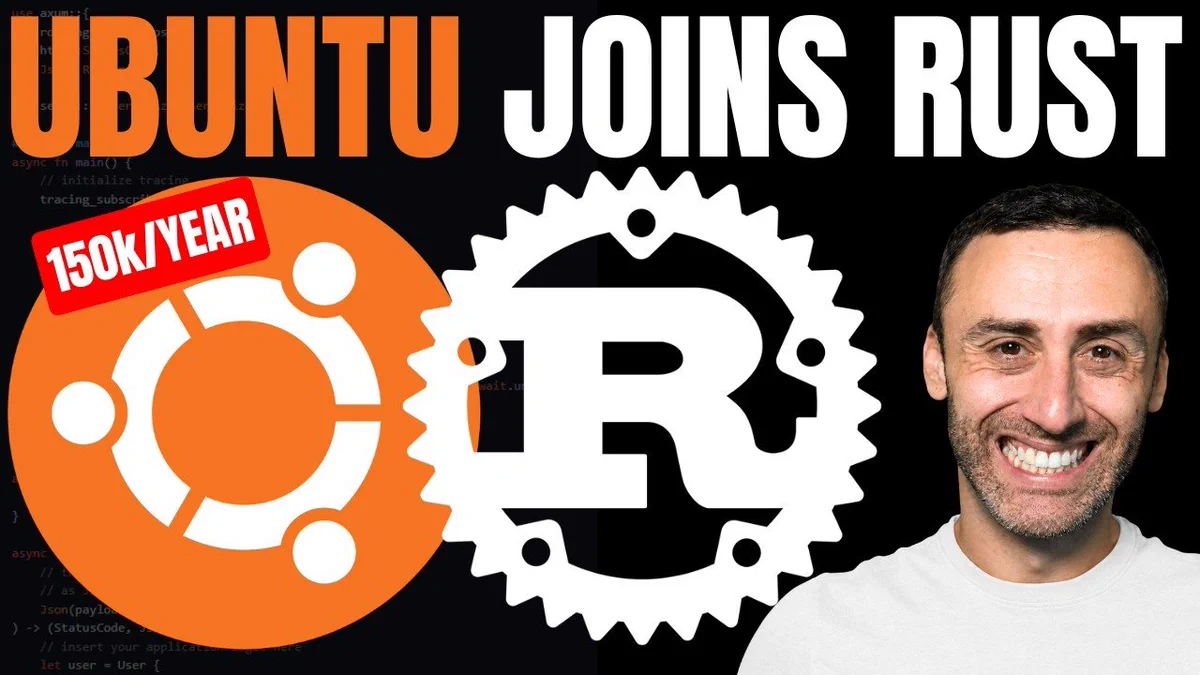
The July 12 Let’s Get Rusty episode, titled “OpenAI just spent $600k on Rust,” takes the same announcement and pushes it in a more useful direction. The title is provocative, but the framing is smarter than the hook: the bigger question is why OpenAI and other AI companies are putting Rust under critical infrastructure. That shift matters because it turns the story from a one-off donation into a look at how companies are thinking about the software layers beneath AI tools.
The channel itself gives the reaction some reach. Let’s Get Rusty has more than 170K subscribers, and the OpenAI Rust video had about 8.3K views shortly after posting. That is enough audience to shape how Rust developers talk about corporate adoption, especially when the message is not “Rust is trendy” but “Rust is moving into the parts of the stack that cannot afford sloppy behavior.”
What is real, what is still speculative
- OpenAI became a Rust Foundation Platinum Member on June 17.
- The total commitment is $600,000.
- The money supports the Rust Project, the broader ecosystem, and maintainer efforts.
- Predrag Gruevski will represent OpenAI’s board seat.
- The Foundation already has a Maintainers Fund and a stated mission built around safety and governance.
The real part is concrete:
The speculative part is the leap from one commitment to a full industry migration. A donation does not prove every AI backend will be rewritten in Rust, and it does not mean the language has become mandatory. What it does show is that major AI companies are willing to associate themselves with Rust at the infrastructure level, where reliability, memory safety, and concurrency are practical constraints rather than talking points.
If you are tracking Rust as a working engineer, the parts to watch are the ones that map to production reality: cargo-semver-checks and API stability, maintainer funding, board governance, memory safety in networked services, and the way large companies describe the languages they trust for the systems underneath their products. That is the layer OpenAI just stepped into, and it is the layer Rust keeps winning on when the conversation stops being about hype and starts being about keeping critical software standing.
This article was produced by Prism’s automated news system from verified source data, official records, and press releases, then run through automated quality and moderation checks before publishing. The system is built and supervised by the people who set the standards it runs under. Read our full AI policy.
Did this article answer your question?