Tailscale launches tailscale-rs preview, extends networking tools in Rust
Tailscale's tailscale-rs preview pushes Rust deeper into networking tooling, with early bindings for Python, Elixir, C and native Rust use. It is experimental, but it broadens tsnet beyond Go.

Tailscale has pushed its embedding model into Rust with tailscale-rs, an experimental preview that opens tsnet to Python, Elixir, C and native Rust code. The move matters because Tailscale is not treating Rust as a sidecar experiment: it is extending a networking path the company already uses internally and in the wider community, while explicitly warning developers not to put it into production yet.
The preview, announced in Tailscale’s April 15, 2026 blog post, is meant to bring Tailscale into applications written in languages other than Go. That keeps the company’s earlier tsnet approach intact, but broadens the surface area for developers who want Tailscale connectivity inside their own software instead of at the operating-system layer. Tailscale said the new library is still an early look and asked developers to test it and send feedback rather than rely on it for live workloads.

That direction lines up with the same pressure points Tailscale has already identified for tsnet. The company says some environments make OS-level networking changes inconvenient or impossible, especially stripped-down kernels and container setups that cannot modify the host network stack. In those cases, embedding the networking layer inside the application becomes the practical route, not a theoretical one.
Tailscale’s tsnet documentation, last validated on January 27, 2026, describes tsnet as a Go library that lets programs embed Tailscale inside an application and connect to devices in a tailnet using a userspace TCP/IP networking stack. The docs also spell out what that buys developers: multiple services can run on one device with different IP addresses, access-control rules and user identities. Tailscale’s own internal tools already rely on that model, including setec, tsidp, tclip and golink, while community projects such as tnsrv and chat-tails have built on it as well.
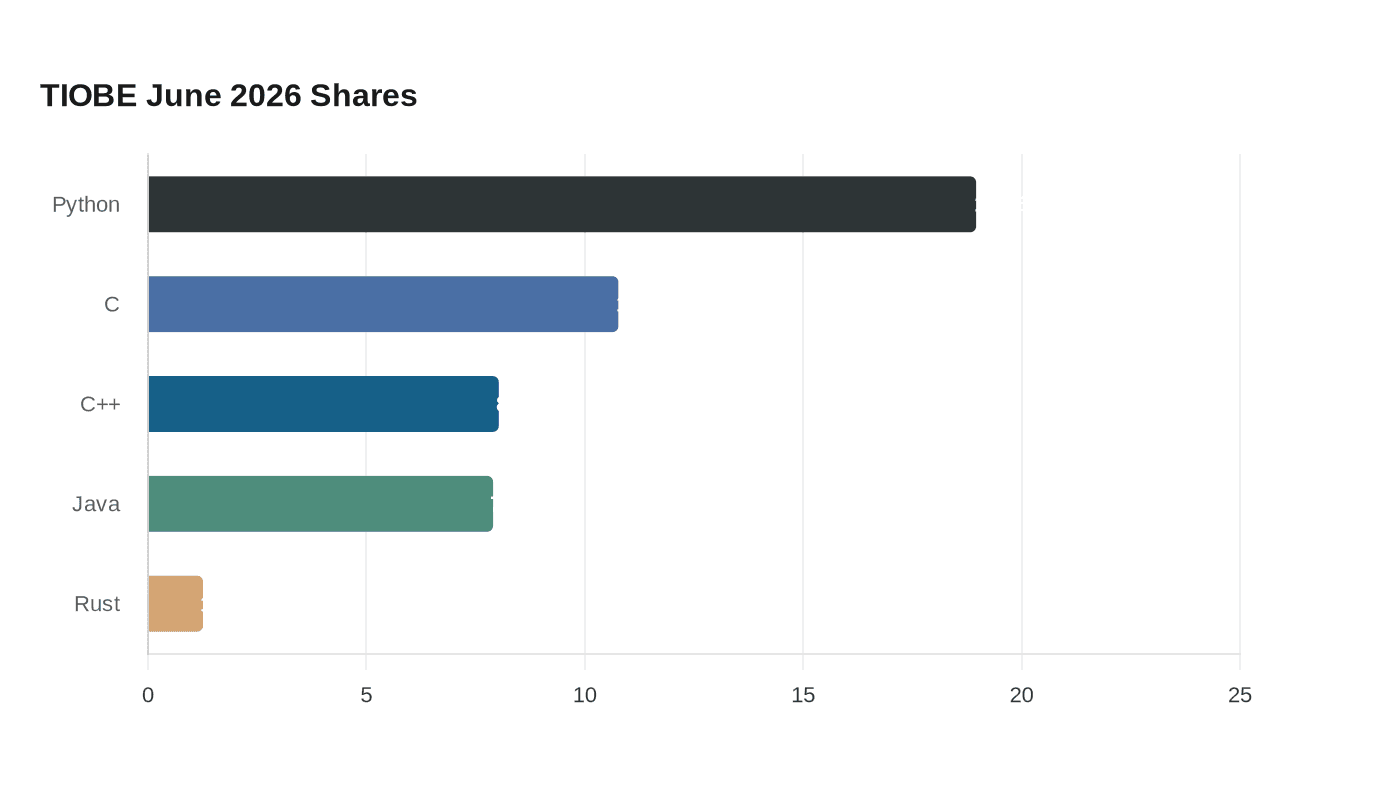
That existing base is why tailscale-rs reads less like a fresh rewrite and more like a widening of an architecture that has already proven useful. Developer dreamsofcode_io drew attention to the repository as another sign of Rust’s pull in networking and infrastructure work, where performance and safety concerns keep pushing teams toward language changes with a clear operational payoff. For Tailscale, the payoff is straightforward: make embedded networking easier to ship in more runtimes, without forcing every application back through Go.
This article was produced by Prism’s automated news system from verified source data, official records, and press releases, then run through automated quality and moderation checks before publishing. The system is built and supervised by the people who set the standards it runs under. Read our full AI policy.
Know something we missed? Have a correction or additional information?
Submit a Tip