A neat way to secure reefing outhaul tails after reefing
Loose reefing tails turn a clean cockpit into spaghetti. A simple coil-and-loop hitch keeps outhauls tidy, secure, and fast to dump when the reef has to come out.
When the first reef goes in, the cockpit gets messy fast
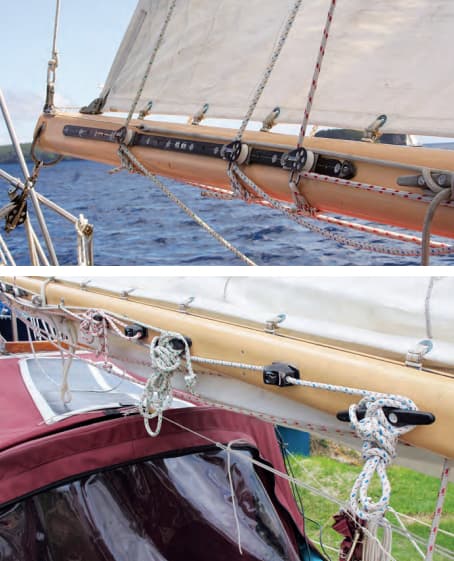
The boat may be behaving perfectly, but a handful of loose reefing tails can make the cockpit look and feel unfinished. On a Nor’Sea 27 like Entr’acte, the problem gets worse the moment the first reef is tied in, because the slack from three reef-clew outhauls has to be dealt with at once, not just the line you used.
Ed Zacko’s fix is worth stealing because it solves the real problem: long tails that snag, tangle, and waste time when the wind is already building. His setup is not about making the boat look polished for a dockside photo. It is about keeping control when you need to shake a reef out quickly and without fumbling around in the cockpit.
Why the tails become a problem
Entr’acte carries three reef points, and the outhaul lengths tell the whole story: about 12 feet for the first reef, 18 feet for the second, and 24 feet for the deep reef. Under full sail, those tails are short enough to stay out of the way. Once the first reef is in, though, all that extra line has to be gathered, secured, and kept from becoming a nest of slack.
That is the part many cockpit systems get wrong. A method that looks tidy when the boat is calm can be too fussy when you are reefing in motion. One that is quick can leave loops loose enough to catch a boot, a hand, or the next line you need to use. Zacko’s point is simple: if the line management is sloppy, the reefing job itself feels sloppy, even if the sail is set correctly.
A tidy-tail method that actually releases cleanly
The heart of Zacko’s solution is a compact hitch-like routine built around a proper coil and a loop. Start by coiling the line clockwise. Leave a long tail, then wrap that tail once around the coil. Form a loop in the tail, pass that loop through the coil, hang it over the cleat, cinch the coil tight, and then belay the tail around the cleat’s ears.
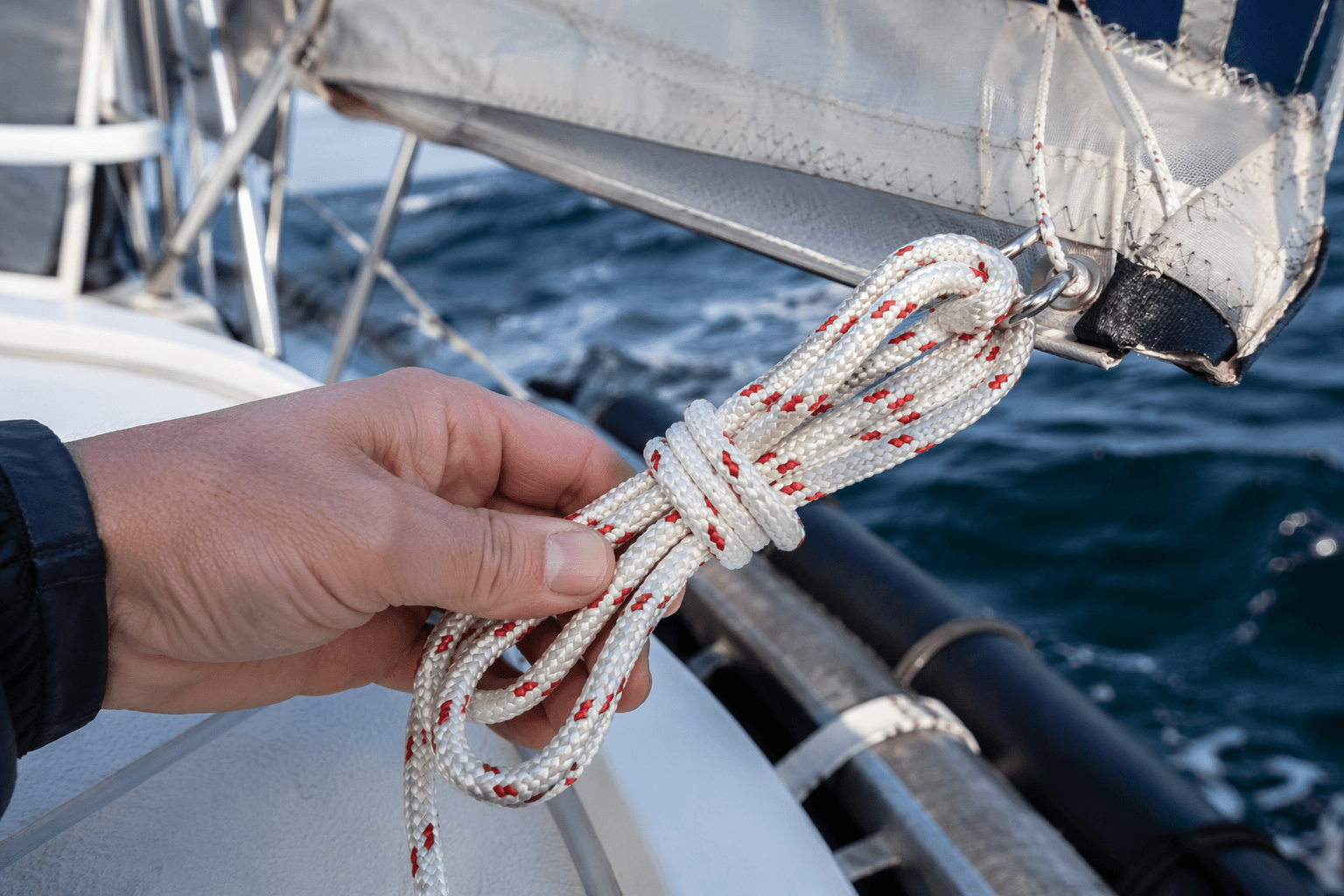
It sounds elaborate on paper, but the appeal is that it can be done by feel once you know the sequence. Zacko says it can be handled one-handed, which matters when you are bracing yourself, holding on, or trying not to lose your balance in awkward conditions. The best part is that it is meant to come apart just as neatly: one undoing motion and the coil falls apart cleanly.
That clean release is the difference between a clever knot and a good reefing system. If you have ever fought with a line that half-unwraps, snags on itself, and then drags the whole pile into the cockpit, you already know why this matters.
How to judge whether this is the right solution for your boat
The method depends on having the right hardware and the right cockpit layout. Zacko notes that the reefing cleats need to be large enough to handle the loop and the extra wraps. If the cleat is too small, the whole system turns awkward, and the loop that should make the hitch work smoothly becomes another thing to fight.
That is the first filter: look at the size of your cleats, the angle of the line run, and how much room you actually have around the coaming or boom. If your reefing lines are used often and your cockpit is tight, a compact system that can be done fast and released cleanly is a better bet than a decorative coil that only looks good when you are alongside the dock.
The second filter is frequency of use. A tail that gets touched only occasionally can tolerate a slightly more deliberate stow. A line you reef and shake out often needs something you can repeat without thinking. That is where this coil-and-loop setup earns its keep. It is built for repetition, not just appearance.
What the bigger seamanship lesson is
This is a small detail, but it sits inside a much bigger rule of thumb: reefing has to stay controlled. Cruising World makes the point plainly that fast, reliable reefing is the difference between a controlled heavy-weather passage and a dangerous one. It also stresses that the reefing gear should be placed so the crew does not have to move from one side of the boat to the other during the maneuver.
That advice lines up with the rest of the job. Every extra step, every crossed tail, every line that needs a second try adds friction exactly when you want the system to be automatic. SAIL Magazine puts it in broader terms by calling reefing an essential skill for all sailors, especially on classic cruising boats from the 1970s, 1980s, and 1990s, where huge overlapping genoas, relatively short booms, and tall masts made mainsail reefing especially important.
Yachting Monthly takes the same practical view: a well-reefed boat sails better than an overpressed one, and reefing should feel like changing gears, not like a last-resort panic move. That is really what tidy tails support. They remove one more bit of friction from a maneuver that should already be familiar and orderly.
A small system that rewards practice
Zacko is clear that he did not invent the idea so much as reinvent a wheel that sailors have been using in one form or another for a long time. That humility fits the job. A good reefing-tail solution is rarely glamorous, but it pays you back every time the boat heels harder than expected and you want the cockpit to stay calm.
His own seamanship background explains the bias toward practical solutions. Good Old Boat identifies him as a contributing editor, and notes that he and Ellen built Entr’acte from a bare hull. Since 1980, they have made four transatlantic and one transpacific crossing, which is the kind of mileage that teaches you to respect the little things that keep a boat orderly underway.
The final takeaway is straightforward: if your reefing outhaul tails are making the cockpit look like a pile of loose spaghetti, the fix does not have to be complicated. Use a compact coil, a loop, and a cleat that is actually sized for the job. Learn the motion until you can do it without staring at your hands. Then, when the reef goes in and the wind starts climbing, the tails stay quiet, the cockpit stays clean, and the boat feels ready instead of half undone.
This article was produced by Prism’s automated news system from verified source data, official records, and press releases, then run through automated quality and moderation checks before publishing. The system is built and supervised by the people who set the standards it runs under. Read our full AI policy.
Know something we missed? Have a correction or additional information?
Submit a Tip