A small rudder leak led to a major repair on an old boat
A drip at the lower rudder bearing turned into a full teardown when corroded fasteners and rotten wood let the bearing climb the stock. The fix was doable, but only because the old boat gave the owner room to work.
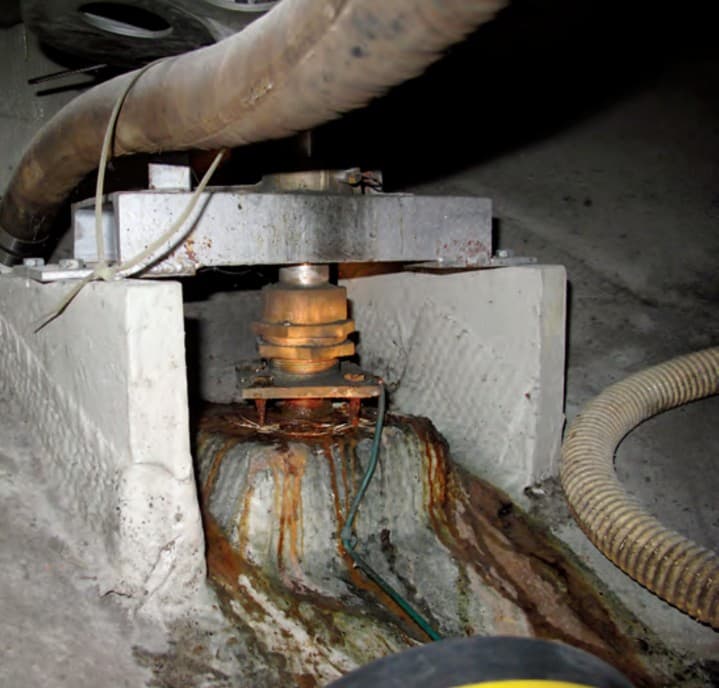
The first clue was almost boring: a little water at the lower rudder bearing after sailing in strong winds. It did not look like much, and for a while it seemed no worse than the usual old-boat seepage that owners learn to live with. Then the inspection got serious, and the real story came into focus: the lag screws holding the bearing to its block had corroded almost completely away, the wooden block had soaked up water and rotted, and the bearing had crept upward on the rudder stock until it no longer sealed against cold Lake Superior water.
When a drip is really a diagnosis
A rudder bearing does not usually fail all at once. It wears gradually, and a little play or dampness can sit there for a long time before it becomes obvious enough to scare you. That is why maintenance guides from boat-supply and rigging specialists keep hammering on the same point: inspect the shaft, seal area, and bearing condition regularly, because the parts have a finite life and the wear is often hidden until the system starts moving where it should not. Jefa Rudder’s guidance is blunt about yearly inspection of the rudder shaft for corrosion, and that advice fits this story perfectly.
The useful lesson is that a small leak is not just a leak. On an older boat, it can be the first sign that the bearing has lost its seat, the mounting wood has softened, or the sealing surface has shifted enough to let seawater start working on the structure. If the boat is sailing in rough water or cold water, that small leak deserves the same attention you would give to a loose chainplate or a suspect through-bolt.
The stopgap that bought time
Craighead did what good hands-on sailors do when a repair is important but the clock is against them: he made the leak manageable rather than pretending it was fixed. He used beeswax from a toilet-ring seal as a temporary gasket material, then pushed the bearing back toward the block with makeshift jacks made from bolts and coupling nuts. That is not a permanent repair, but it is the sort of practical, improvised solution that can get a boat safely to haulout.
The result was enough to reduce the leak to a drip. That matters, because once you are down to a controlled seep instead of a progressive leak, you can plan the teardown instead of rushing it in the water. In this case, the stopgap was not a triumph of chemistry or engineering; it was a way to buy time until the boat could be hauled and the whole steering end could be opened up safely.
Getting the rudder out without losing control of it
This is where the job stops being a simple bearing swap and turns into a system removal. When the boat came out, the marina owner and operator placed it at the edge of the pullout dock so the rudder could be dropped without first digging a hole. That kind of access is gold, because a rudder assembly is awkward even before you start unbolting the steering hardware.
Before the quadrant and stop collar came off the rudder stock, a rope sling was fastened under the rudder. That was not overkill. Craighead estimated that the rudder assembly, together with its solid stainless-steel stock, weighed about 150 pounds, and a heavy assembly like that does not forgive a slip. The sling kept the rudder from dropping into the mud as the quadrant and stop collar were removed, and it let the whole assembly be lowered onto the dock instead of becoming a recovery problem.
That detail is the first real decision point for a DIY owner. If you can support the rudder, control the weight, and get clean access to the stock and bearing blocks, the job stays in the realm of careful home repair. If you cannot, you are already drifting toward yard-only territory. Recent maintenance guidance has pointed out that some boats can have the rudder dropped and repaired without haulout, but design varies widely by boat type, and that variation is exactly what makes one boat a straightforward project and another a headache.
What the teardown revealed
Once the old fiberglass covering was cut away, the failure story was obvious. The rotted block itself became the template for the replacement, which is a very old-school advantage: simple original construction often means the failed part can be copied directly. The bad news was that the original fastening method had aged badly. The lag screws were nearly gone, the block had turned soft, and the bearing had been left with nothing solid to hold it in place.
That kind of surprise is common in steering repairs. The bearing itself may be only part of the problem. The surrounding structure, the fasteners, the seal surfaces, and the way the load is transferred into the hull all matter just as much. If the rudder feels loose, sits too high, or has started leaking after rough sailing, it is smart to assume the mount may be compromised, not just the bushing or seal.
Building the new part better than the old one
Craighead did not just duplicate the old block. He made a stronger one. For the replacement, he used white oak, shaped it on a bandsaw, machined the bearing opening, and epoxied stainless-steel bolts into the block instead of trusting lag screws again. The entire block was sealed with epoxy, and he even heated the oak before the first coat to help the epoxy penetrate.
That is the sort of upgrade that makes a DIY repair worthwhile. White oak gives the structure real meat, stainless bolts provide a more durable fastening strategy, and full epoxy sealing helps keep the next leak from starting in the same place. If you are choosing between a quick patch and a proper rebuild, this is the difference: the old arrangement was merely good enough until water and time exposed its weak point, while the new one was designed to survive the same abuse better.
It also explains why parts catalogs can be frustrating on this job. Rudder bearings, bearing housings, and rudder-port hardware come in many styles, and modern suppliers such as PYI Inc. and Fisheries Supply show just how boat-specific these pieces can be. There is rarely a universal answer. Matching the right part depends on the rudder stock, the bearing housing, and the steering layout, which is why the simple wooden replacement in this case made more sense than chasing an off-the-shelf miracle part.
The line between DIY and yard work
This repair is a good yardstick for deciding whether you should tackle a rudder-bearing job yourself. If the boat has simple original construction, if the assembly can be supported safely, and if the parts are accessible once the rudder is out, the work can be realistic for a competent owner with patience, tools, and a place to do careful fitting. The fact that some boats allow a no-haulout rudder drop only reinforces that point: accessibility is everything.
The job stops being sensible for a DIY approach when the assembly cannot be controlled, the mounting structure is badly compromised, or the steering system hides the bearing where you cannot inspect or replace it cleanly. At that point, the smartest move is not stubbornness, it is hauling and resetting the job in a place that can manage the load.
That is why this story starts with a tiny leak and ends with a much bigger repair. The drip at the lower bearing was never just water. It was the clue that led straight to corroded fasteners, rotten structure, a 150-pound steering assembly, and a repair that only worked because the owner caught it early enough to turn a failure into a controlled teardown.
This article was produced by Prism’s automated news system from verified source data, official records, and press releases, then run through automated quality and moderation checks before publishing. The system is built and supervised by the people who set the standards it runs under. Read our full AI policy.
Did this article answer your question?