Andy Miller’s hard-won boat-restoration skills power Boatworks Today
Andy Miller’s seven-year apprenticeship turned Boatworks Today into a repair playbook: the value is not just in the fix, but in the sequence.
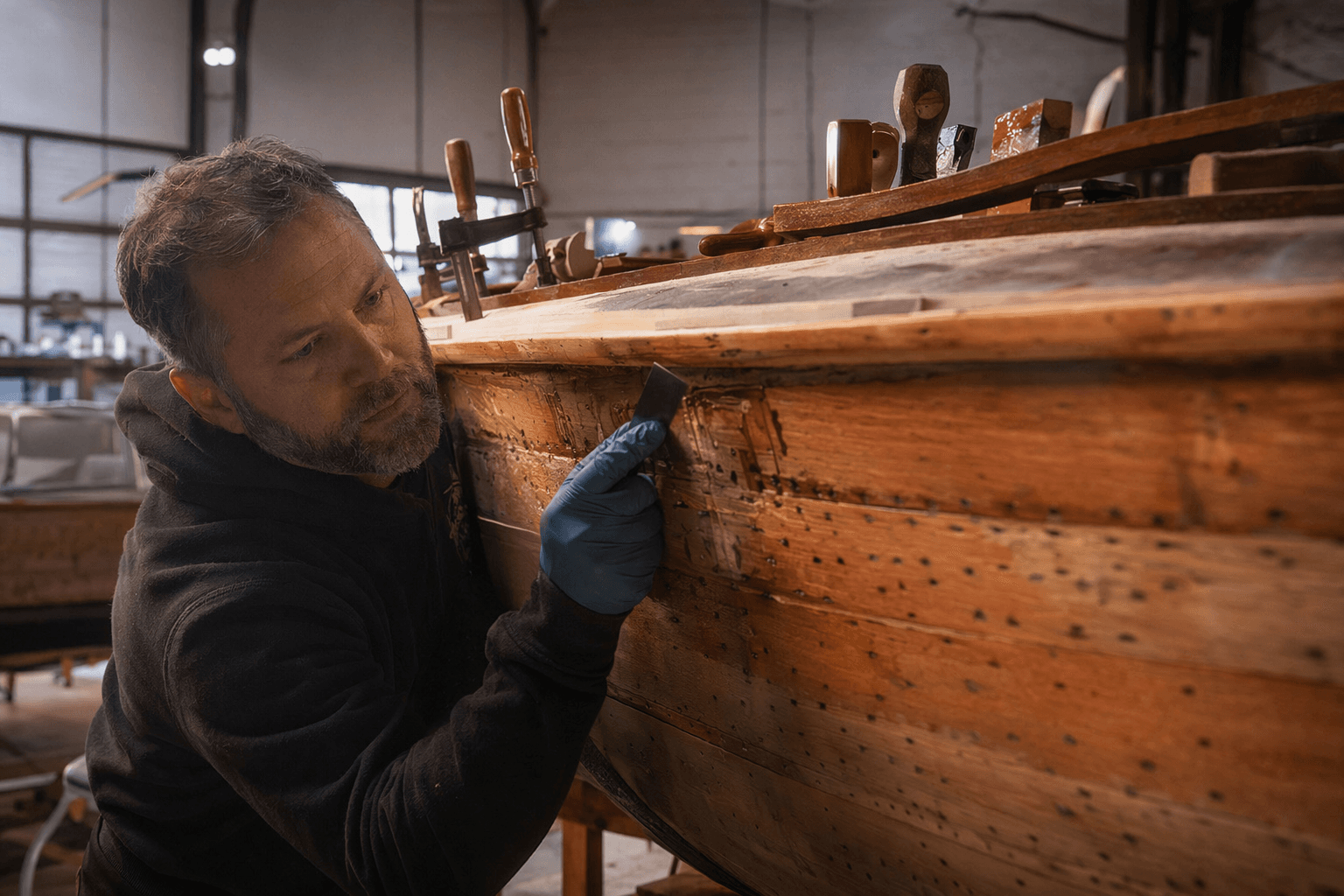
Why Miller’s method matters when a repair can snowball
A bad fiberglass patch, rushed gelcoat work, or the wrong repair sequence can turn a manageable job into a far more expensive one. Andy Miller’s appeal is that he built his reputation around exactly those decisions: not just fixing boats, but showing how to think through the order, the tradeoffs, and the points where a shortcut stops being a shortcut.
That is why Boatworks Today resonates so strongly with DIY sailors and working boatyards. Miller is not selling a fantasy of effortless restoration. He is showing the part most owners need most: how to decide what is urgent, what can wait, and what method fits the boat in front of you.
A path into the trade that was anything but linear
Miller did not arrive in the marine trades through a tidy, preplanned route. He earned a psychology and sociology degree, discovered office-style work was not for him, bought and lived aboard a sailboat for a period, and later became a certified scuba instructor. Only after that detour did he move into an apprenticeship at a local marina.
That seven-year stretch at someone else’s marina became the foundation for Miller Boatworks. It gave him the kind of repetition that can’t be faked: seeing how repairs age, how access affects the job, and how one fix often exposes the next problem. For anyone learning boat restoration, that sequence matters because the marine world rewards patience, observation, and memory more than it rewards impatience.
The real skill is knowing the whole repair, not just one material
Miller’s shop work spans cosmetic repair and restoration, including gelcoat, paint, fiberglass, custom woodworking, refinishing, and complete rebuilds. That breadth is part of his authority, because boat repair rarely stays in one lane. A finish problem can reveal a structural issue; a fiberglass issue can force a rethink of access; a beautiful repair can fail if the underlying sequence was wrong.
That is the lesson hidden inside his body of work. A DIY owner who only thinks in terms of the visible damage can miss the logic underneath it. Miller’s approach suggests a better order:
1. Assess the structure before chasing the finish.
2. Solve access and preparation before mixing materials.
3. Choose the repair method that fits the damage, not the method that looks easiest on camera.
4. Finish only after the underlying work is sound.
That mindset is what turns a patch into a durable repair.
Boatworks Today works because it shows the why, not just the what
Miller started filming because he was already doing the work. That simple choice made the channel useful in a way many repair videos are not. The library now holds hundreds of hours of restoration content, and the value is not volume alone. It is that the videos show what he does, why he does it, and what can go wrong when a step gets skipped.

One of the clearest examples is a video like “3 Ways to Laminate Fiberglass Patches for Boat Repair (One Works Better).” That kind of comparison is exactly what DIY boat owners need when they are choosing between patch-building strategies, adhesives, or laminate methods. Instead of pretending there is one magic answer, Miller lays out multiple valid techniques and lets the job itself determine the best fit.
That is a crucial distinction in boat work. Real-world repairs are shaped by temperature, reach, cure time, existing laminate, cosmetic goals, and whether the issue is structural or merely ugly. A single best practice rarely survives contact with a real boat.
Restraint is part of the credibility
Miller’s authority also comes from what he does not do. He does not chase trends, and he does not hype products. That restraint makes his advice feel grounded, because the focus stays on results rather than branding. For owners trying to spend wisely, that matters just as much as any specific resin or filler.
The broader lesson is that experience can outweigh product hype. A well-chosen system, used in the right sequence, often beats the newest or flashiest option. In boat restoration, the wrong material in the right hands can still fail if the process is off, while a modest product used with discipline can last because the preparation, layering, and finish were done properly.
What DIY sailors can take straight from Miller’s playbook
Miller’s work offers a practical framework for anyone tackling their own restoration. The value is not just inspiration; it is a way to think through the job before the dust starts flying.
- Learn the whole job before opening the first can.
- Watch for the hidden issue behind the visible damage.
- Compare methods instead of assuming one technique fits every repair.
- Respect sequencing, because the wrong order can make a repair harder to reverse.
- Use experience, not brand names, to decide what really belongs on the boat.
That approach is especially useful in fiberglass work, where a repair can look acceptable while hiding a weak bond, poor laminate choice, or a finish that will telegraph flaws later. Miller’s teaching style makes those risks visible early, when they are still cheap to fix.
Why his example sticks
Andy Miller’s story is compelling because it is not really a story about reinvention for its own sake. It is a story about turning hard-earned repetition into a repeatable process others can learn from. Seven years at another marina, a business built on cosmetic repair and full restorations, and a video library measured in hundreds of hours all point to the same idea: good boat work is documented, deliberate, and honest about tradeoffs.
For the DIY sailing world, that is the real hook. Miller does not just restore boats. He shows how to make restoration legible enough that the next person can do it better, safer, and with fewer expensive surprises.
This article was produced by Prism’s automated news system from verified source data, official records, and press releases, then run through automated quality and moderation checks before publishing. The system is built and supervised by the people who set the standards it runs under. Read our full AI policy.
Did this article answer your question?