Automatic fire suppression can help, but wiring still matters aboard boats
Automatic suppression can buy time on an unattended boat, but it only works when wiring, charging, and housekeeping are already right.
Automatic suppression is backup, not absolution
A fire bottle or tube system can be the difference between a scare and a loss when your boat is sitting alone in the slip, but it is not a cure for bad wiring, sloppy charging, or a dirty engine space. The smartest way to read the fire-suppression pitch is as a final layer, not the first line of defense.
That is the useful split Practical Sailor makes in its fire-prevention brief. The gear matters, especially when no one is aboard, but it only earns its keep when the boat already has disciplined electrical work, solid mechanical upkeep, and a habit of keeping flammables out of hot compartments.
Where automatic suppression actually helps
The best case for automatic suppression is simple: you are not aboard, the engine space is inaccessible, or the fire starts in a closed compartment before anyone can react. In that scenario, a system that trips on heat can slow or stop the event before it grows legs.
One of the systems reviewed, the Proteng THIA tube setup, is designed to trigger at 350 degrees Fahrenheit. That is the right idea for a cruising boat, because it reacts to abnormal heat early, before a small electrical or mechanical problem becomes a larger fire. Proteng says THIA is self-contained, requires no power, and is intended for enclosed areas up to 3 cubic meters, or 114 cubic feet.
That makes it a natural fit for tight, high-risk spaces: engine compartments, battery lockers, fuse panels, and junction boxes. The point is not that the system replaces vigilance. The point is that it may still act when vigilance is impossible, which is exactly the problem on a boat left unattended.
What it cannot do
It is worth being blunt here, because a lot of owners want fire gear to be magic. It is not. An automatic system will not stop a fire that starts elsewhere in the yard, and it will not protect you from a neighboring boat going up. It can only try to suppress a fire on your own boat, in the space it covers.
That limitation matters because many boaters think about fire protection as either a total solution or a gimmick. The better way to think about it is as one tool in a layered plan. If the wiring is poor, the battery charging is suspect, or the compartment is full of oily rags and cardboard, suppression is just buying a little time for a bigger problem.
The real fire risk is usually upstream
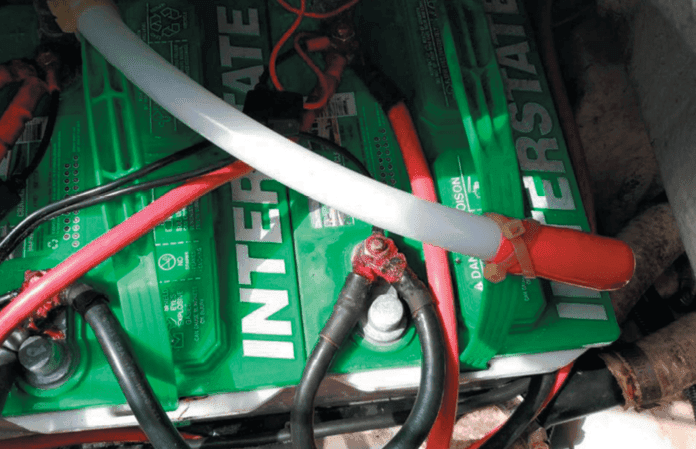
The uncomfortable truth is that bad electrical work causes more fires than most owners want to admit. BoatUS analysis found that the DC electrical system accounts for more than a third of all boat fires, while AC shore power contributes another 9 percent. That is a huge slice of the problem, and it puts the focus exactly where it belongs: wiring quality, charging gear, and how those systems age in salt and vibration.
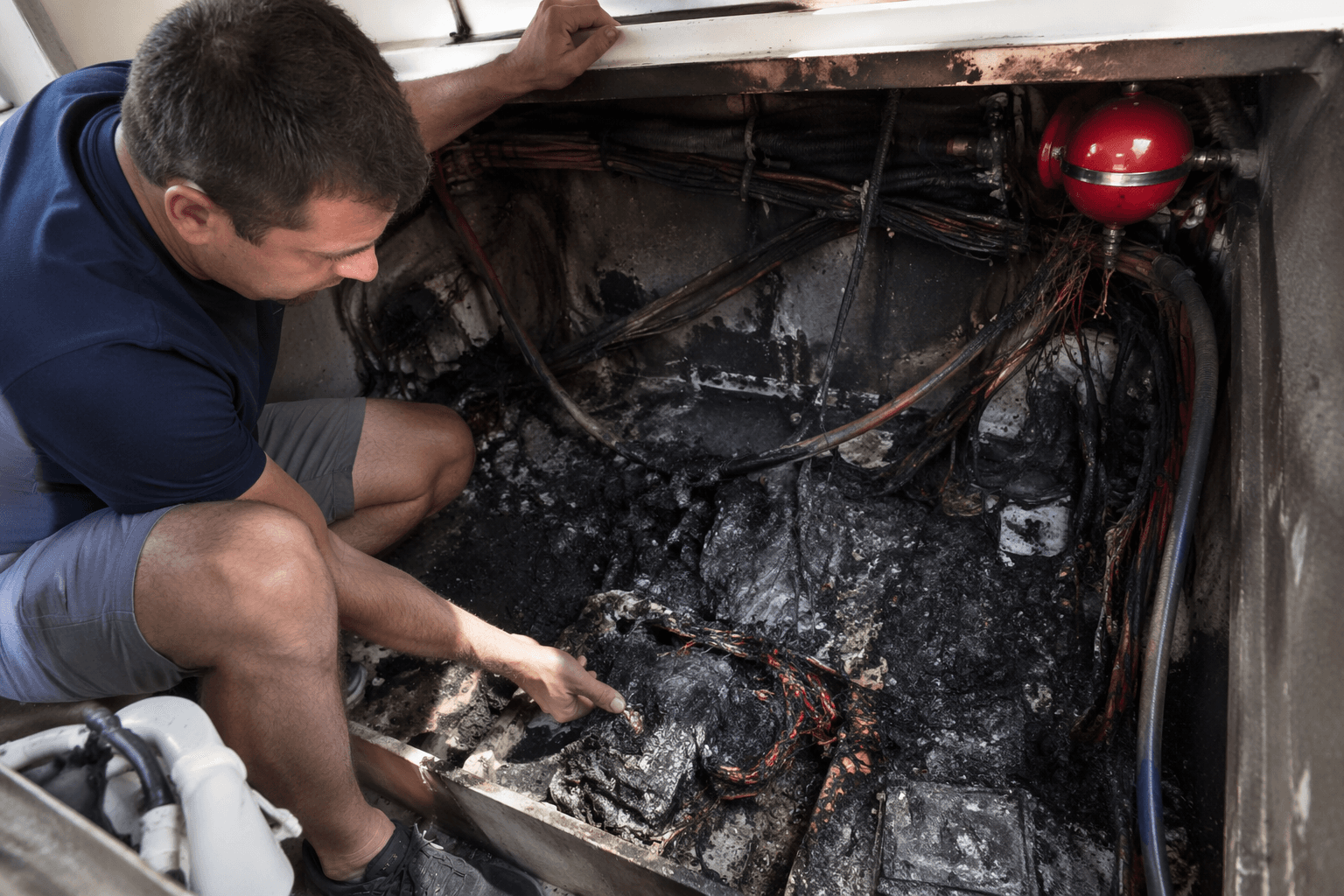
Marine-safety guidance keeps circling back to the same failure points, because they are the ones that keep showing up. Loose or corroded connections, chafed insulation, and electrical shorts are major fire hazards aboard boats. Corroded bilge pump wiring is a frequent offender in unattended-boat fires, which is a nasty reminder that even the least glamorous circuit on the boat can turn into the one that matters most.
That is why ABYC compliance is not just a certification phrase to wave around. The American Boat & Yacht Council says it has been developing standards for boat design, construction, repair, and maintenance since 1954, and it does that work through 16 Project Technical Committees with more than 400 volunteer marine professionals, including U.S. Coast Guard and industry representatives. When a fire-prevention brief leans on ABYC-compliant installation, it is really saying this: do the wiring the hard way, the right way, and do not trust a neat-looking install that would fail the standards check.
How to decide whether suppression is worth it
Not every boat needs the same level of hardware. The case gets stronger when the boat spends time unattended, sits on a mooring, is left in a slip for long stretches, or has crowded engine and electrical spaces where a fire could develop quietly. It also gets stronger on boats where the owner cannot realistically inspect the boat every day, or where access to the engine room and battery area is awkward enough that a fast manual response is unlikely.
That does not mean small boats are exempt. It means the decision should be based on usage pattern and fire exposure, not pride or budget theater. If your boat has older wiring, a shore-power setup, a busy battery bank, or an engine compartment packed tight enough that heat builds quickly, automatic suppression starts to look less like an accessory and more like sensible insurance.
A practical decision frame looks like this:
- High value: boats left unattended often, boats with enclosed engine spaces, boats with shore-power dependency, and boats where the electrical system is busy or aging.
- Lower value: boats inspected constantly, kept extremely simple, and maintained with recent, clean electrical work in open-access spaces.
- Poor fit: boats where owners expect the system to compensate for neglected wiring, poor battery management, or cluttered compartments.
Installation mistakes that undermine the whole point
The most common failure is not the extinguisher itself. It is the install around it. If the sensor or tube is placed where heat from normal machinery cooking will trip it too late, or if the protected volume exceeds the system’s design limit, the owner has bought false confidence.
The same goes for leaving the boat messy. Automatic suppression is not a license to store fuel-soaked gear, spare solvents, or flammable trash near hot machinery. If the compartment is used as a catchall, the system may still work, but it will be fighting avoidable fuel for the fire.

ABYC training treats fire protection systems as part of marine systems certification because the install is part of the safety outcome. That is the key detail many DIY owners miss: the product alone does not make the protection. The placement, sizing, and surrounding wiring quality do.
The maintenance owners cannot skip
Suppression gear is not one-and-done. It has to be inspected and replaced at designated intervals, the same way you treat other safety equipment that sits quietly until the day it is needed. If you install it and forget it, you have not built a fire system. You have built a hope.
Before leaving the boat for a long period, the checklist should stay disciplined and boring:
- Inspect high-risk areas, especially engine space, battery compartments, fuse panels, and junction boxes.
- Remove flammable materials from enclosed spaces.
- Check that terminals are clean and wiring is protected from chafe.
- Verify that the suppression system is the right size for the compartment.
- Confirm that the system is serviced and within its replacement schedule.
That list is not glamorous, but it is where real fire prevention lives. The National Fire Protection Association keeps pushing early warning and early detection in marine spaces for good reason, and its active work on vessel fire-detection systems reflects the same reality: enclosed boat spaces turn small faults into major events quickly. The U.S. Coast Guard’s 2024 Recreational Boating Statistics report logged 3,887 incidents and 556 fatalities, the fewest fatalities in more than 50 years of recordkeeping, which is encouraging but hardly a reason to get casual about prevention.
The lesson is simple. Automatic fire suppression can absolutely help when the boat is unattended and the engine space is out of reach, but it works best as the last layer on top of good wiring, clean charging practice, and a compartment you would actually trust with your own name on it.
This article was produced by Prism’s automated news system from verified source data, official records, and press releases, then run through automated quality and moderation checks before publishing. The system is built and supervised by the people who set the standards it runs under. Read our full AI policy.
Did this article answer your question?