Best bus bars for clean, safe marine electrical systems
The right bus bar turns a messy 12V panel into a safer, easier-to-troubleshoot system, while the wrong one invites voltage drop and corrosion.
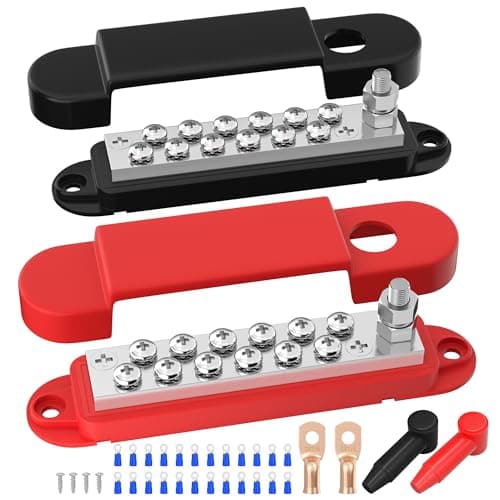
Nothing wrecks trust in a 12V panel faster than a dead circuit when the boat is loaded for a passage. ABYC Standard E-11 is the North American baseline for AC and DC electrical systems on boats, and it is built as a consensus document that gets reviewed at least every five years. The practical takeaway is simple: keep positive and negative organized, verify every connection before power-up, and choose a bus bar that matches the real load instead of the space you happen to have left. The U.S. Coast Guard’s official recreational boating statistics are the benchmark for boating-safety data, and its 2023 report, released May 28, 2024, showed fewer fatalities and incidents. Blue Sea Systems’ lineup reflects the same logic, with bus bars spanning 150A and 250A options, plus a 400A block for bigger loads, and hardware details like stainless terminal screws, M6 or M8 studs, and snap-lock covers that help keep vibration and accidental contact under control.
1. Blue Sea DualBus
This is the cleanest choice when you want positive and negative distribution in one place, because it cuts down on crossed wires and makes polarity obvious in a cramped panel. On a boat, that matters more than it does in a workbench build, because the real enemy is not just clutter, it is the slow drift into troubleshooting chaos when every add-on lands wherever there is room.
2. Blue Sea MaxiBus 250A
The MaxiBus 250A is the smarter backbone when the system starts carrying chargers, inverter loads, or solar input into the same distribution point. Blue Sea lists it at 250A continuous, 48V DC maximum, and 300V AC maximum, with tin-plated copper, insert-molded stainless steel studs, and an optional insulating cover, which is exactly the kind of hardware that keeps a future upgrade looking deliberate instead of improvised.
3. Blue Sea Common BusBar
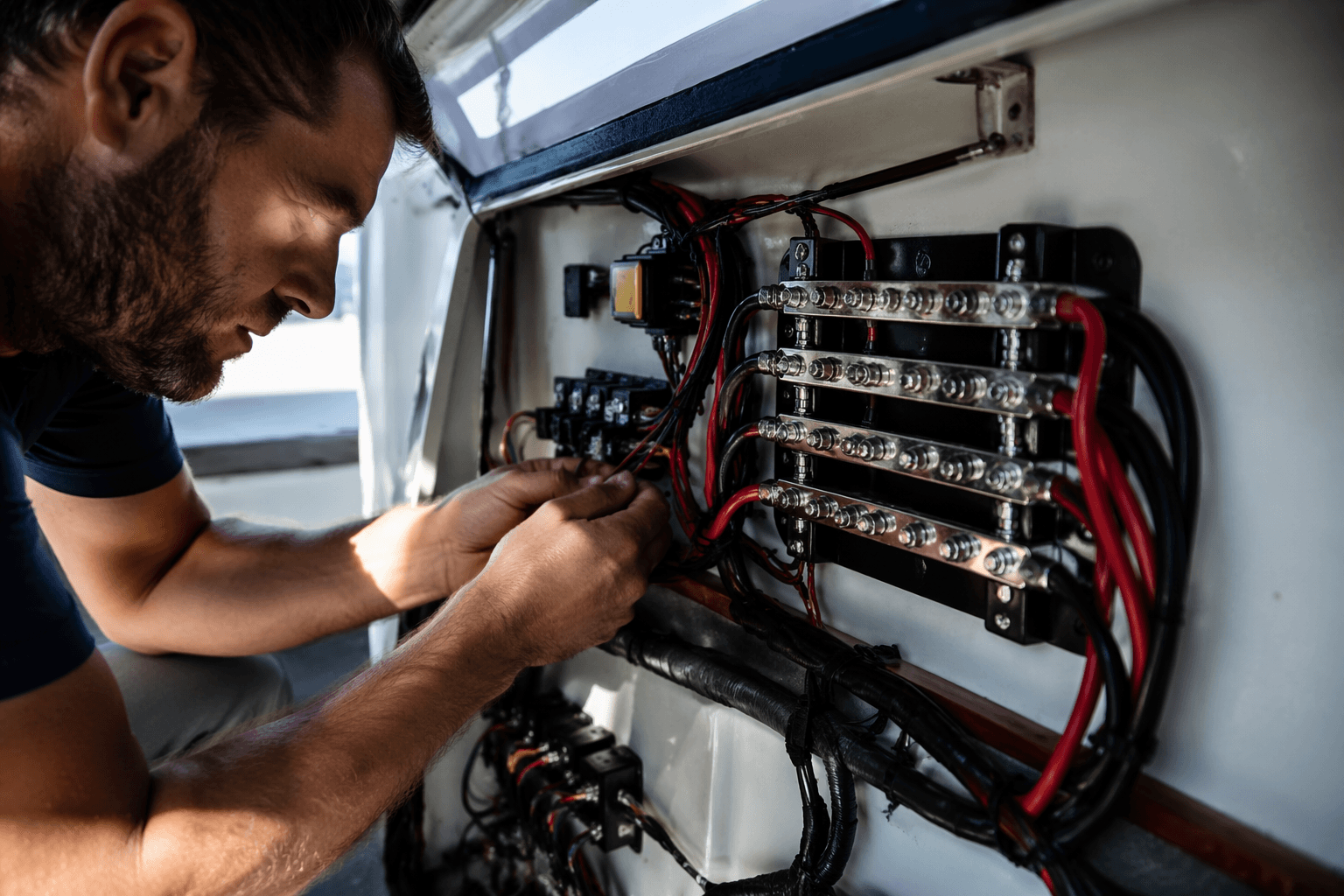
The Common BusBar is the straightforward pick for a smaller cruiser that needs to gather a handful of accessory conductors without building a rat’s nest behind the panel. Blue Sea says its bus bars are meant to consolidate multiple wires or feed multiple circuits, and this style does that job with the least drama when you are adding a light, a pump, or a plotter to an already crowded 12V system.
4. Blue Sea PowerBar
The PowerBar is the better answer when the house bank starts to grow and the system needs a bigger landing point for expansion. Blue Sea’s bus bar category runs from 100A up to 1,000A continuous ratings, and that range is the clue that a proper distribution block has to match the scale of the wiring job, whether you are cleaning up a marine panel, tying in solar, or consolidating a crossover automotive install.

5. Blue Sea MiniBus
The MiniBus is the space-saver for tight lockers and smaller branch circuits, especially when you want to stop one-off add-ons from wandering across the back of a panel. In a cramped marine install, the compact footprint is not a gimmick, because cleaner routing means fewer chances for shorts, less corrosion from makeshift connections, and a lot less time spent tracing a bad wire after the boat has already left the dock.
The wrong bus bar gives you voltage drop, corrosion, and a mess of add-on wiring that is hard to trace after the fact. The right one keeps the panel legible, makes future solar or electronics work easier, and leaves you with a 12V system that looks boring in the best possible way when the boat is under way.
This article was produced by Prism’s automated news system from verified source data, official records, and press releases, then run through automated quality and moderation checks before publishing. The system is built and supervised by the people who set the standards it runs under. Read our full AI policy.
Did this article answer your question?