BetterBoat Step-by-Step Guide for Re-Cushioning and Recovering Worn Boat Seats
A photo-led SOP to diagnose, re‑cushion, and recover marine seats, repair small tears for $15–20 or follow a full reupholstery sequence using closed‑cell foam and marine‑grade materials.
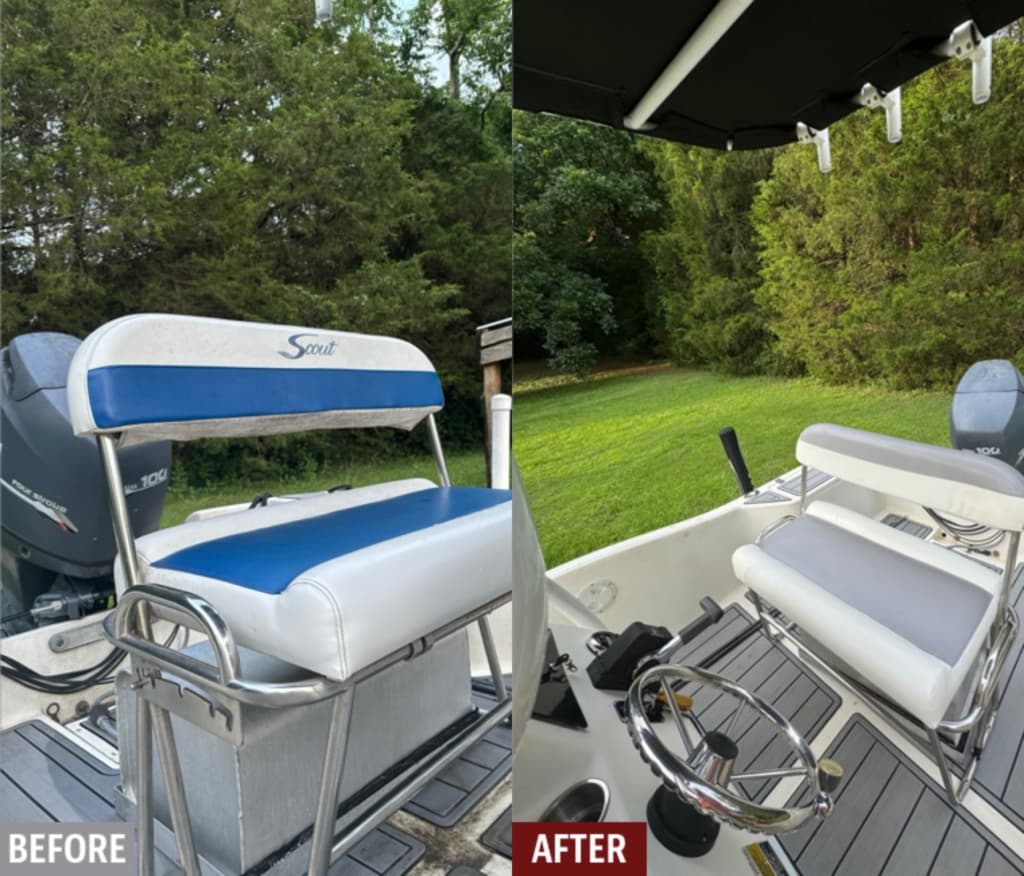
1. Diagnose the problem and know the warning signs
Boat seat issues aren’t just cosmetic. BetterBoat’s photo‑led how‑to warns: “Let's be honest, boat seat repair is practically a rite of passage for any boat owner. Sooner or later, you'll be dealing with cracked vinyl, flattened foam, or hardware that's decided to go on strike.” If the seat “feels more like a concrete slab than a cushion, stays soggy for days after it rains, or has developed some mysterious lumps,” BetterBoat says the foam has likely “given up the ghost” and you’re looking at full reupholstery or foam replacement rather than a surface patch.
2. Decide repair vs full reupholstery
For small tears and surface damage, Caymarineservice and Bakesonline recommend trying a vinyl repair kit first: “These kits can cost as little as $15-20 at a marine store.” Caymarineservice notes kit contents “typically include adhesive and vinyl patches that blend seamlessly with your existing upholstery.” But when foam is flattened, waterlogged, or the substructure shows rot, BetterBoat and Bakesonline both advise replacing foam and covers to avoid having to “Bust Out Another Thousand” later.
- Cutting: utility knife, sharp sturdy scissors (Getmyboat; Caymarineservice)
- Measuring: measuring tape and old cover for templates (Getmyboat; Bakesonline)
- Fastening: staple gun plus stainless steel staples (BetterBoat describes a “battle line of stainless steel staples”)
- Removal: flathead screwdriver, pliers, little hammer (BetterBoat; YouTube Rudder Innovations)
- Sewing: sewing machine, marine‑grade upholstery thread (Getmyboat), example used on video: “the white version of Coats and Clark extra strong 100% nylon upholstery thread” (Rudder Innovations)
- Foam: closed‑cell marine foam (BetterBoat: “In the marine world, there’s really only one choice: closed‑cell marine foam… It actively pushes water away…”)
- Repair/finish: vinyl patch repair kit, vinyl prep solution, vinyl restoration product, Dulepax‑Fabric Repair Tape (Caymarineservice)
- Extras: piping materials and pins (Rudder Innovations), marker for fold lines, staple tacks.
3. Tools and materials checklist (gather before you start)
Note: if you’re ordering materials online, BetterBoat’s storefront banner advertised “FREE US SHIPPING ON ORDERS OVER $60,” a logistics detail to factor into small orders.
4. Pre‑project prep and measuring templates
Getmyboat emphasizes: “Before you start, gather all the necessary tools and materials. Having everything at hand will make the process smoother and more efficient.” Remove the old cover and lay it flat on the ground as a template, measuring with a tape and leaving extra for seam allowances and for wrapping around the seat edges. Bakesonline repeats the same measuring advice: remove the cover to ensure accurate sizing for both foam and vinyl.
5. Step 1, remove the seat from the boat
Start by unbolting the seat from its pedestal or base; BetterBoat’s guide opens with this removal: “Start by unbolting the seat from its pedestal or base and flip it over.” The Rudder Innovations video recommends locating mounting fasteners first so the seat “should come off with ease.” Working off the boat makes access to the underside and staples far easier and safer.
6. Step 2, remove the old upholstery and fasteners
Getmyboat’s Step 1: “Use a utility knife or scissors to carefully cut away the existing fabric, being careful not to damage the foam underneath.” BetterBoat points out the “battle line of stainless steel staples” you’ll need to extract; use a flathead screwdriver and pliers to pry staples out, and a little hammer to tap any remaining staples down as shown on Rudder Innovations. Save the old cover pieces as your cutting templates.
7. Step 3, inspect foam and the seat substructure
With fabric removed, inspect the foam for flattening, sogginess, or lumps, BetterBoat’s phrasing: if a seat “stays soggy for days after it rains” or has “mysterious lumps,” the foam has failed. Also check the wood or plastic backing for soft spots or rot; Bakesonline warns that structural damage will force a larger repair. Document any rot and plan to replace affected backing before reattaching new covers.
8. Step 4, cleaning and surface restoration (when appropriate)
If the damage is surface only, Caymarineservice directs: “Start by thoroughly cleaning the cushions with a mild soap and water solution. This removes dirt and oils that can interfere with the repair process.” Let everything dry completely, then apply a vinyl prep solution to improve adhesion. After repair or patching, “Use a vinyl restoration product to apply a new coat. This not only restores the color and appearance but also adds a protective layer against future damage,” Caymarineservice advises.
9. Step 5, pick the right foam and cut to fit
BetterBoat is explicit: “In the marine world, there’s really only one choice: closed‑cell marine foam. Unlike the open‑cell stuff you find in household cushions that acts like a sponge, closed‑cell foam is non‑absorbent.” That non‑absorbency is critical for pushing water away and preventing mildew and rot. Use your measured templates to trace and cut closed‑cell foam to size, allowing for any depressions or shaping the original design required.

10. Step 6, cut fabric panels and leave seam allowances
Getmyboat’s Step 2 instructs: “Use a measuring tape to measure the size of your boat seats, then cut your new fabric accordingly. Remember to leave some extra fabric for seam allowances and for wrapping around the edges of the seat.” Cut panels precisely from the old cover templates, and mark fold lines and staple margins. Accurate cutting makes the sewing and stapling stages much simpler and reduces puckering.
11. Step 7, sew the cover assembly (panel work and piping)
Getmyboat notes: “If your seat design requires sewing, now is the time to do it. Use a durable, marine‑grade thread to ensure your stitches hold up against the elements.” Rudder Innovations walks through panel assembly: pin piping between two pieces if used, “Sew each additional side panel to the two front panels of the seat. Take your time around the curves.” Their practical sewing tip: “When sewing the middle seam, you need to leave a minimum of a/4 in so you'll have enough material to staple to the wood backing if you're separating cushions.” Use heavy upholstery machines and a strong nylon thread such as the Coats and Clark example when available.
12. Step 8, attach the cover, pull tight, and secure to the backing
Getmyboat’s Step 4: “Once your fabric is cut and sewn, it's time to attach it to your seats. … use your staple gun to secure the fabric to the seat, pulling it tight as you go to avoid wrinkles.” Rudder Innovations advises starting pinning at the fold line and using existing staple marks as a guide; attach the center seam to the wood backing to separate cushions and hold tension. Work evenly around each edge, trimming excess and setting staples in a tidy, staggered line for long life.
13. Step 9, finishing touches, patches, and protective coatings
Trim any stray threads and test foam fit and comfort. For small repairs or color restoration, Caymarineservice recommends vinyl repair kits and restoration coats; they say kits “typically include adhesive and vinyl patches that blend seamlessly with your existing upholstery.” For very temporary fixes Caymarineservice acknowledges duct tape as a stopgap, but not a long‑term solution. Consider Dulepax‑Fabric Repair Tape for durable short repairs as recommended by their guide.
14. Step 10, reinstall seats and long‑term maintenance
Rebolt seats to their pedestals in the reverse of removal and confirm mounting hardware is secure. For longevity, Caymarineservice and BetterBoat both stress routine cleaning, protective sprays, and the long‑term benefit of closed‑cell foam: it “actively pushes water away, which is exactly what you need to prevent the mildew and decay that rots boat seats from the inside out.” Bakesonline’s bottom line remains practical: “Doing the correct repairs now will save you from having to 'Bust Out Another Thousand' later.”
15. Visual references and further how‑to media
BetterBoat’s photo‑led how‑to (published February 17, 2026) provides step photos that match this workflow and is handy for visual sequencing. Rudder Innovations’ YouTube walkthrough demonstrates staple removal, sewing pivots, piping placement, and a finished look, useful if you want to see the techniques in motion. Between the photos and video you can match each step to a clear image of tools, seam lines, and final fit.
Conclusion Follow this sequence, diagnose, decide repair vs. replace, gather marine‑grade materials, and move steadily through removal, inspection, foam selection, sewing, and reattachment, and you’ll convert a soggy, cracked seat into a weatherproof, comfortable place to sit. Use closed‑cell foam and marine‑grade supplies to lock in longevity and remember that a small upfront repair often prevents a much larger bill down the line.
This article was produced by Prism’s automated news system from verified source data, official records, and press releases, then run through automated quality and moderation checks before publishing. The system is built and supervised by the people who set the standards it runs under. Read our full AI policy.
Did this article answer your question?