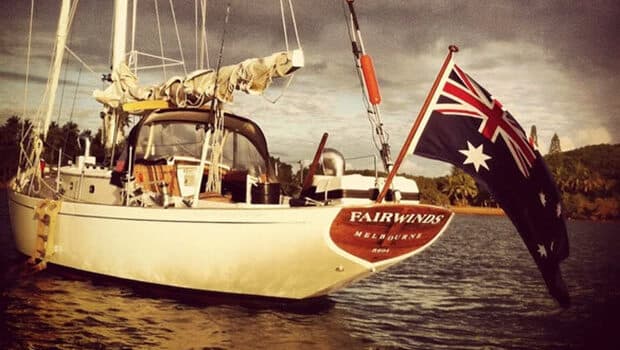
Birds guide a sailor across the changing Celtic Sea
Birds, not just instruments, can warn a Celtic Sea skipper about water, weather, and distance from shore before the swell turns.
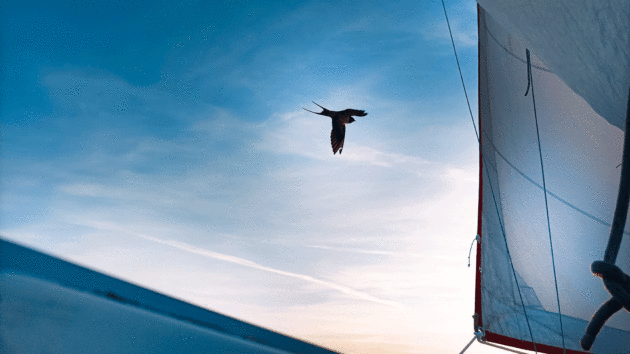
A flock of small birds can tell you more about the next mile than a polished chartplotter ever will. On a passage across the Celtic Sea, Jasper Winn treats birds as living shorthand for the water beneath the bow, the weather ahead, and how far he has pushed from land, which makes the crossing feel less like a scenic drift and more like a lesson in reading the sea with your whole body.
This piece also sits under the Brian Black Memorial Award, a marine environmental journalism prize launched by Yachting Monthly and the Black family in memory of Brian and Lesley Black. Brian Black was known as a sailor, journalist, broadcaster, and environmentalist who used his boat to film melting glaciers and report on climate change, while Lesley Black was Northern Ireland’s first female yacht club commodore. The award has expanded since launch, adding writing and video categories by 2023 and later being presented as a £4,000 prize package.
The Celtic Sea is alive, and under strain
The Celtic Seas are not empty water between coasts. The International Council for the Exploration of the Sea says at least 23 seabird species breed on their shores, including globally important populations of Manx shearwater, European storm-petrel, and northern gannet. That richness is also fragile, because many breeding species have been declining over the past decade.
The broader warning is hard to ignore. The British Trust for Ornithology says breeding seabirds and upland birds are the two bird groups most vulnerable to climate change, and it identifies 14 seabird species as being at risk from negative climate impacts. Its most striking projection is for puffins, with Britain and Ireland facing an 89% decline by 2050. For a sailor, that is not just conservation language. It changes the character of the crossings, because the birds that once marked a coast, a tide line, or a feeding front may become less common or shift their habits.
A late start, a practical boat
Winn comes to sailing as many good coastal hands do, by way of the water first. He had already spent time swimming, kayaking, and fishing on the coast before buying his first boat in the first months of 2020, after taking advice from a more experienced friend. That advice led him to a Westerly Pageant, a modest cruiser with full headroom and bilge keels, the kind of boat that fits the Sailing DIY instinct to choose something workable, understandable, and forgiving.
The Pageant has its own bit of yachting history. Laurent Giles designed it in 1969 as a replacement for the earlier Nomad, production began in 1970, and around 550 were built through 1979. Very few fin-keel versions were made, and those were known as Kendals. In other words, this is not a glamour boat story. It is a story about a small, sensible platform that lets a skipper learn the sea by spending time in it.
What the birds are saying
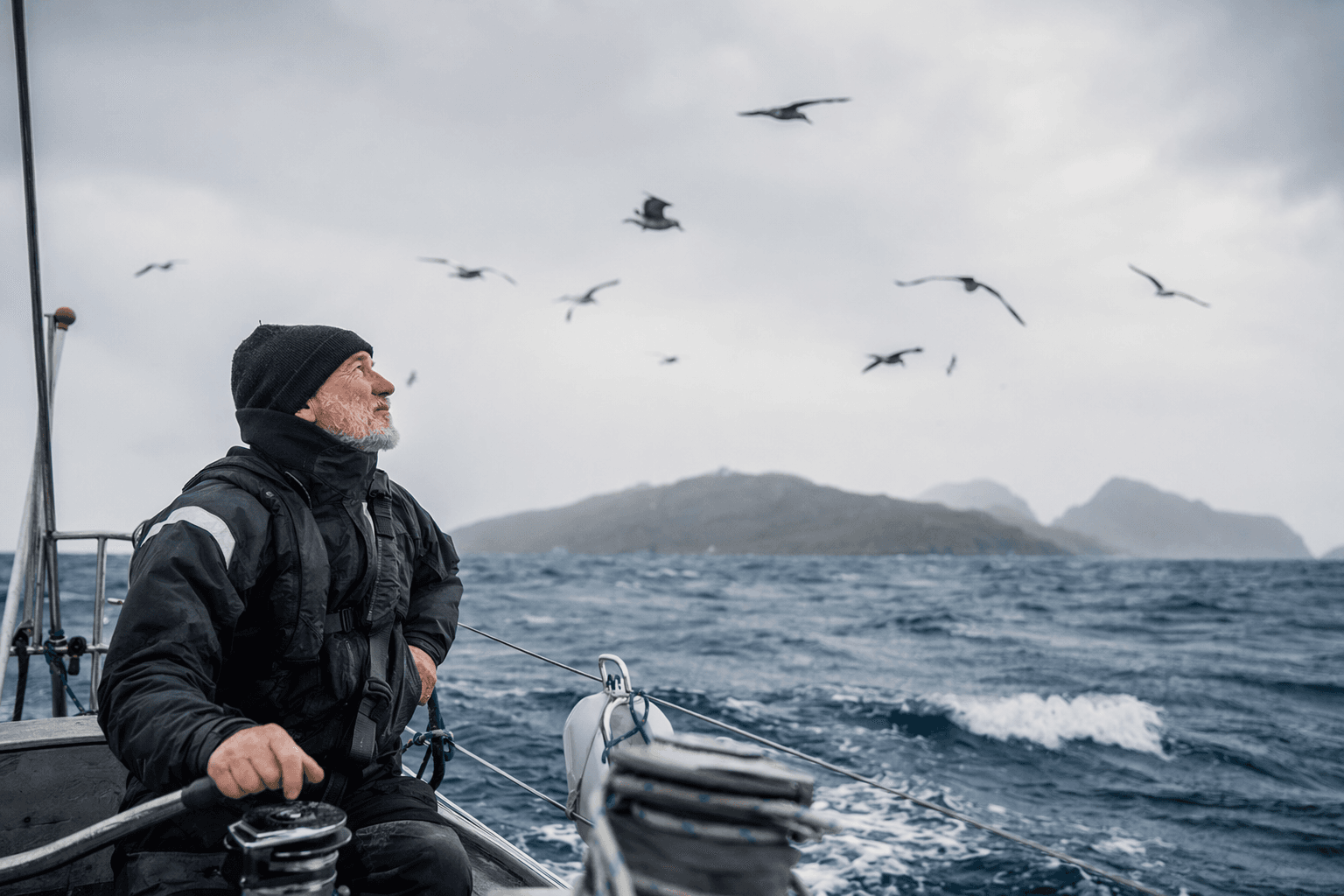
Once afloat, Winn found that engines and he were not natural allies, so sailpower took over and the boat became a moving observation post. That is where the guide value of the piece really lands, because every bird cue becomes something a small-boat skipper can use.
- Cormorants and shags suggest shallow water, so treat them as a nudge to check your soundings, your chart, and the shape of the bottom ahead.
- Guillemots point to a slightly different offshore regime, a reminder that the bird mix is changing as you move away from the coast.
- Gannets are a sign of fish, which often means feeding activity, surface life, and a reason to look harder at the water before you dismiss it as just glitter.
- Skuas and petrels are the birds that tell you you are far out to sea, where the weather feels less local and more system-wide.
Scotland’s marine waters back up that kind of reading. Cormorants, gannets, skuas, petrels, gulls, terns, and auks all belong to the seabird community there, and the seasonal rhythms of shags, cormorants, and gannets show that even familiar birds do not appear at random. The practical takeaway is simple: do not just identify the bird, notice the company it keeps and the season it arrives in.
Reading weather before it reads you
The deeper idea in Winn’s passage is that migratory birds and sailors are both responding to the same climate pressures. BirdLife has warned that climate change could drastically reshape migratory patterns and create major challenges for long-distance birds, which means the old patterns a skipper leaned on are already under pressure. What used to be a reliable sign may now be a sign in motion.
That is where this kind of seamanship becomes more than folklore. Watch the feeding birds, yes, but also watch what is missing. Track how the flock changes with latitude, time of year, and distance from shore. On a small boat, that habit can sharpen your judgment long before the wind shifts or the sea state gets ugly, because the birds often register the boundary between one water mass and the next before your instruments make the change feel obvious.
A better way to cross
The best thing about this Celtic Sea crossing is that it never treats nature as decoration. It treats birds as part of the seamanship. That is the useful lesson for every coastal skipper: the water tells stories through texture, the sky tells them through cloud lines, and birds tell them through behavior, species, and timing.
Winn’s Pageant, bought after late-blooming advice and chosen for practicality, becomes the right sort of boat for that education. It is small enough to keep the skipper honest and steady enough to let the birds, the sea, and the changing weather do the talking. Out there, a flock of small birds is not a postcard detail. It is often the first sensible thing on the horizon.
This article was produced by Prism’s automated news system from verified source data, official records, and press releases, then run through automated quality and moderation checks before publishing. The system is built and supervised by the people who set the standards it runs under. Read our full AI policy.
Did this article answer your question?