Mattapoisett boatyard fire shows how maintenance mistakes spread fast
One tank swap, one spark, and a six-alarm yard fire followed. The hard lesson: fuel vapors, tight storage, and bad separation can turn routine maintenance into a full-yard loss.
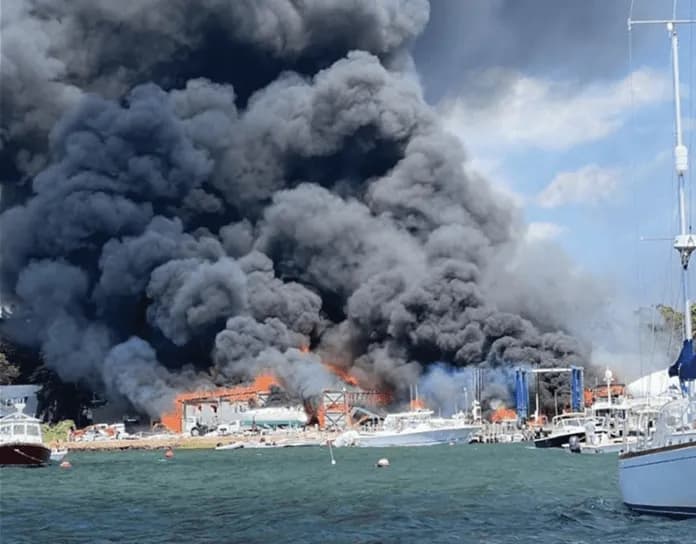
Could your boat, charger, fuel system, or winter-storage setup be the thing that lights off an entire yard? The Mattapoisett Boatyard fire makes that question painfully real. A routine gas-tank replacement inside a building at 32 Ned’s Point Road turned into an explosion, a six-alarm fire, and a lesson every DIY owner should take personally.
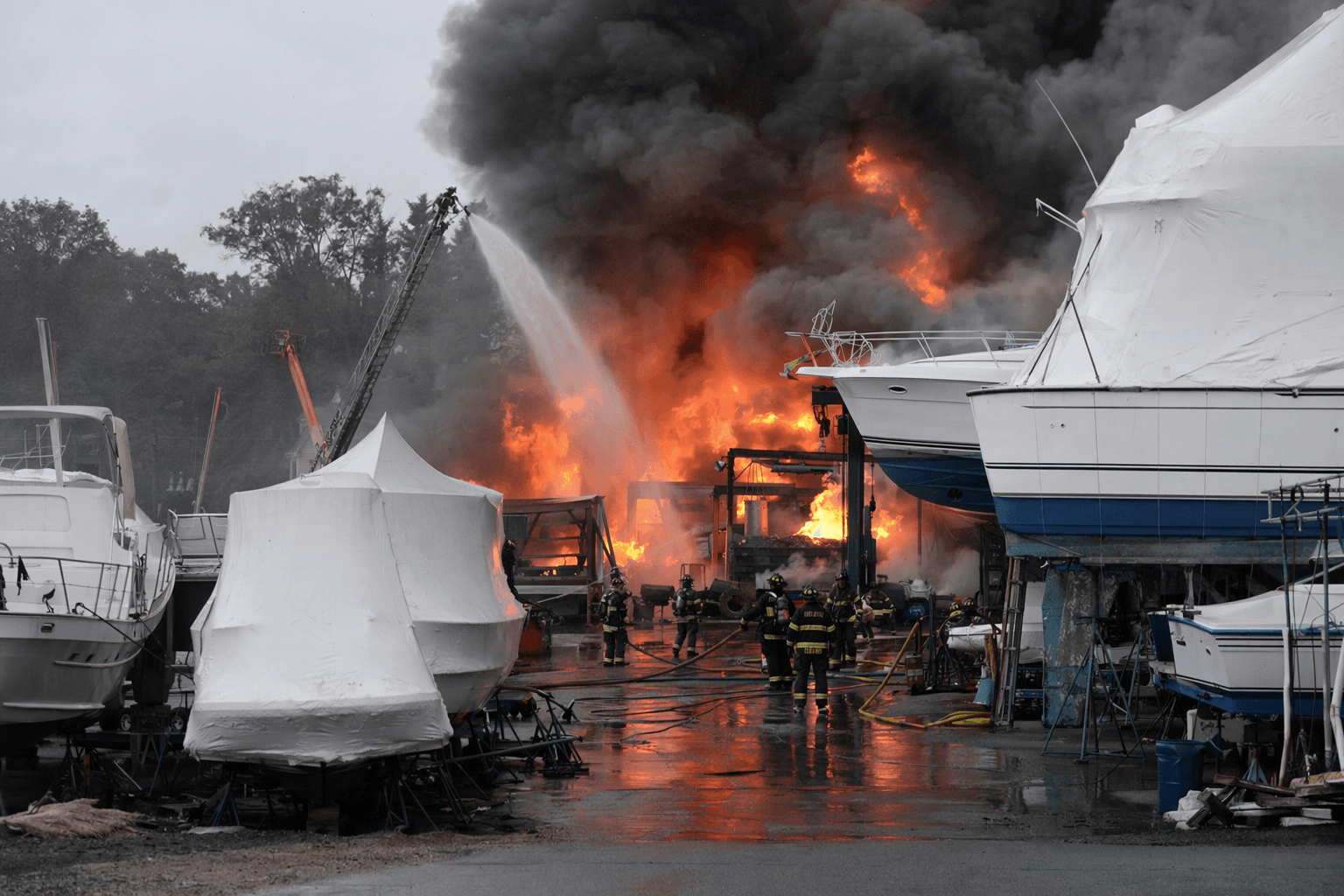
The fire began on August 19, 2022, after gasoline vapors were likely ignited while a worker was replacing a boat’s gas tank. Initial 911 calls reporting explosions came in around 1:20 p.m., and the blaze was already spreading hard enough to demand more than 100 firefighters, 19 engines, 12 tankers, three fire boats, and two ladder trucks. It took more than four and a half hours to get under control, and winds of up to 25 miles per hour coming in off the water helped feed the fire.
What the Mattapoisett fire showed in real time
This was not a tidy little shop accident. The fire destroyed six buildings, 47 vehicles, and 14 boats, and other reporting said the boatyard’s own post put the loss at about 20 boats and nearly 40 vehicles. One worker was seriously injured, and local reporting identified him as longtime employee Phil Macomber, who suffered major burns and a shattered femur. Three firefighters were also injured and treated for smoke inhalation and heat exhaustion.
That is the ugly part of marine fire risk: one mistake rarely stays where it starts. In Mattapoisett, a spark in a repair building became a whole-yard problem because fuel vapor, structure, and wind all lined up at once. The plume of dense black smoke over southeastern Massachusetts was the visual version of a maintenance job gone wrong.
The prevention lesson starts before the boat ever reaches the travel lift
If you do your own maintenance, the first thing to fix is your mental model. A boatyard is not just a place where boats sit. It is a storage system for gasoline, solvents, batteries, paint, wiring, and sometimes hot work, all packed into a space that can let fire move from one fuel source to the next faster than you can drag a hose.
That is why spacing, access routes, fire stops, and building separation matter so much. The same basic lesson that came out of the great fires of London, Chicago, and San Francisco applies here: once fire can leap from one ignition source or fuel load to the next, the loss can mushroom fast. Boats parked tight, narrow roadways, and repair spaces full of combustible material give the fire an easy path.
For your own boat, that means you need to treat the following as red-flag work, not casual Saturday chores:
- Fuel tank replacement needs full attention. The Mattapoisett fire started during gas-tank work, so any job that opens a tank, line, or fitting should be treated as vapor-heavy and ignition-prone.
- Keep batteries and chargers out of the fuel zone. A charger left humming near fuel work, battery cables loose in a compartment, or a corroded connection can become the wrong kind of heat source at the wrong time.
- Know where your wiring is vulnerable. Chafed conductors, poor terminals, and improvised connections may not look dramatic, but they are exactly the kind of hidden fault that turns a simple spark into a bigger event.
- Do not mix hot work with fuel residue. Grinding, cutting, soldering, or welding has no business sharing space with vapor, soaked rags, or open fuel systems.
- Store with room to breathe. Tight winter storage and overpacked rows are not just a management issue for the yard. If your own storage plan leaves boats, trailers, and gear jammed together, you are helping a fire travel.
- Clear the access routes. The Mattapoisett response needed engines, tankers, fire boats, and ladder trucks, which is a reminder that responders need room to reach the problem fast. Your layout should never block the path to a boat, a building, or an exit.
Why boatyard fires keep repeating the same mistake
Mattapoisett was not a one-off freak. Similar destructive yard fires followed in Mystic, Connecticut, and Wickford, Rhode Island, and a later Mystic Shipyard West fire in February 2025 again took multiple departments and several hours to extinguish. When a marine fire starts, it is often not just the ignition source that matters. It is the whole setup around it, from the spacing between boats to the way the yard is laid out.
Weather can make the same bad arrangement much worse. Hurricane Ian made landfall in Southwest Florida on September 28, 2022 as a Category 4 hurricane, and the destruction it caused showed how extreme conditions can hammer marinas and boatyards. In some storage yards, wider spacing helped keep losses from compounding boat to boat, which is exactly the point owners miss when they shrug off room between hulls as wasted space.
That is why NFPA 303 exists. The Fire Protection Standard for Marinas and Boatyards is built around fire and electrical hazards at marinas, boatyards, yacht clubs, boat condominiums, and docking facilities. The U.S. Fire Administration also keeps issuing guidance aimed at boats and marinas for the same reason: these places combine fuel, power, structure, and storage in one place, and when that mix goes bad, it goes bad quickly.
Mattapoisett is the cautionary tale that should haunt every owner who thinks maintenance is only about oil changes and bottom paint. The real question is not whether your boat looks safe from the dock. It is whether your fuel work, battery setup, wiring, and storage habits could give a spark enough time and room to turn one repair into a yard-wide disaster.
This article was produced by Prism’s automated news system from verified source data, official records, and press releases, then run through automated quality and moderation checks before publishing. The system is built and supervised by the people who set the standards it runs under. Read our full AI policy.
Did this article answer your question?