Cape Dory MS300 review highlights a practical all-weather motor sailer
The MS300 is built for sailors who would rather keep moving than go fast. Its pilothouse comfort is real, but so is the upkeep that comes with an older, niche motorsailer.
What the MS300 is really for
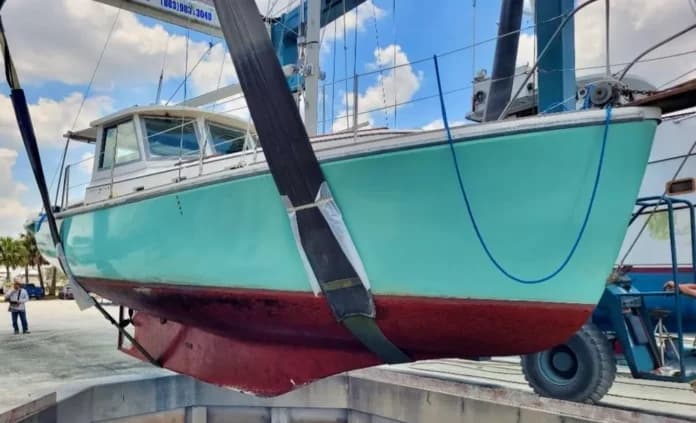
The Cape Dory MS300 is one of those boats that makes sense the moment you stop asking it to behave like a normal 30-footer. Practical Sailor frames it as a pilothouse motorsailer that gives up light-air speed in exchange for all-weather comfort, and that is exactly the right lens for buying one. This is not a racer, not a gimmick, and not a cramped little coastal box; it is a deliberate answer to the cruising problem of wanting to keep going when the breeze dies, the chop builds, or the weather turns ugly.
The numbers tell you what kind of compromise you are buying
The MS300 sits right at the edge of what most sailors still think of as a manageable boat, with a length around 29 feet 10 inches to 29.85 feet, a beam of about 11 feet 5 inches, and a draft of roughly 3 feet 11 inches to 3.92 feet. That wide footprint gives it real interior volume, but the long keel and pilothouse are what matter most: they point to range, shelter, and directional stability rather than quick tacks or slippery performance. Common listings put the displacement at 11,500 pounds, ballast at 4,500 pounds of lead, sail area at 442 square feet, and a hull speed near 6.9 knots, which is exactly the shape of a boat that expects to cruise instead of sprint.
The machinery side reinforces that mission. A technical listing gives the boat a 46 hp Westerbeke diesel option, 50 gallons of fuel, and 75 gallons of freshwater, so you are looking at a motorsailer that was built to spend meaningful time under power as well as under canvas. That is a feature if your home waters are fickle, but it is also a reminder that the boat’s value lies in flexibility, not in pretending to be a pure sailboat.
Why the Cape Dory name still carries weight
Cape Dory was not some small-time builder improvising a one-off oddball. Andrew Vavolotis founded the company in 1963 in Bridgewater, Massachusetts, where he started with 10-foot dinghies in a garage, and by 1984 the yard had grown into a 142,000-square-foot factory in East Taunton with 325 workers. That bigger company story matters because the MS300 came from a yard that knew how to build real cruising boats, even as the sail market weakened and the 1990 luxury tax on recreational boats over $100,000 hurt the business badly.
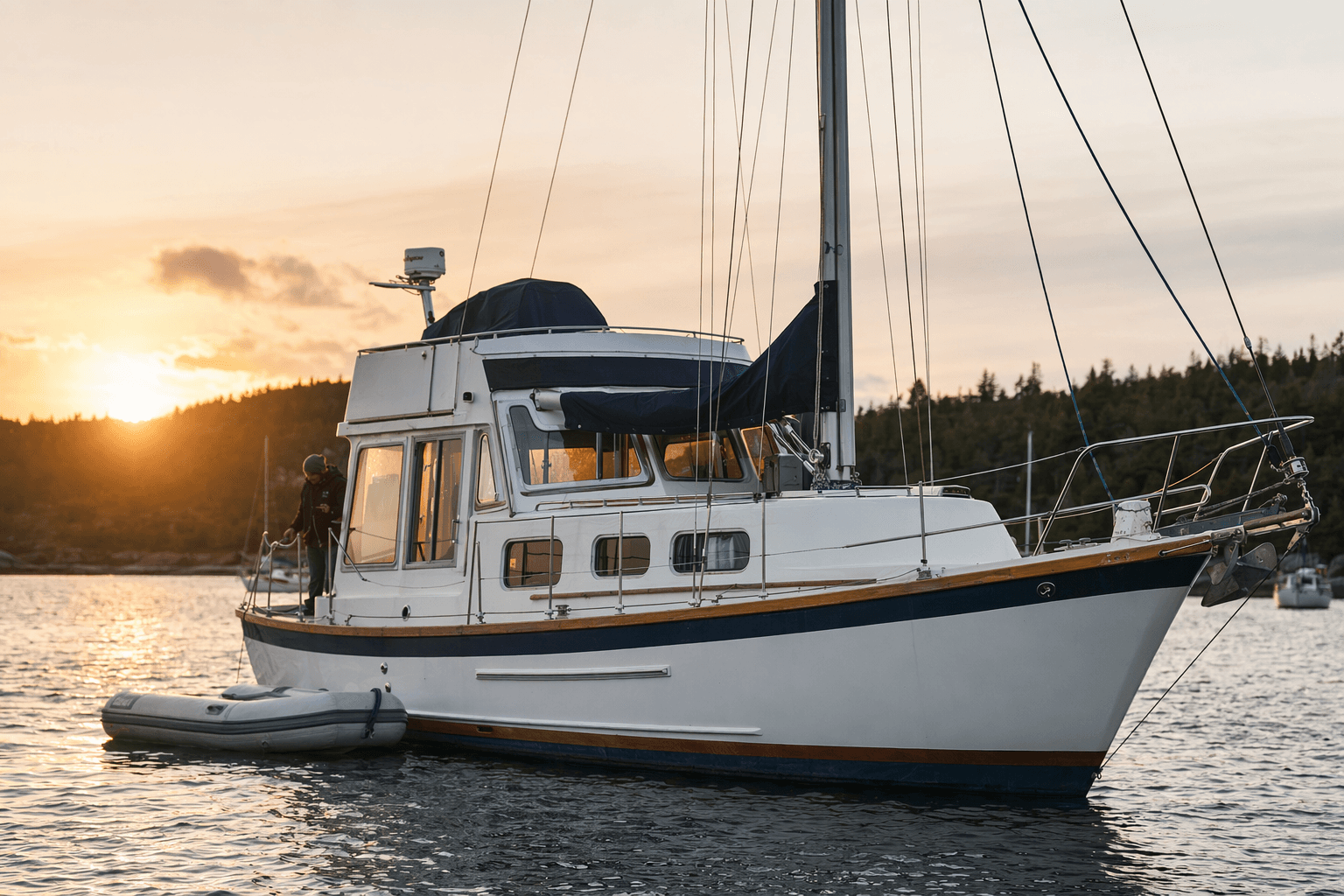
The MS300 also had a life beyond Cape Dory’s own production run. A 2000 Cape Dory Board post said Hobby Marine had purchased the molds and planned to restart production, and the same thread described the boat as an “ideal boat” that “sails well” and will motor at 7 to 8 knots, with confidence for trips to the islands or Bermuda. That kind of fan loyalty is useful context, because boats do not keep that sort of following unless they solve a real problem for real owners.
Who the MS300 fits, and who will hate it
This is the right boat if you want a sheltered cockpit, a pilothouse that stretches the season, and a layout that does not punish short-handed cruising. One owner described the MS300 as “more of a pilothouse sailboat rather than a motorsailer,” said it “sails fairly well,” and praised it as a boat with “a ton of room” and enough practicality for a large dog to move around in. Another owner said the pilothouse “extends the season up in Maine,” which is the most honest sales pitch this boat has ever had.
That same owner enthusiasm also points to the compromise. If you want a lively light-air sloop, this is the wrong shape of fun. If your ideal day is keeping the crew dry, sailing or motoring on schedule, and making the boat easy to manage without a circus on deck, the MS300 starts to look a lot less quirky and a lot more sensible.
What to inspect before you buy
For a boat of this age, the expensive mistakes are the usual ones, just packaged inside a niche layout. Practical Sailor’s used-boat guidance says the engine deserves special scrutiny because it is the single most expensive piece of gear aboard, and it specifically flags leaks, excessive rust, broken or missing components, corroded exhaust parts, and signs of water intrusion as red flags. On the electrical side, look for corrosion at the panel, charred terminals, exposed conductors, loose breakers, and sloppy wiring behind the panel, because those are the kinds of faults that turn a comfortable cruiser into a troubleshooting project.
On the MS300, I would add the drivetrain and steering to the front of the line. Owners in the refit thread were replacing shafts, cutlass bearings, motor mounts, hoses, gaskets, and even PSS shaft seals, which tells you exactly where age tends to show up on these boats. If you are looking at one with original systems, assume the survey will find work in the propulsion train, the electrical system, and the plumbing before it ever gets to cosmetics.

What a real refit looks like
The cleanest way to understand ownership reality is to read the refit lists from people actually tearing into these boats. One owner in Wilmington, North Carolina, documented a total interior refinish, new 4D AGMs, a new charger/inverter, new head and faucets, new motor mounts and hoses, a shaft removed, cleaned, and straightened, a new PSS shaft seal, a new cutlass bearing, all new running rigging, some standing rigging, and a new Bimini. That is not a weekend varnish project. That is a full catch-up campaign.
Another owner on hull #18 said he had already replaced the shaft, cutlass bearing, motor mounts, and much of the engine’s wear items, including pumps, oil seals, hoses, glow plugs, and injectors, along with a new DC electrical system from batteries to panel and a composting toilet in place of the holding tank and head. That is the kind of list you should expect if you want the boat to earn its keep instead of just looking charming on the hard. In practical terms, the MS300 is not a cheap boat to neglect and then rescue, but it can be a deeply satisfying boat to bring back properly.
Bottom line
Recent market data shows MS300 examples clustering around the low-to-mid $30,000 range, with asks commonly landing between about $29,000 and $39,000. That makes a sorted boat look attractive, but it also means a tired one can get expensive fast once you start stacking batteries, charging gear, rigging, drivetrain parts, and interior work on top of the purchase price.
If you want a boat that keeps the crew drier, stretches the season, and makes short-handed cruising feel less like a compromise, the MS300’s oddball silhouette starts to look smart. If your idea of a good sail is wringing every knot out of light air, this boat will never pretend to be that machine. It was built for the sailor who values staying comfortable and staying on schedule, and that is still a strong case.
This article was produced by Prism’s automated news system from verified source data, official records, and press releases, then run through automated quality and moderation checks before publishing. The system is built and supervised by the people who set the standards it runs under. Read our full AI policy.
Did this article answer your question?