BoatUS Guide: 5 Common DIY Boat Repairs and When to Call Pros
BoatUS outlines five common repairs owners can tackle and when to call a pro to protect safety, boat integrity, and insurance coverage.
Five repairs account for much of owner-level boat maintenance, but knowing when to stop and call a professional can save boats and lives. BoatUS breaks the work into clear, stepwise troubleshooting for thru-hulls and seacocks, bilge pumps, cooling and raw-water systems, simple electrical fixes, and small gelcoat or cosmetic fiberglass repairs, and highlights the safety and insurance stakes involved.
Start at the throat of the problem: thru-hull fittings and seacocks. Verify seacock condition by checking for excessive play, corrosion, and proper operation; practice temporary shutoff procedures so you can isolate leaks at sea. If the fitting shows structural deterioration or the flange is compromised, haul the boat for repair rather than jury-rigging a fix. These components are critical to buoyancy and are a clear call-to-pro situation when integrity is in doubt.
Bilge pumps often save trips and boats. Walk through float switch checks and wiring best practices, confirm pump sizing matches the boat’s bilge volume, and test operation under load. Replace wiring that shows chafing or corrosion; isolation of electrical power is essential before any work. If multiple pump failures or wiring faults extend beyond terminal cleaning and fuse checks, engage a marine electrician.
Cooling and raw-water systems demand routine inspection of strainers, impellers, and hose condition. Test raw-water flow by observing intake and discharge under load and inspect strainers for debris. A collapsed hose, seized impeller, or blocked strainer may be a straightforward swap; however, persistent overheating or hard-to-diagnose flow loss can indicate deeper engine or transmission problems best handled by a pro.
Electrical basics are often owner-serviceable: battery terminal care, tightening connections, fuse and breaker checks, and corrosion prevention can restore reliability. Always isolate power before working on circuits and verify good grounding. If you encounter overheating wiring, smoldering insulation, or complicated panel repairs, step back and call a qualified technician to avoid fire risk and insurance complications.
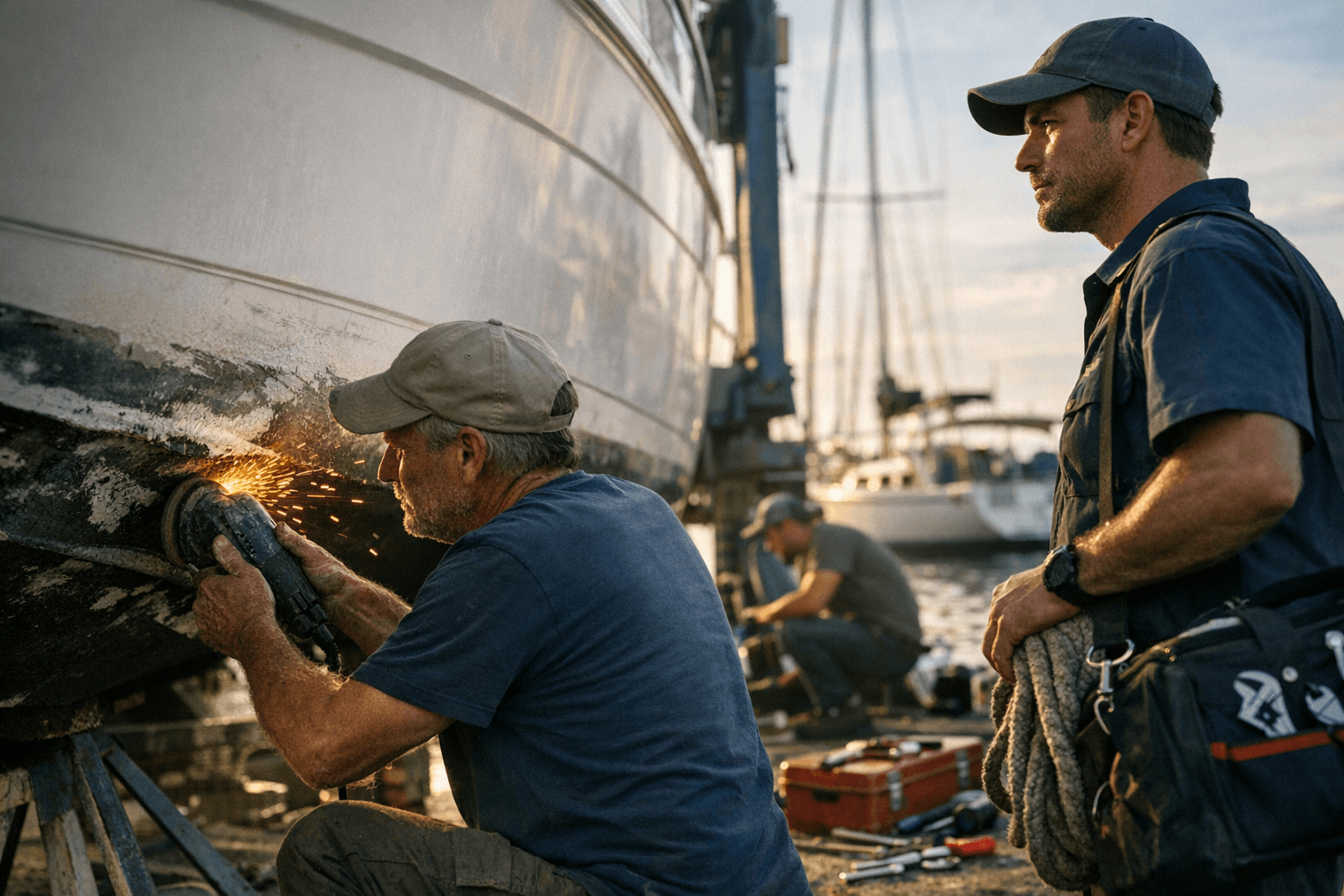
Cosmetic gelcoat and small fiberglass repairs cover surface prep, fairing, and blending. These are good owner projects for scratches, dings, and small voids; structural delamination, core rot, or load-bearing failures require professional structural repair.
Every chapter emphasizes essential tools, common failure modes, safety cautions - isolate power, secure fuel systems, and avoid confined-space hazards - and suggested spare parts to keep aboard. The practical value is immediate: this approach helps you decide whether a job is a straightforward owner task or needs escalation to protect safety and your insurance position.
For active boat owners, the takeaway is straightforward: master the basics listed here, keep a small kit and the right spares, and don’t let a DIY impulse trump structural or electrical red flags. Staying honest about what you can fix keeps boats afloat and weekends stress-free.
Know something we missed? Have a correction or additional information?
Submit a Tip