BoatUS shares tips for easier hard-to-reach boat repairs
The hardest boat repairs are usually access problems first. Open the hatches, light the space safely, and you can turn a cramped bilge job into something you can actually finish.
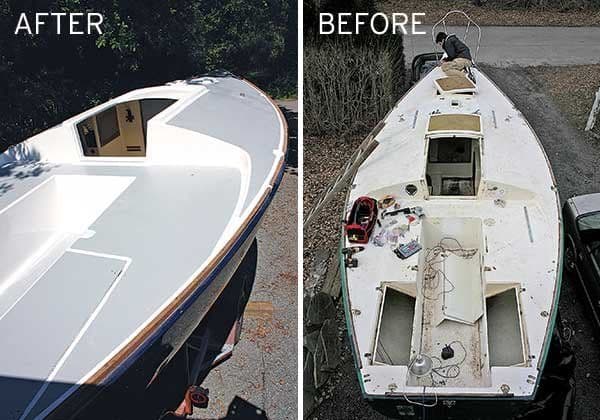
The repair itself is often the easy part. What eats your hands, your patience, and half a Saturday is the part you cannot reach, tucked behind a bulkhead, under a liner, or down in the bilge where a hose clamp or crimp connection might as well be on the moon.
Modern boats make that worse. Systems often go in before the deck goes on, and somewhere along the way access gets sacrificed to cleaner interior lines. That is why the smartest DIY move is not grabbing the wrench first. It is treating access, lighting, and body position as part of the repair plan.
Start with access, not the task
If you are staring at a tight compartment, begin by mapping the route in. Open every nearby hatch before you crawl in. If the job sits behind a framed opening, even removing the hatch frame can buy an extra inch of working room, and in a cramped space an inch is the difference between finishing the job and rounding off a fastener you will regret later.
That extra room matters because boat repairs in tight spaces are not just uncomfortable, they are inefficient. A simple connection under a liner can turn into a full-body contortion if you cannot get a straight shot at the part. Before you commit to a repair, ask the blunt question: can you actually see, reach, and turn the tool without fighting the boat at every step?
If the answer is no, you are not being fussy by stopping to improve access. You are saving time and reducing the odds of mistakes. Better access means fewer dropped parts, fewer half-tightened fittings, and less of the miserable trial-and-error that usually happens when you try to work blind.
Light the job like a proper workspace
Start with light. Open the surrounding hatches, put a shop light or flashlight inside the area, and wear a headlamp so both of your hands stay free. Once you try that combination in a dark bilge or behind a locker panel, the value is obvious.
The kind of light matters too. Belowdecks lighting should be ignition protected, because the U.S. Coast Guard’s rule at 33 CFR 183.410 is built around preventing an electrical component from igniting a propane gas and air mixture under specified conditions unless it is isolated from gasoline fuel sources and related fittings. In plain boat-owner language, heat and sparks do not belong in a tight compartment full of fuel vapor risks.
That is also why LED fixtures are the sensible choice belowdecks. They run cooler than hotter bulbs, which is exactly what you want near confined wiring, hoses, fiberglass, and anything else that can make a small mistake turn into a bigger problem. If your repair light is adding heat to an already cramped space, it is the wrong light.
A practical setup usually looks like this:
- Open the surrounding access points first.
- Put a flashlight or shop light where it actually illuminates the work, not just the deck.
- Wear a headlamp so the beam follows your eyes.
- Use ignition-protected lighting belowdecks.
- Choose LED whenever you can, because it runs cooler.
That combination sounds basic, but it changes the whole job. A good light setup stops you from working by feel and lets you catch the exact moment a hose clamp is seated, a wire is fully crimped, or a fitting is not quite where it should be.
Protect your body before you reach for the tool
Cramped repairs punish the body before they punish the hardware. If you are wedged under a liner with your neck twisted, your shoulder jammed against a stringer, and your wrist bent around a bulkhead, the odds of making a clean repair drop fast. The point is not to tough it out. The point is to arrange the space so you can move the tool, not the other way around.
That is why the order matters. Get the light right. Get the hatches open. Get the extra inch if a frame comes out cleanly. Then bring in the wrench, crimp tool, or screwdriver. When you reverse that order, you end up using brute force in a space that rewards patience.
This is also where a lot of mistakes start. A cramped hand position can make a hose clamp feel tight when it is not, or make a wiring connection seem secure when it has not actually seated. The more the boat forces you into a bad angle, the more likely you are to miss something small that becomes a repeat repair later.
Know when the “simple” job has crossed the line
There is a point where a repair stops being a maintenance job and becomes an access project. If you are considering cutting access panels just to reach a part that should have been serviceable in the first place, pause and look at the bigger picture. Some jobs are still worth doing yourself, but some are only realistic once you create proper access, and sometimes that means bringing in help.
That judgment call matters because access is not a side issue. It affects repair time, error rate, and whether the work is miserable enough to tempt you into shortcuts. On boats, shortcuts tend to show up later as leaks, loose connections, or hardware that is just a little too hard to reach the next time it fails.
BoatUS serves more than 740,000 members. ABYC has 84 standards and technical information reports, and it has been developing safety standards for boat design, construction, equipage, repair, and maintenance since 1954. Full access to ABYC’s comprehensive standards library is available only to members.
The U.S. Coast Guard publishes Boating Safety Circulars with advisories about boating hazards, defects and recalls, and rules and regulations for recreational boats. Its Recreational Boating Product Assurance Branch is responsible for developing and enforcing federal safety standards and investigating consumer complaints.
This article was produced by Prism’s automated news system from verified source data, official records, and press releases, then run through automated quality and moderation checks before publishing. The system is built and supervised by the people who set the standards it runs under. Read our full AI policy.
Did this article answer your question?