Budget catamaran build in Brittany becomes a community classroom
A 41-foot Wharram in Brittany is turning one budget build into a shared classroom for moisture, materials, and multihull know-how.
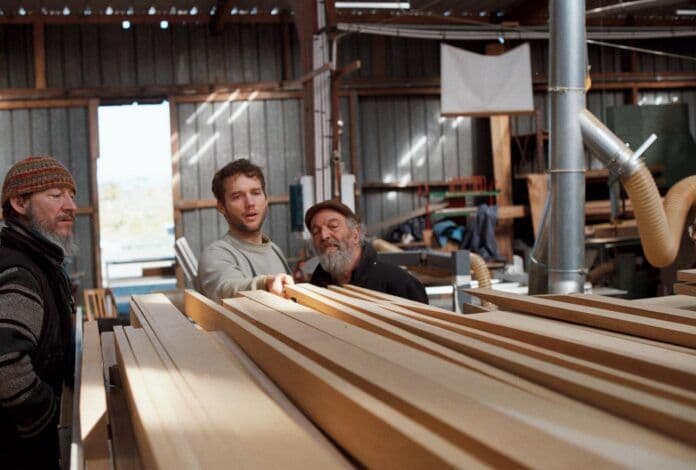
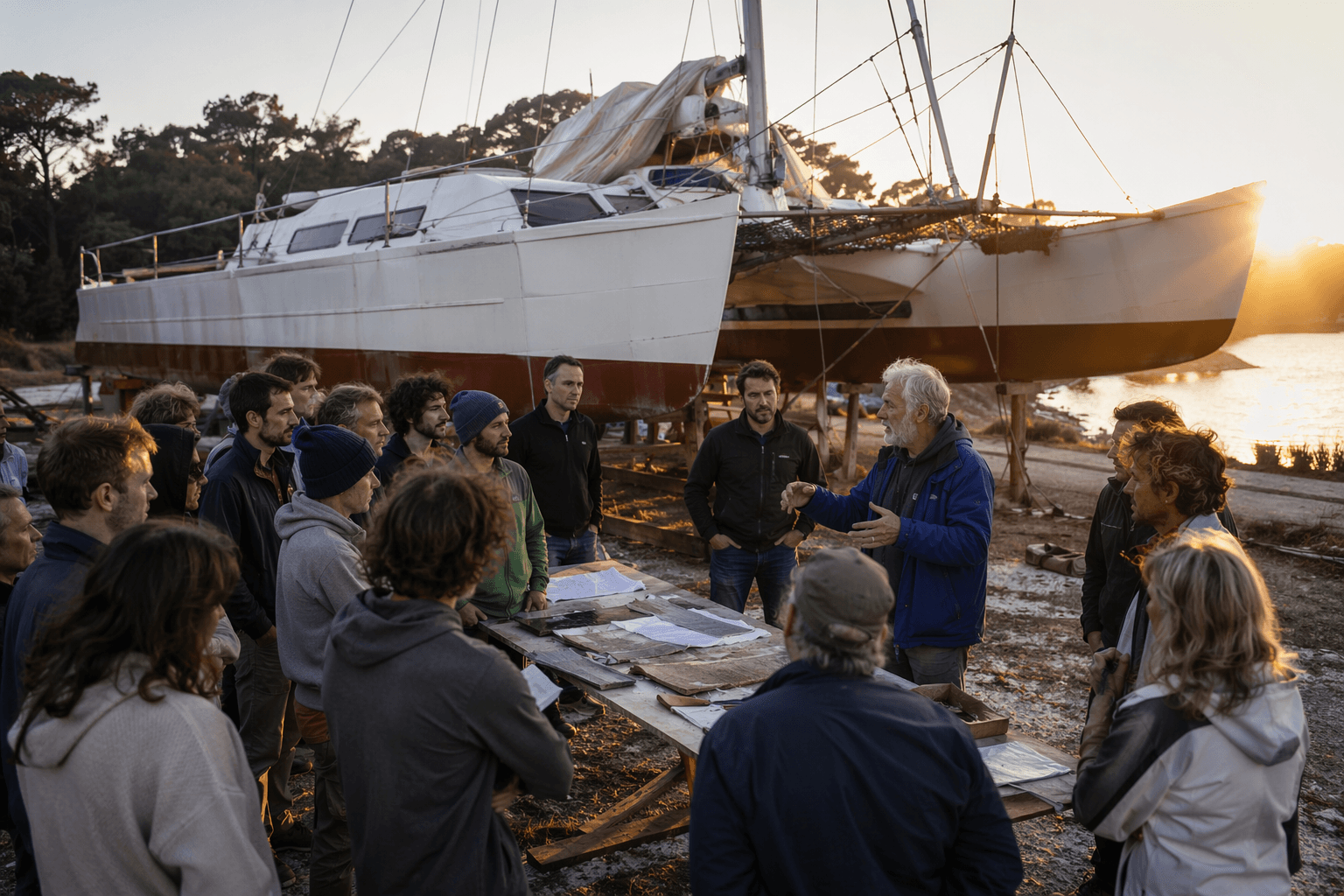
A 41-foot wooden Wharram Narai Mk IV is rising in a modest Brittany workshop, and the boat is already doing more than taking shape. With the door rarely closed, neighbors drifting in, volunteers lending hands, and shop-talk often carrying on later at the local pub, the build has become a working lesson in how boat knowledge gets passed from person to person. What started as a budget DIY catamaran project is now a live demonstration of why shared labor matters when the stakes are a full-size cruising boat.
A build that teaches as it goes
The project sits inside Floating Stories Lab, a non-profit association built around a community of volunteers and a 41-foot Polynesian-inspired wooden catamaran. Angie Richard and Remy are using the boat as a regenerative sailboat studio, a platform meant to support a future circumnavigation while also serving research, storytelling, and community engagement. That broader mission changes the feel of the build: it is not just about getting a hull together, but about creating a place where learning happens in public.
That public learning is the heart of the story. The project began as an effort to build on a budget, but it quickly turned into a hands-on education in moisture, materials, and the way collaboration changes the quality of the work. On a wooden multihull, humidity is not a footnote, it affects how stock behaves, how the shop operates, and how quickly decisions can be made. When more people can see the same problem, more mistakes get caught early and more specialized know-how gets spread around before it becomes expensive.
For anyone working through a refit, a hull repair, or a full scratch build, that is the first lesson worth borrowing: build your knowledge network as carefully as you build the boat itself. A collective project can slow the pace of a single task, but it can also reduce the risk of repeating a mistake across an entire structure.
Why the Narai Mk IV is such a useful platform
The Narai Mk IV is not a random experiment. James Wharram Designs describes it as a direct descendant of the 40-foot Rongo, the catamaran Wharram used for his pioneering North Atlantic voyage in 1959. Wharram had already designed his first offshore cruising catamaran, Tangaroa, in 1953, after reading about Polynesian double canoes and Éric de Bisschop’s voyage. By the time he died in 2021 at age 93, he had become one of the clearest names in amateur multihull building.
That lineage matters because the Narai Mk IV carries a very specific promise: more usable volume on the same length. James Wharram Designs says the Mk IV was developed after the Narai Mk I and II to create wider individual hulls and increase headroom by raising the decks to the gunwales, with cross beams set in beam troughs. In practice, that makes the design attractive to builders who want an ocean-capable boat without drifting into the complexity and cost of a conventional production cruiser.
Third-party sailboat data list the Narai Mk IV hull beam at about 7 feet, or 2.13 metres, and note that Narai variants have sailed with a wide range of rigs, including junks, Polynesian sprits, ketch, cutter, and gaff schooner setups. Wharram Designs also describes the boat as a sturdy ocean cruiser with many crossings and circumnavigations to its name. For a DIY builder, that combination is the draw: a recognizable, proven shape, but one that still leaves room for personal choices in rig and finish.
What other amateur builders can take from the Brittany workshop
The most useful part of the Brittany build is not the romance of the location. It is the working method. A project like this shows how collective labor can flatten the learning curve, especially on wood boats where one person rarely has every answer in hand. The moment a neighbor spots a problem in the shop or a volunteer brings a different skill set, the build becomes less isolated and more resilient.
The practical lessons are straightforward:
- Keep the shop open to conversation, because the informal questions are often where the useful corrections start.
- Treat moisture as a planning issue, not just a materials issue. On a wooden build, humidity changes how the job unfolds.
- Let the mission extend beyond the hull. Floating Stories Lab ties the boat to citizen science, creative media, and community-driven conservation, which gives the project a reason to keep moving when the work gets slow.
- Use the right design scale for the ambition. A 41-foot Wharram gives enough volume for ocean voyaging without abandoning the lower-cost, low-tech appeal that attracts many amateur builders in the first place.
That mix of practical discipline and shared purpose is what makes the project feel bigger than one boat. It turns construction into a workshop for confidence, not just carpentry.
Brittany as a live test site
The geographic anchor is just as specific as the boat. Floating Stories Lab says the catamaran is being built in Brittany, near Plouhinec and Plozovét, with a future launch planned from Port of Audierne. That gives the project a clear home base and a clear next step, which matters for a build meant to stay connected to a wider community.
The near-future milestone is already set, too. A Wharram gathering in Audierne on July 18 and 19, 2026 will include visits to the Floating Stories Lab build site. That makes the project visible beyond the shop floor and folds it into a broader network of Wharram builders and friends who understand the value of seeing a design in progress, not just in finished photographs.
A tradition built for sharing
Wharram’s legacy has always been tied to accessibility. His designs are repeatedly described as foundational to the amateur-build multihull movement because they offered seaworthy, lower-cost alternatives to more conventional yacht construction. That is exactly why the Brittany catamaran fits so neatly into the modern DIY conversation: it shows that a serious cruising boat can still be built around simplicity, self-sufficiency, and communal problem-solving.
In that sense, the boat in Brittany is doing what the best shop projects do. It is teaching the people around it how to build, how to adapt, and how to trust one another when the materials, the weather, and the timetable all demand attention at once. By the time it reaches Port of Audierne, the real value may be measured not only in the hull on the water, but in the network of skills that made the launch possible.
This article was produced by Prism’s automated news system from verified source data, official records, and press releases, then run through automated quality and moderation checks before publishing. The system is built and supervised by the people who set the standards it runs under. Read our full AI policy.
Know something we missed? Have a correction or additional information?
Submit a Tip