Budget-minded sailor rescues 1968 Morgan 24 for a full refit
Jim Kiley turned a $2,500 Morgan 24 into a usable cruiser by spending about $600 more, proving cheap boats stay cheap only when you do the refit work.
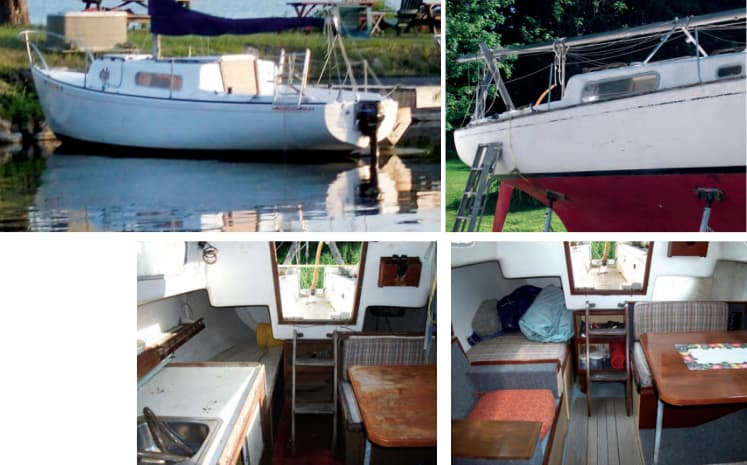
A bargain sailboat is never really a bargain until you know whether the savings are sitting in the hull or hiding in the labor. Jim Kiley’s 1968 Morgan 24 is a clean example of the rule: the boat was rough, the price was low, and the real payoff came because he and Ruth were willing to spend time, money, and sweat where it mattered. That is the difference between a smart project and a money pit.
Why the Morgan 24 was worth a closer look
Kiley and Ruth began sailing in 2005 and spent five years sailing an O’Day 22 out of Lansing, New York, on Cayuga Lake. That boat was a good first step, and it was also a reminder that comfort matters when you actually use a boat instead of just admiring it at the dock. The O’Day 22 was built from 1972 to 1983, with more than 3,159 produced, which is part of why used examples keep showing up as realistic stepping-stone boats for sailors who want to move up without jumping into a financial ditch.
But the O’Day’s narrow berths stopped working for Kiley’s 2-X frame, and that pushed the search toward something bigger. He spotted a 1968 Morgan 24 listed at $3,000 and negotiated it down to $2,500. That price alone does not make a boat smart, but it does buy a seat at the table if the hull, deck, and basic structure still have life in them.
The inspection told the real story
What Kiley found was not a polished bargain hiding in plain sight. It was the kind of neglected-but-promising boat that makes or breaks a refit: dull chalked gelcoat, stained cockpit benches, faded brightwork, a tired tiller, and a cabin that smelled like a boat that had sat closed up too long. The owner was honest about the condition, which matters, because honesty is often the cheapest part of buying an old boat.
Just as important, Kiley saw enough shape and structure in the hull to believe the Morgan could be saved. That is the line every buyer has to learn to draw. Cosmetic damage can be sanded, painted, cleaned, and replaced; structural problems are where the wallet starts bleeding. If the bones are good, grime is a project. If the bones are bad, grime is a warning.
Why the Morgan 24/25 made sense as a project boat
The Morgan 24/25 has the kind of proportions that make budget refits tempting. The boat is about 25 feet long, with an 8-foot beam and roughly 4,900 to 5,000 pounds of displacement. Practical Sailor describes it as offering the conveniences you want in a small cruiser, but notes that it can be a bit tender in heavy air because the ballast sits relatively high in the shallow keel.
That tradeoff is exactly why the model appeals to practical sailors. You get real small-cruiser livability without moving into the costs and systems complexity of a much larger boat, but you also have to respect its sailing manners. It is not the boat for someone who wants to ignore sail trim and brute-force everything with more canvas. It is a boat for someone who understands that a modest cruiser becomes a better boat when the owner is honest about its limits and willing to sail within them.
The design’s backstory helps explain the appeal. Morgan Yachts was founded by Charles Morgan in St. Petersburg, Florida, in 1962. Morgan sold the company in 1968, and the design later became commonly known as the Morgan 24/25 after the length settled at 24.92 feet. That history matters less as trivia than as context: you are looking at a proven small cruiser from an era when builders were still trying to pack a lot of boat into a manageable footprint.
What changed the boat from rough to usable
Kiley and Ruth did not rescue the boat by throwing money at every flaw. They worked through grime and interior issues, including a bulkhead repair that changed the cabin layout and even led to removing the counter in favor of seating. That is the kind of decision DIY refits live or die on: if a piece of furniture is making the cabin less usable, and the structure lets you rework it safely, simplify it.
Fresh paint then did what fresh paint does when the prep is honest. It made the Morgan look transformed compared with the day of purchase. That does not mean the boat became new, and it should not. What it means is that the refit respected the difference between fixing what was tired and pretending every old boat needs a showroom finish.
If you are thinking about your own project boat, this is the sequence that keeps you out of trouble:
1. Check the structure first, especially bulkheads, hull shape, and the feel of the interior around trouble spots.
2. Decide what is cosmetic and what is functional.
3. Spend money where failure would be expensive or unsafe.
4. Use labor to handle the rest, including cleaning, sanding, paint, and trim work.
That approach is what turns a rough little cruiser into a good one.
The cost math is the real lesson
Kiley says they bought the Morgan for $2,500, spent about $600 on materials, and received a $300 refund from the previous owner for the soggy bulkhead. That left them at roughly $3,000 out of pocket before counting their own labor and the favors they called in. For a sailboat with real cruising potential, that is not magic. It is disciplined buying, realistic expectations, and a willingness to earn the savings with work.
That is the part readers should remember when they start hunting for “cheap” boats. The bargain is not the purchase price. The bargain is the finished boat you get if the structure is honest, the size is manageable, and you are ready to do the dirty work yourself. Kiley’s Morgan 24 proves the point the hard way, and that is why it lands: the cheap boat was only cheap because he was willing to turn labor into value.
This article was produced by Prism’s automated news system from verified source data, official records, and press releases, then run through automated quality and moderation checks before publishing. The system is built and supervised by the people who set the standards it runs under. Read our full AI policy.
Did this article answer your question?