Build a cedar dorade, keep air moving, water out offshore
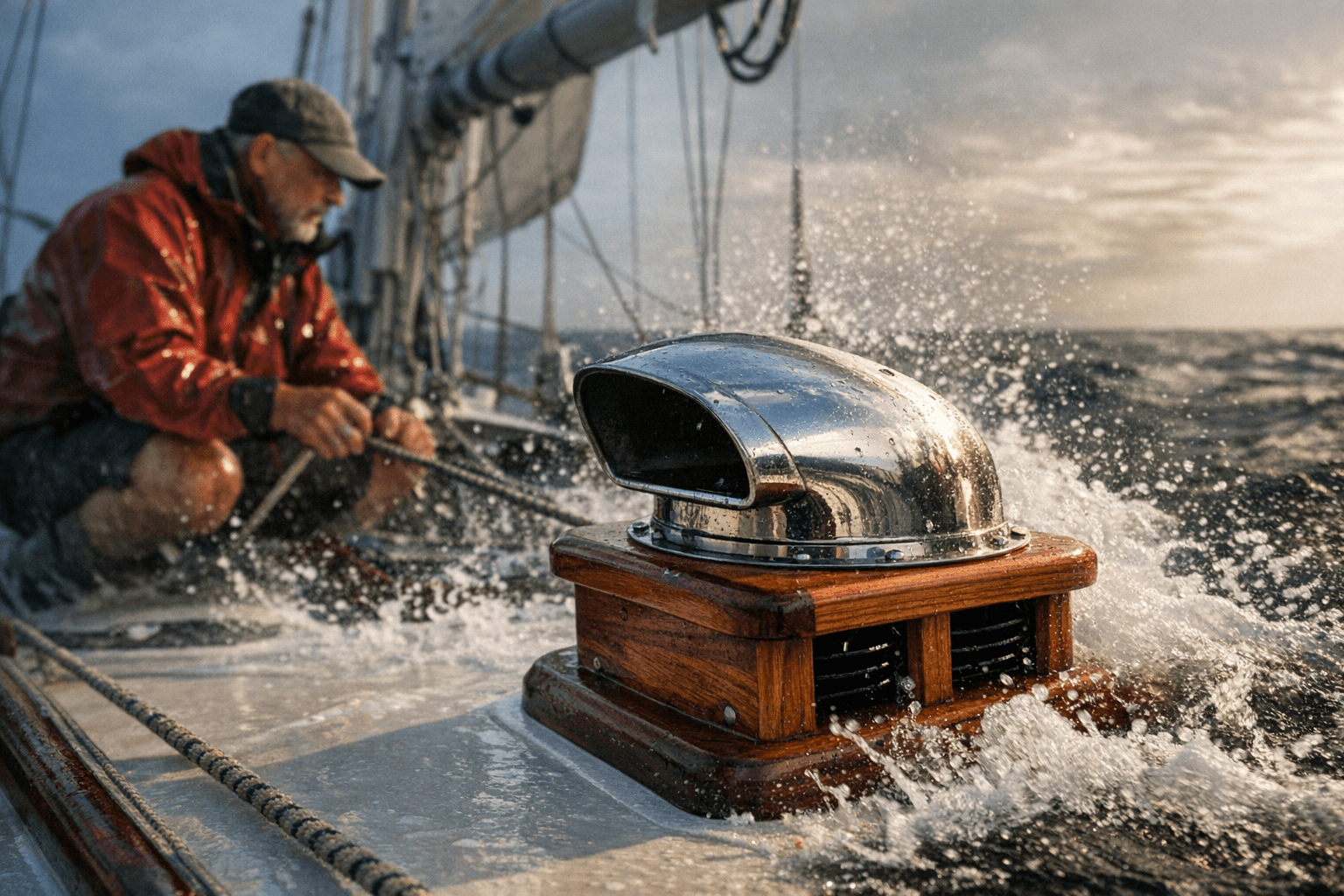
A dorade keeps a sealed-up boat livable offshore, moving real air when hatches stay shut and spray is coming aboard.
Why a dorade still earns its keep offshore
When the weather turns ugly and you have to dog the hatches down tight, the cabin can turn hot, stale, and miserable fast. That is where a dorade still makes sense: it gives you passive airflow without opening a direct path for rain and green water. Mushroom vents can help keep spray out, but they usually cannot move the same amount of air, and that difference matters when you are trying to keep a liveaboard cabin habitable on a rough passage.
The appeal is not luxury. It is seamanship. A properly built dorade helps cut condensation, reduce heat buildup, and keep the boat more livable when safety demands that everything be closed up. On long offshore stretches, or even during wet shoulder-season cruising, that is the difference between enduring a cabin and actually using it.
Why the dorade beats the simpler vent
A simple vent is easy to understand: small opening, less hardware, less work. The problem is that less work often means less performance, especially when the deck is taking spray and the boat is buried in wet weather. A dorade box creates a protected path for air to enter and exit while forcing water to change direction, which is exactly why it can keep the cabin breathing when the seas are trying to shut it down.
That makes the dorade a piece of practical gear, not decorative joinery. It serves the same liveaboard problem every time the hatches have to stay shut: how do you keep the air moving without inviting water below? The answer, if you want serious passive ventilation offshore, is to give the airflow a weatherproof maze to pass through instead of a straight shot into the cabin.
Where placement matters most
A dorade only works as well as its location. Put it where it can catch useful air, but not where it will be constantly hammered by boarding seas or buried under gear, lines, or dodgers that block the flow. The whole point is to keep the path open to air and closed to water, so placement has to respect both the wind and the way water actually travels across the deck.
You also want to think about the cabin spaces you are trying to serve. A dorade that feeds the hottest, least ventilated part of the boat will pay off every time the boat is buttoned up. That is why this is not just a deck fitting decision, it is a livability decision. The better the placement, the more you will notice less condensation, less heat, and less of that trapped, wet-air feeling that makes a boat feel smaller than it is.
Starting the build with western red cedar
The woodworking starts with western red cedar stock, and that is a strong clue that this is a real build, not a plastic add-on. Cedar is lightweight, workable, and a familiar choice for the kind of hands-on project that needs to balance structure, weather resistance, and manageable weight on deck. If you are building by hand, it gives you a material that is practical to shape and fair cleanly.
The dorade box itself has to be more than a pretty housing. It needs clean internal geometry, solid joinery, and enough robustness to survive offshore use without becoming a leak point. Cedar is a sensible starting point because it lets you build the form accurately, then finish and seal it well enough to stand up to the marine environment. The key is not just making it look good, but making it work every time the weather gets bad.
Building for airflow without making a leak path
The dorade has one job: admit air and reject water. Everything in the build should support that, from the shape of the box to the way the cap and openings are arranged. If you create easy paths for splash or standing water to get inside, you defeat the whole point and turn a ventilation upgrade into a maintenance problem.
That is why the build has to be treated like a small piece of deck hardware, not a furniture project. Pay attention to how the box sheds water, how it sits on the deck, and how any seams or fasteners are protected. The dorade should be the last place water wants to go, while air should find it easy to travel through. That balance is what separates a useful offshore fitting from a nice-looking one.
Teak, fiberglass, and modern composites
Material choice changes the character of the project. Teak brings the classic look and the familiarity of traditional boatbuilding, but it also brings weight, cost, and the expectation of careful maintenance. Fiberglass gives you a more molded, lower-maintenance approach, with the upside of easier repeatability and the downside of feeling less like a custom wooden piece of gear.
Modern composites sit somewhere in between the old and the new. They can be a smart option if you want durability and reduced upkeep, but they may not offer the same satisfaction as shaping a cedar dorade by hand. The right choice depends on whether you value traditional woodworking, low-maintenance performance, or a balance of both. For a sailor who wants the project to feel like part of the boat rather than a bolt-on accessory, cedar still has a lot going for it.
Protecting the deck, the core, and the cabin below
A dorade can only be an upgrade if it does not create a new problem at the deck. Any deck-mounted fitting deserves careful sealing and a clean interface with the deck structure, because a leak point in the wrong place can turn into a deck-core headache that is far worse than a hot cabin. The fastening and bedding need to be as thoughtful as the airflow path.
That is especially important on a boat that lives offshore. Water intrusion is never just a cosmetic issue when it reaches the deck core or migrates into the structure below. A dorade should solve the comfort problem without starting a structural one, which means the install has to be dry, deliberate, and built for the long haul. Get that right, and the reward is simple: cooler air in the cabin, less moisture on the bulkheads, and a boat that feels far less sealed-in when the weather is at its worst.
The payoff every time the hatches close
The real value of a cedar dorade shows up after the boat is buttoned up. You are no longer choosing between safety and comfort, because the cabin can keep breathing while the green water stays outside. That is why this old solution still belongs on serious cruising boats: it solves a real liveaboard problem with no power draw and no compromise on offshore practicality.
For a sailor dealing with hot cabins, wet decks, and long hours with everything shut down, a well-built dorade is not an accessory. It is part of making the boat work the way it should offshore, with air moving, water out, and the cabin still usable when the weather says otherwise.
This article was produced by Prism’s automated news system from verified source data, official records, and press releases, then run through automated quality and moderation checks before publishing. The system is built and supervised by the people who set the standards it runs under. Read our full AI policy.
Did this article answer your question?