How to Diagnose Tired Boat Seats Before Rebuilding Them
Cracked vinyl is only the warning. Wet foam, soft corners, and failing backing tell you when a patch becomes a rebuild.
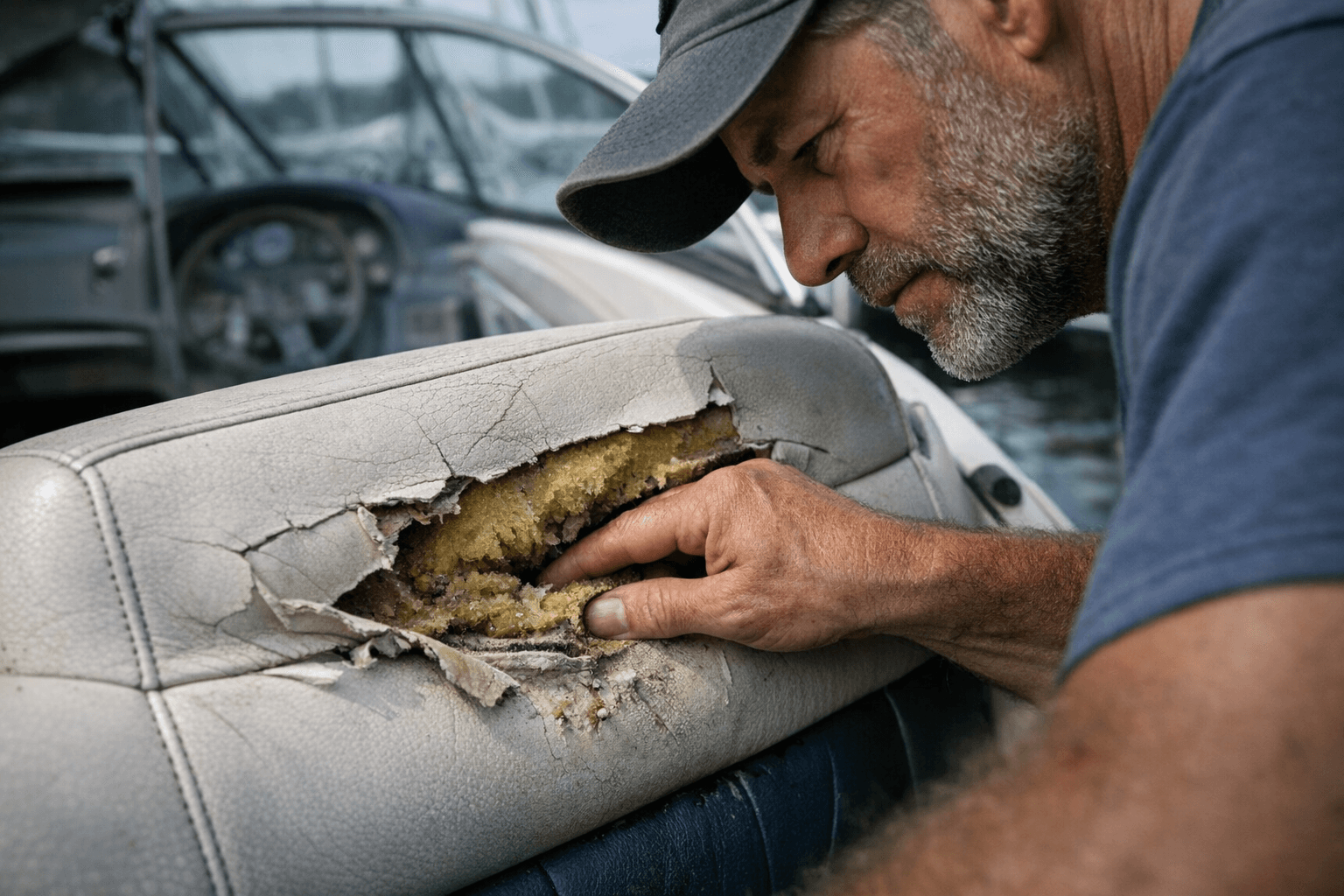
When a seat stops being cosmetic
The first clue is usually obvious: cracked vinyl, faded color, and a cushion that feels too soft in all the wrong places. That softness matters more than the cosmetic wear, because it often means water has lived in the foam long enough to flatten support, hold mildew, and start breaking down the seams and mounting points around it.
On a sailboat, that is the moment to stop thinking in terms of a quick recover and start thinking in terms of diagnosis. A tired cushion can need nothing more than fresh vinyl, but it can also need a new foam insert, a new backing board, or a complete rebuild. The difference changes the budget, the tool list, and how much of the seat you have to tear apart.
Read the failure, not just the cover
The smartest approach is to treat the seat like a system. Vinyl, foam, backing, and fasteners all age together, and the weakest part usually tells the bigger story. A small crack in the skin may still be cosmetic, but once moisture gets into the cushion, the damage spreads into the foam, the seams stay wet longer, and the structure underneath starts to lose shape.
That is why the best check is hands-on. Press every corner and every center section, not just the most obvious bad spot. Weak foam often shows up where people step, pivot, and sit down hardest, so a cushion can look acceptable at the edges and still be failing right where the load lands.
A simple inspection can usually separate four conditions:
- The vinyl is worn, but the foam still springs back
- The foam has absorbed water and lost its shape
- The backing board is soft, warped, or pulling away
- The whole assembly is too far gone and needs a full rebuild
Once you see which of those you are dealing with, the job gets much easier to control.
Repair, replace, or rebuild
Fresh vinyl alone makes sense when the cushion is still firm and the backing is solid. That is the least-skill, best-value path because you keep the original structure and solve the visible wear. If the foam is tired but the shell is sound, a new foam insert is the better move, especially if the old cushion has gone flat or holds water after every wet ride.
The next step up is a new backing board. That matters when the support layer has started to soften or the hardware has stopped holding the seat in the shape it needs. At that point, a new cover over bad structure just hides the problem for a while.
A complete rebuild is the right call when the damage has moved past the skin and into the cushion’s core. That is the point where the seat is no longer just ugly. It is failing as a seat, which means the fix has to restore support, drainage, and attachment strength, not just appearance.
Boat owners like this job because it breaks into clear stages: diagnose, remove, pattern, build, install, and protect. That sequence keeps the project from turning into guesswork, and it lets you inspect hidden damage before paying someone else to uncover it for you.
The material choices that decide how long it lasts
Marine upholstery lives under constant stress from UV rays, moisture, sunscreen, dirt, and mildew. BoatUS notes that sunlight can pull plasticizers out of vinyl over time, which is one reason cushions on deck fail faster than owners expect. It also recommends regular care with products such as 303 Aerospace Protectant, and it warns that bleach can break down vinyl and stitching over time.
That care matters, but so does the replacement material itself. West Marine product listings for replacement seating highlight the parts that solve the common failure points: UV- and mildew-treated marine-grade vinyl, high-compression foam, and mesh underlay to expel moisture. Those features are not marketing fluff. They are the difference between a cushion that dries out and one that stays damp long enough to smell, sag, and split again.
Foam choice is just as important as the cover. Sailrite’s marine upholstery guidance points sailors toward closed-cell foam for sailboat cockpit cushions that face heavy water exposure. That makes sense when spray, rain, and boarding water are part of daily life, because closed-cell foam resists soaking up the kind of water that ruins support and stretches dry time.
The other side of the decision is comfort. Softer marine foams have a different feel and different drainage behavior, so the right answer depends on where the cushion lives and how much water it sees. In a dry, protected cabin seat, comfort may lead the decision. In an exposed cockpit, water resistance and quick drying usually win.
Why the repair is really about comfort and structure
A good cockpit cushion does more than look tidy. It keeps you planted, dries fast, resists mildew, and holds its shape when the boat is moving under you. Once foam stays wet, seams and stitching take the punishment, and the cushion stops being a comfort upgrade and starts becoming a maintenance problem.
That is why this kind of project belongs in the same conversation as the rest of routine marine upkeep. The National Marine Manufacturers Association says the 2024 U.S. Recreational Boating Statistical Abstract covers 11.8 million registered and documented boats, more than three-quarters of the U.S. recreational fleet. At that scale, tired cushions are not a niche restoration issue. They are a normal ownership problem that touches a huge share of the fleet.
Seen that way, the best value is not the cheapest cover. It is the fix that restores support, keeps water out of the foam, and uses materials that can survive the sun, spray, and mildew cycle that comes with real boating. If the seat still has a solid core, patch it. If the foam has gone soft or waterlogged, replace it before the damage spreads. If the backing has failed, rebuild the structure and give the new upholstery something worth covering.
This article was produced by Prism’s automated news system from verified source data, official records, and press releases, then run through automated quality and moderation checks before publishing. The system is built and supervised by the people who set the standards it runs under. Read our full AI policy.
Did this article answer your question?