Boat cover repair guide helps owners decide patch or replace early
A small tear can stay cheap only if you catch it before UV, chafe, and wet seams turn the cover into scrap.
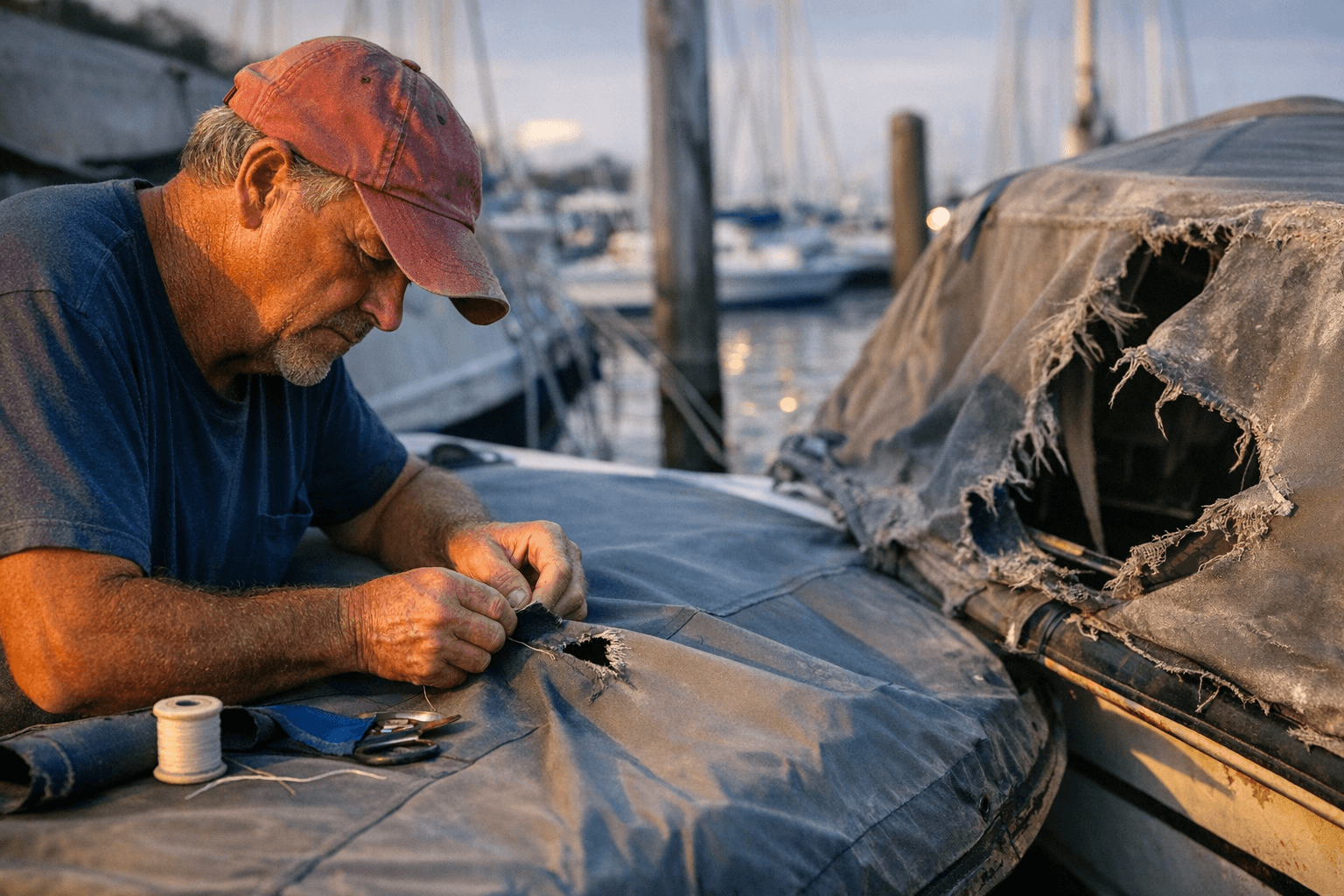
The first rip is the warning
A boat cover is not just a sheet of fabric. It is the layer that keeps vinyl, carpet, electronics, and the finish underneath out of the weather, so a tear near a windshield corner or a failed seam after trailering is not a cosmetic nuisance. Left alone, that little opening lets the cover flap, chafe, and spread damage into the panels around it, which is how a repair turns into a replacement bill.
That is the real value of Boat Juice’s repair guide: it treats the cover as a maintenance item with direct resale and upkeep consequences. Covered boats tend to hold up better, and the case for early repair gets stronger when you remember that Better Boat says some figures put fabric and upholstery repairs at up to 30% of annual boat maintenance budgets. On a cruising boat, that is not pocket change.
Inspect it flat before you decide anything
The easiest mistake is judging the cover while it is still stretched over the boat. The guide’s advice is simple and right on the money: lay it out flat on a driveway, garage floor, or table, then look for the weak spots that disappear when the fabric is bunched up under tension. Hidden damage shows up more clearly when the cover is relaxed.
Start with the places that work hardest. Windshield corners, tower cutouts, snap lines, and any spot that rubs, stretches, or gets yanked during ramp use are where failure usually starts. Those are also the points most likely to grow from one rip to a shredded panel if you keep running the cover as-is.
Patch, restitch, or retire it
The decision point is whether the cover is still structurally sound enough to save. If the fabric is healthy and the damage is localized, patching and re-stitching make sense. If the material is brittle, shrunken, or failing in multiple places, you are usually throwing time at a cover that has already given up.
That is the part many owners want to dodge, because a cover can look fixable from ten feet away and still be done. Common failure modes include tearing, seam separation, UV damage, mildew buildup, and broken fasteners. Sailrite’s canvas repair tutorials line up with that reality, covering rips and tears, restitching seams, replacing old zippers, dealing with hook-and-loop closures, and fixing failed grommets. In other words, the useful repair work is often structural, not decorative.
What actually holds up in marine use
Marine canvas lives a rough life. Sun, wind, moisture, and salt all work on the same cover at once, which is why a quick dockside fix can fool you and still fail the first time the boat moves. Boat Ed’s reminder matters here: ultraviolet radiation breaks down synthetic materials over time, so even a cover that still looks decent can be aging from the inside out.
The water side matters too. Yachting’s boat-canvas guidance notes that covers that become permeable or stay wet can dry slowly and become more vulnerable to algae and mold. That is why cleaning and water-repellency checks belong in the same conversation as sewing repairs. If the fabric stays damp, gets dirty, and leaks, you are not just dealing with a hole. You are creating the conditions for a cover that degrades faster every season.
The cheap fix versus the real fix
There is a big difference between making a cover presentable at the dock and making it survive another season on the water. A small patch and proper restitching can be a smart save when the fabric still has life in it. Replacing broken snaps, zippers, hook-and-loop, and failed grommets can also extend serviceable life when the base material is still sound.
Once the fabric is brittle, sun-beaten, or failing along several seams, the honest answer is replacement. At that stage, every hour spent stitching one more corner is likely buying a short reprieve, not a durable repair. That is why the guide’s sequence is so practical: inspect, assess, patch if the structure is healthy, or replace if the cover is too far gone.
Why this is more than a canvas problem
The broader boating world treats maintenance this way for a reason. The American Boat & Yacht Council says it has developed safety standards for boat design, construction, repair, and maintenance since 1954, which is a reminder that upkeep is part of safety culture, not a separate hobby. A failed cover does not belong in the same category as a structural hull issue, but it sits in the same chain of prevention: small neglect becomes bigger damage.
Sailrite puts the owner’s side of that argument plainly by treating canvas repair as worthwhile because boat canvas is such a large investment of time and money. That is the core lesson here. A torn cover is only cheap if you catch it early, judge it honestly, and use repair where repair still has a real chance. Once the fabric has gone brittle or started failing in multiple places, replacement stops being an overreaction and starts being the least expensive way to protect the boat underneath.
This article was produced by Prism’s automated news system from verified source data, official records, and press releases, then run through automated quality and moderation checks before publishing. The system is built and supervised by the people who set the standards it runs under. Read our full AI policy.
Did this article answer your question?