Canvas Covers Protect Fixed Boat Windows from UV Damage
Fixed windows don’t need to wait for cloudy, crazed failure. A simple Sunbrella cover can buy years of protection and cost far less than replacing weakened plastic later.
Why fixed windows are worth covering before the damage starts
Sunlight is brutal on fixed acrylic and polycarbonate windows. Once the surface starts to haze and craze, polishing compounds cannot truly bring the plastic back, and what looks cosmetic can quickly become structural weakness. That is the expensive trap Drew Frye’s maintenance piece is trying to help you avoid: keep the sun off the window now, or pay for a much bigger job later.
The logic is straightforward. Practical Sailor notes that UV exposure can damage acrylic and polycarbonate so deeply that deep crazing cannot be reversed, and that clear plastic windows often still reach replacement territory after about 15 to 25 years. Acrylic generally holds up better against UV than polycarbonate, but neither material is immune when it sits exposed on deck season after season. For a cruising boat, especially one living in tropical or high-UV conditions, prevention is the cheaper and safer path.
What the cover solves, and what it does not
A canvas cover does not magically restore a damaged pane. What it does is slow the chain of failure before the window becomes cloudy, brittle, and hard to trust in service. That matters because a fixed window is not just a viewing panel, it is part of the boat’s weather protection and, in some cases, a component that has to stand up to impact.
The key distinction here is between delaying deterioration and repairing it. Good Old Boat’s later “Window Treatments” coverage makes the same point in a different context: when it looked at vinyl enclosure windows, a Sunbrella cover was the only thing it found that dramatically and effectively delayed deterioration, but a bad cover that rubs or flaps can also cause damage. In other words, a cover has to fit and behave well. If it moves around and grinds against the surface, it can become part of the problem.
Why Frye’s design matters to a DIY sailor
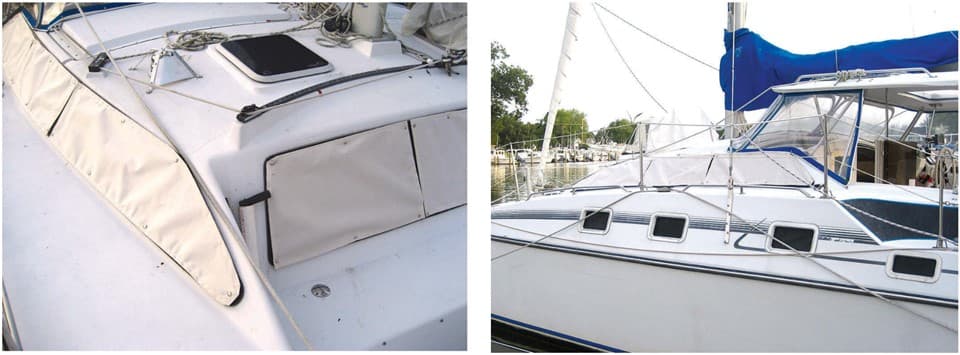
Frye’s approach is attractive because it protects the window without forcing permanent changes to the cabin side. Instead of drilling fresh holes, he works with the existing perimeter screw pattern and swaps selected fasteners for male snap screws. That gives the cover secure attachment points while leaving the window assembly essentially unchanged, which is exactly the kind of reversible modification many owners want on a cruising boat.
This is where the preventive-cost argument becomes practical. Replacing a damaged fixed window usually means more time, more labor, and more risk than making a well-fitted cover. If the plastic has already been weakened by UV, the job is no longer a simple cosmetic improvement. It becomes a maintenance event that can escalate into a more invasive repair, and that is the outcome a cover is meant to postpone.
Material choice: why Sunbrella is the obvious canvas here
For this kind of cover, fabric choice is not just about appearance. Sunbrella says its marine fabrics are built for UV protection, fade resistance, mold and mildew resistance, and cleanability. Those are exactly the traits you want on a piece that will live in full sun, take spray, and get handled regularly.
That also explains why the article’s material selection is so sensible. A cover meant to protect a vulnerable window has to survive the same environment that is attacking the plastic. If the fabric itself breaks down fast, you have only traded one maintenance problem for another. Sunbrella gives the cover enough durability to make the project worth doing.
How the fit comes together
The pattern-making method is simple, which is part of its appeal. Frye uses freezer paper to build templates, presses through the paper to mark the fastener locations, traces the window edge, labels each piece, and adds extra material to account for shrinkage. That last part matters because once a cover is sewn and installed, you do not want it coming up short after the fabric settles.
He also accounts for the realities of sewing marine fabric. Because he is working with Sunbrella, he allows for shrinkage and hems the edges to give the snap area enough thickness to hold securely. The use of Tenera thread adds long-service life to the build, which matters when the whole point is to make a cover that outlasts a season or two and continues protecting the window year after year.
Attachment method: secure, reversible, and low-risk
The attachment strategy is one of the strongest parts of the project. By using the existing perimeter screw pattern, the cover avoids the common mistake of adding new holes where water can enter or where future repairs become more complicated. Replacing selected fasteners with male snap screws creates a clean attachment path that is easy to understand and easy to service later.
That makes the cover especially well suited to owners who want protection without committing to a permanent alteration. It is a practical compromise between leaving the window exposed and rebuilding the opening. In maintenance terms, that is the sweet spot: enough security to keep the cover in place, but enough reversibility to preserve the boat.
Why labeling and repetition matter on board
One detail that sounds small but pays off fast is labeling each cover. On deck, several windows can look nearly identical, especially once the covers are off and stowed. Without clear labeling, the installer ends up wasting time test-fitting pieces that almost fit but not quite.
This is one of those job-site realities that separates a tidy DIY project from a frustrating one. Good patterns, marked fasteners, and labeled pieces reduce mistakes and make the system usable for the long haul. The best maintenance solution is the one you will actually put on and take off regularly.
Where this fits in the larger maintenance philosophy
Good Old Boat framed the piece in its issue preview as a “Useful modifications” article, which is exactly right. This is not cosmetic trim work. It is a protective retrofit that preserves expensive gear by stopping a predictable failure mode before it turns structural.
ABYC’s H-3 standard covers exterior windows, windshields, hatches, doors, portlights, and glazing materials, and the American Boat & Yacht Council says it has been developing safety standards for boat design, construction, repair, and maintenance since 1954. That broader standards context reinforces the same lesson Frye is making in canvas and thread: clear plastic on a boat is a maintenance item, not a set-and-forget feature.
The best time to cover a fixed window is before the haze, crazing, and weakening force your hand. Once UV damage has taken hold, the fix becomes slower, more expensive, and less satisfying. A well-made Sunbrella cover is a small project that can save a major replacement job, and on a cruising boat that is money well spent.
This article was produced by Prism’s automated news system from verified source data, official records, and press releases, then run through automated quality and moderation checks before publishing. The system is built and supervised by the people who set the standards it runs under. Read our full AI policy.
Did this article answer your question?