Capiz Bantay Dagat Gets New 40-Foot Fiberglass Patrol Boat for Coastal Waters
Capiz's Bantay Dagat received a 40-ft fiberglass patrol boat on March 27, and the construction choices behind it are a working masterclass for DIY sailors building gear that lasts.
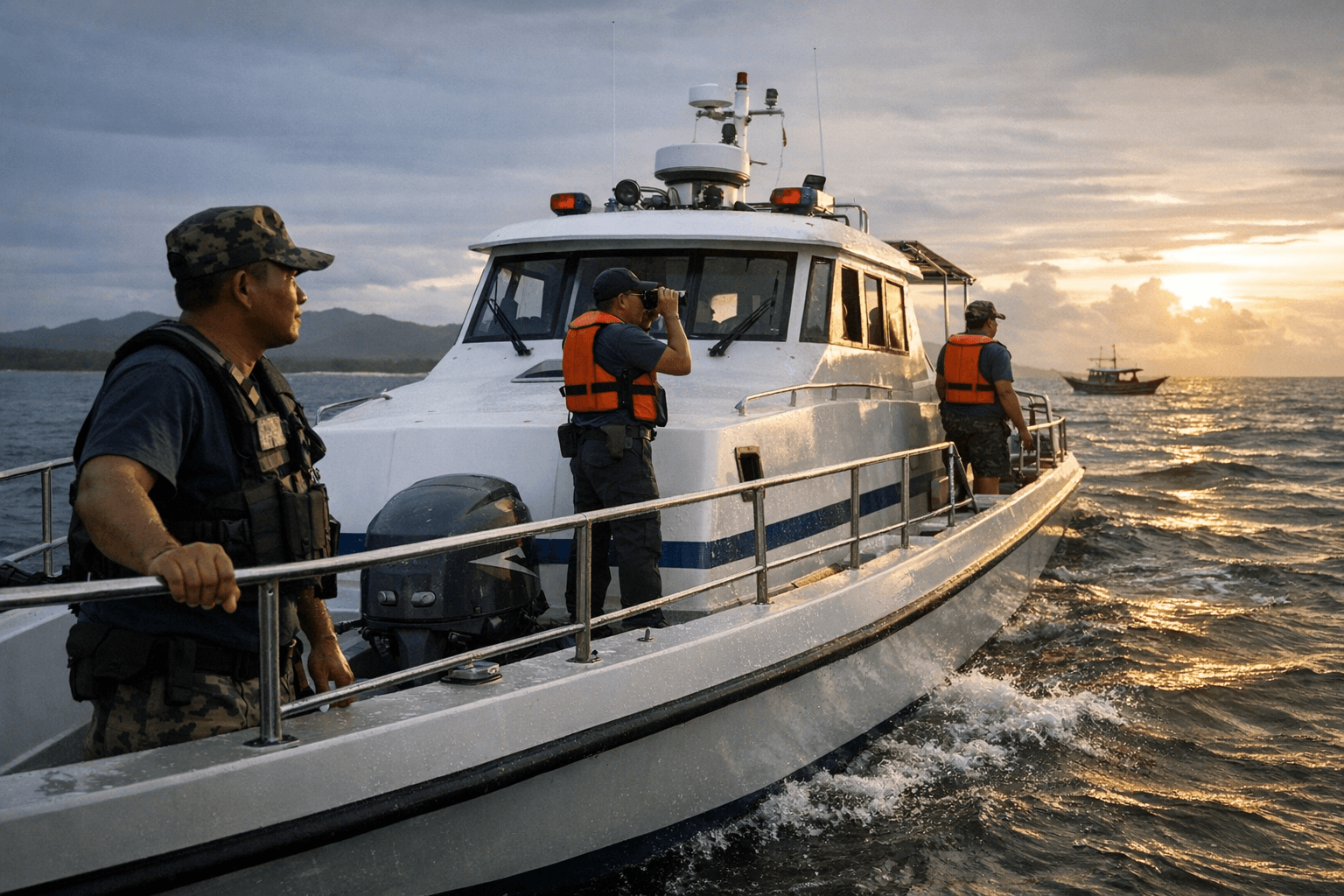
Fiberglass is a forgiving material until you treat a structural deck fitting like a cosmetic detail, and the resulting pulled-out cleat or fractured hull section reminds every working-boat builder that this medium rewards the disciplined and punishes shortcuts. The 40-foot fiberglass patrol boat formally handed over to the Capiz Provincial Bantay Dagat unit on March 27 at the Bureau of Fisheries and Aquatic Resources Field Office VI in Pototan, Iloilo, is the kind of purpose-built vessel that crystallises exactly what separates a hull designed to absorb punishment from one that merely looks capable at the dock.
The acquisition was coordinated through a collaborative initiative led by Second District Congresswoman Jane T. Castro and Dumalag Mayor Maria Concepcion "Khuku" Castro in close partnership with BFAR. The turnover ceremony drew key regional officials and Bantay Dagat coordinators and marked the commissioning of the vessel for active patrol operations across Capiz's Second District, with municipalities such as Ivisan among the areas the boat will serve. The multi-agency approach, combining the congressional office, local government, and BFAR, underscored the seriousness of the mandate: strengthened coastal surveillance and active enforcement against illegal fishing.
For context, roughly one-fifth of all fisheries violations documented in the Western Visayas region involve gear incursions into municipal waters, the kind of activity that also snaps prop shafts, tangles running gear, and leaves unlit nets across night-sailing routes. More patrol coverage directly reduces those hazards for every small-boat operator, cruising sailor, and volunteer rescue crew working those same coastal corridors.
The choice of fiberglass for a 40-foot patrol hull is itself a statement worth unpacking. Aluminum is faster to weld and lighter per foot, but fiberglass wins on total lifecycle cost in a tropical maritime environment where corrosion control around fasteners and fittings becomes a relentless maintenance item. A glass hull that is properly laid up and post-cured can be repaired in the field with materials available at any chandlery: grind back to clean laminate, wet out biaxial cloth, roll out air bubbles, and fair with epoxy filler. No welding rig, no certified welder, no waiting for a fabrication shop with the right aluminum alloy in stock. That repairability calculus drives Bantay Dagat units, regional coast guard auxiliaries, and working-boat yards across the Philippines toward fiberglass repeatedly, and it is the same logic that makes glass the default choice for serious DIY passage-making builds.
Where a patrol boat like this one earns its construction credentials is in the laminate schedule at high-stress junctions. A 40-footer running daily patrols in chop takes repetitive slamming loads at the bow sections and torsional stress through the cockpit coaming. Standard hand-layup with woven roving and a mat core is adequate for a weekend daysailer but falls short for a vessel that may be accelerating hard, stopping fast, and taking beam seas in sustained operations. Patrol hulls in this size range typically run a heavier biaxial or triaxial schedule in the forward third of the hull, with additional tabbing at every bulkhead-to-hull joint. DIY builders taking notes here should resist the temptation to treat the laminate schedule as uniform throughout the hull: double up at the stem, reinforce the keel floors to at least twice the standard thickness, and add a sacrificial outer layer in the bow sections where grounding contact is most likely.
Rub rails on a working boat deserve the same engineering respect as any structural component. A hollow vinyl rub rail stapled to the sheer with stainless screws will last exactly as long as it takes a dock cleat to find the gap. Patrol boats running daily contact with concrete quays, fishing vessel fenders, and rocky shorelines need rub rail systems that are through-bolted, not screw-fastened, with a backing plate or continuous backing strip on the inside of the hull. The rail itself should be deep enough to absorb impact before the hull laminate takes it. For DIY cruising builds, upgrading from factory rub rails to through-bolted aluminum extrusion with a replaceable rubber insert is a one-weekend job that pays dividends every time a marina approach goes slightly wrong.
Deck hardware backing is where many otherwise well-built fiberglass boats fail under real working conditions. Every cleat, pad eye, mooring bitt, and stanchion base on a patrol vessel carries the potential to become a stress riser if it is bedded directly onto the deck skin without load-spreading reinforcement. The standard fix, a plywood or G10 fiberglass backer plate bonded to the underside of the deck before the fitting is bolted through, distributes the load across a wider area of laminate and dramatically reduces the chance of a pulled fitting taking a core sample of the deck with it. On deck layouts with heavy anchor rode handling or tow-line cleats, stainless backing plates welded to a steel subframe inside the hull provide the highest confidence. DIY sailors fitting new hardware to aging fiberglass decks should budget time to open up each fitting location, inspect the core for moisture intrusion, replace any wet balsa or foam, and install proper backing before refastening.
Non-skid texture on a patrol deck is not a cosmetic finish. Crew moving quickly in wet conditions, handling lines at speed, or climbing back aboard after a water entry need a surface that grips regardless of whether they are in deck shoes or bare feet. Molded-in non-skid patterns from the original gelcoat layup degrade over years of UV exposure and abrasive cleaning. Painted-on non-skid using epoxy base with aggregate rolled in provides a renewable surface that can be touched up section by section as it wears, without a full repaint. Patrol vessels and cruising boats used for offshore work benefit from non-skid extended further toward the centerline than builders typically provide from the factory, covering the areas crew actually stand on during line handling rather than just the aesthetic margins around the cockpit sole.
Compartmentation in a working hull serves two functions: buoyancy reserve and operational organization. A 40-foot patrol boat carrying fuel, safety gear, boarding equipment, and crew in varied sea states benefits from multiple sealed watertight compartments fore and aft that maintain positive buoyancy even with a flooded cockpit or an open hatch taking water in a boarding evolution. For DIY builders, installing foam-filled watertight compartments in the bow sections and under side decks adds meaningful insurance without significant weight penalty. Monthly inspection of those compartment access hatches, checking gaskets, checking hinge fasteners, and probing for softness in adjacent deck sections that might indicate water migration into core material, belongs on any storm-ready checklist.
The Capiz patrol boat's deployment to waters around Ivisan and the broader Second District coastline means it will accumulate hull hours quickly. Gelcoat repairs will be part of its maintenance reality within the first season: surface crazing from UV exposure, osmotic blistering below the waterline if the hull was not barrier-coated before launch, and impact chips from debris and dock contact. The repair sequence for all three is well within DIY capability. Crazing requires grinding to sound laminate, filling with fairing compound, and respraying matched gelcoat. Osmotic blisters require opening, drying the hull over weeks to months depending on severity, and sealing with multiple coats of epoxy barrier coat before antifouling goes back on. Neither is a boatyard-only job; both reward patience and preparation over speed.
Congresswoman Castro and Mayor Castro's coordination with BFAR to put this vessel into active service represents the kind of infrastructure investment that coastal fishing communities and recreational sailing populations share a stake in. Safer, better-patrolled waters around Capiz's Second District reduce illegal gear in the water, which means fewer entanglement hazards and more predictable conditions for every vessel operating in those passages. That is a practical outcome with real navigational value, and the fiberglass hull carrying that mission ashore every evening is a reminder that material choices and construction discipline made at the laminating table determine how much of that value actually reaches the water.
This article was produced by Prism’s automated news system from verified source data, official records, and press releases, then run through automated quality and moderation checks before publishing. The system is built and supervised by the people who set the standards it runs under. Read our full AI policy.
Did this article answer your question?