DIY Sailor Replaces Rotted Boat Floor and Rebuilds Rear Bench With Fiberglass
A rotted boat floor is a structural emergency. Len's fiberglass floor replacement and rear bench rebuild proves DIYers can fix it right the first time.

A fiberglass hull is forgiving material. Until you step through the floor.
That's not hyperbole. A soft, spongy sole isn't a cosmetic inconvenience; it's a structural failure in progress. When a boater named Len tackled a full floor replacement and rear bench rebuild on his aging vessel, the project became one of the most instructive customer spotlights Fiberglass Warehouse has published. The repair is a textbook example of what separates a sailor who gets another decade out of a boat from one who patches and prays until the problem can't be ignored.
Why the Floor Matters More Than You Think
Most people underestimate what a boat floor actually does. It's not just a walking surface; it's a structural component that distributes compressive and shear loads across the hull. When that floor rots, those loads have nowhere to go. The moisture that caused the rot continues migrating into the surrounding laminate, accelerating failure in adjacent structures.
Len's project was described as a "major undertaking" from the outset, and that framing is deliberate. A rotted floor isn't a weekend patch job. It requires the same systematic approach you'd apply to any structural repair: full diagnosis, proper material selection, methodical lamination, and a finish that locks water out permanently.
The distinction between structural and cosmetic repair is critical here. A cosmetic fix, a layer of gelcoat over a soft spot, might look correct for a season. But if the core beneath it hasn't been addressed, the problem is still progressing under the surface. Len's project went all the way down to the core, which is the only approach that restores the load paths the structure depends on.
Removing the Rotted Core
The first phase of any floor replacement is demolition, and it's the phase most DIYers underestimate. Rotted plywood core has to come out completely. Any material left behind that holds moisture will compromise the bond of the new laminate and restart the degradation cycle.
In Len's case, the removal phase exposed the full extent of the damage, a reality common to these projects. Once you pull back the old skin, the rot often extends further than the soft spots suggested from above. Budget extra time here. Rushing the removal to get to the building phase is one of the most common mistakes in floor renovation, and it's where many DIY repairs fail years later.
Choosing the Right Core Material
The choice of replacement core is where material science and practical boatbuilding intersect. Fiberglass Warehouse positions closed-cell foam as the preferred option when rot resistance is the primary concern, and for good reason. Unlike marine plywood, closed-cell foam physically cannot absorb water. If the bond line ever develops a micro-crack and moisture finds its way in, foam doesn't rot. It may compress or delaminate, but it won't turn into the soft, saturated mass that caused the original failure.
Marine plywood remains a viable option in specific applications, particularly where point loads are high and you need the mechanical fastening capacity of wood grain. But it must be encapsulated completely: every edge, every fastener hole, every penetration sealed with resin before laminate goes over the top. A single unsealed edge in contact with the bilge is enough to restart the cycle.
High-density composite cores are a third option, particularly useful under hardware mounting points or where through-bolts carry significant loads. The key principle across all three materials is the same: the core must be compatible with the resin system, properly prepared, and fully encapsulated by the fiberglass skins.
Laminating New Skins
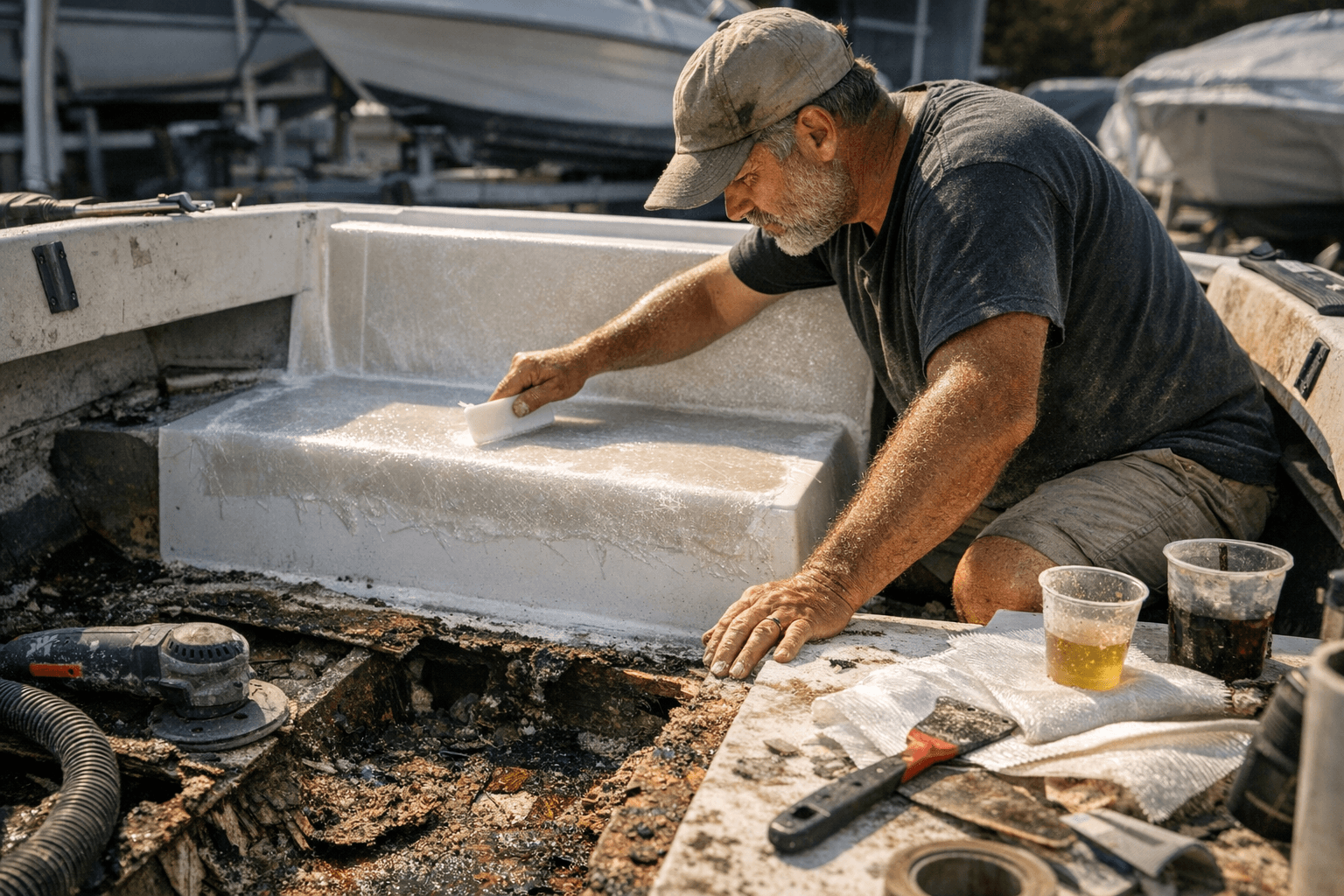
Once the core is fitted and bonded in place, the lamination work begins. This is the phase that determines the structural outcome of the repair. Resin-to-hardener ratios must be accurate; an off-ratio mix won't fully cure, and uncured resin in a structural laminate creates soft spots that will telegraph through the finished surface over time.
Fabric selection and layup schedule matter just as much. The number of layers needs to match or exceed the original laminate specification. Under-laminating to save material or time produces a floor that flexes under load, which will eventually crack the gelcoat and allow water ingress. Len's project photos, shared as part of the spotlight, show visible structural-quality laminate work, the kind of layup that's built to carry real-world loads from crew movement, equipment weight, and the dynamic forces of offshore sailing.
Rebuilding the Rear Bench
The rear bench reconstruction was a companion project to the floor replacement, and it follows the same structural logic. A bench attached to a sound floor and laminated correctly becomes part of the interior structural network. One glued onto a compromised substrate with inadequate lamination will work loose, create stress risers, and eventually fail at the joint.
The bench rebuild followed the same sequence as the floor: remove damaged material, shape replacement core to fit, laminate with appropriate fabric and resin, fair the surface, and apply a final resin coat for abrasion and moisture resistance. That finishing coat is the seal that keeps the structural work underneath protected from the ongoing wet environment of a boat's interior.
Resin Coating and Finishing
The final resin coat is sometimes treated as an afterthought, but it carries genuine protective function. A proper barrier coat seals the laminate against osmotic moisture absorption and provides a hard, abrasion-resistant surface that holds up to foot traffic and equipment drag. It also gives you a fairable surface when you're finishing to a cosmetic standard.
Fiberglass Warehouse notes a surge in similar floor repair projects among its customer base, and it points to something worth sitting with: a significant portion of older fiberglass boats are reaching the age where core failures become widespread. The boats built in the 1970s and 1980s used plywood cores extensively, and those cores are now four to five decades old. The wave of repair work underway in boatyards and driveways is real, and the community of DIYers working through these projects is only growing.
The Case for Doing It Right
Len's project is documented as a transformation: a weathered, structurally compromised vessel brought back to a platform that's safe, solid, and ready for use. The goal, as the project puts it, is to "bring your vessel back to its former glory," and while that has a marketing register to it, the underlying point is sound.
A well-executed floor replacement extends the serviceable life of a boat by years or decades. The alternative, patching and deferring, compounds the problem and typically results in a much larger repair bill when the structure finally fails in a way that can't be ignored. For any boat showing soft spots, flex underfoot, or visible delamination at the sole, the message from Len's project is clear: start the demo now, choose materials for the long term, and laminate it like the structure depends on it, because it does.
This article was produced by Prism’s automated news system from verified source data, official records, and press releases, then run through automated quality and moderation checks before publishing. The system is built and supervised by the people who set the standards it runs under. Read our full AI policy.
Did this article answer your question?