Careful Fabric Choices and Measuring Refresh Eurisko’s Sailboat Cushions
Eurisko’s cushion refresh shows how the right measurements, fabrics, and seam choices turn a tired cabin into a more livable boat.
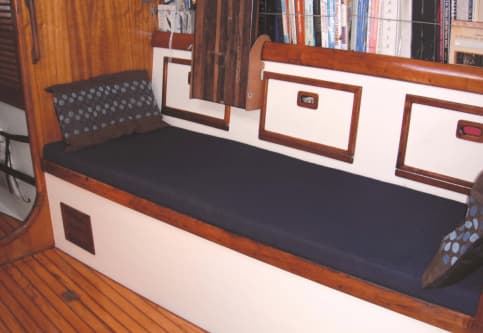
Why the cushion job mattered
Eurisko’s old settee cushions had already done a hard job. They had lived through 14 years of cruising, three sons aboard, and a family life that logged 20,000 miles on a 34-foot Creekmore before Connie McBride and Dave finally decided the boat, and the people inside it, deserved a reset. That is the real lesson in this kind of refit: cushions are not decoration, they are part of how a sailboat works as a home, a berth, and a place to spend long hours underway.
On a cruiser, settee cushions shape more than the look of the cabin. They affect where you sleep, how you sit, how often you use the lockers under the seats, and how welcoming the boat feels after years of use. McBride’s project shows why a careful upholstery refresh can be one of the best comfort-per-dollar upgrades on board, as long as you treat it like a planning job, not a quick fabric swap.
A cruising boat, not a showroom project
Eurisko is not just any sailboat interior. The boat is a 34-foot Creekmore designed by Lee Creekmore, with the Creekmore 34 first built in 1975 and the design later developed into the Endeavour 37 in 1977. That pedigree matters because the boat’s interior was shaped by real cruising life, not by a showroom spec sheet. McBride also wrote about the family’s longer voyage in *Eurisko Sails West: A Year in Panama*, which follows the move from St. Croix west to Bocas del Toro, Panama, with their 16-year-old son after years in the Eastern Caribbean.
That background explains why the cushions had to do more than look tidy. They had to hold up to family use, sea berths, and the daily rhythm of a cruising boat. The original interior had already proven its worth, but once a family has spent years living with the same foam, cloth, and seams, the worn spots start to tell the whole story.
Measure first, then make patterns
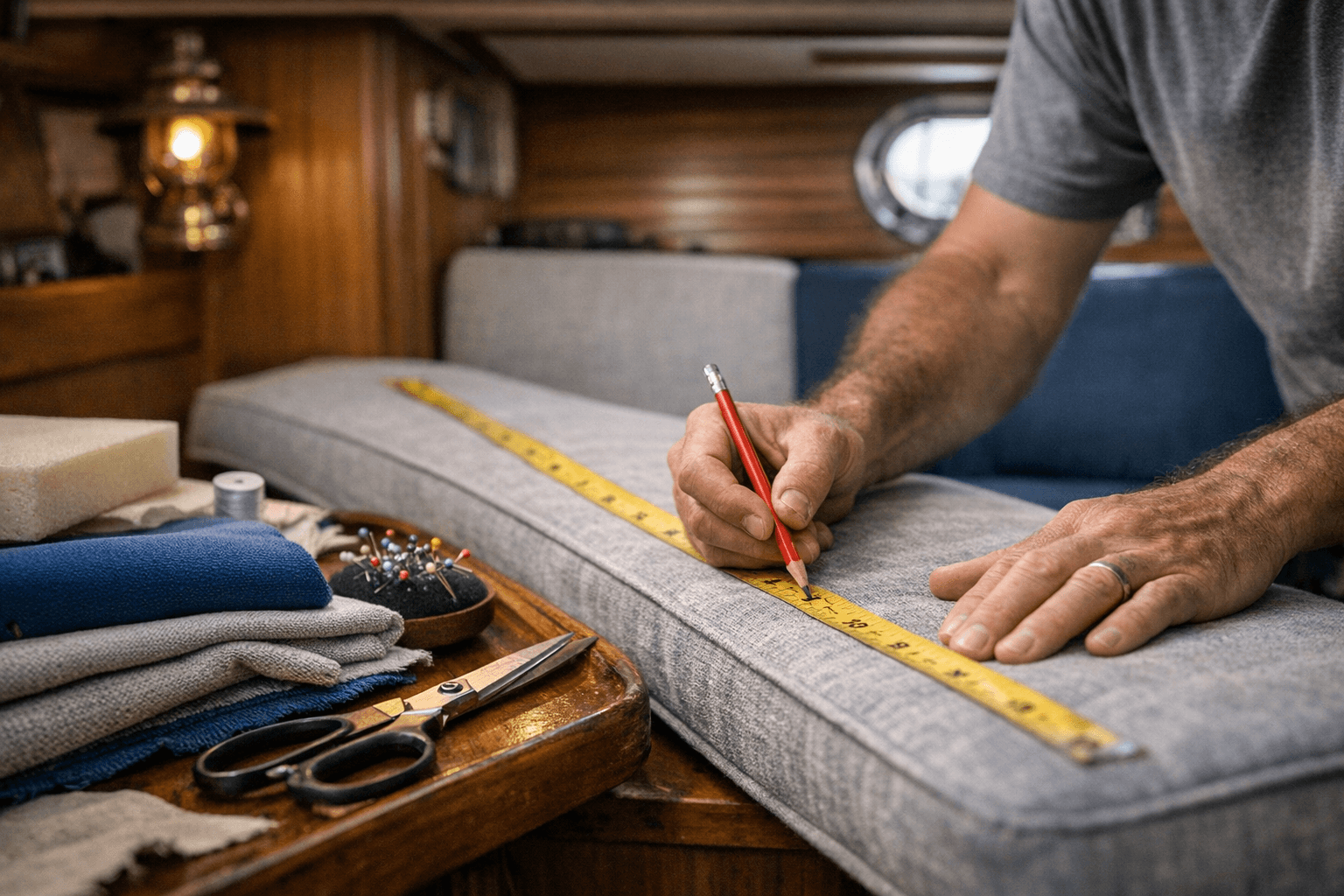
McBride’s approach starts with the part most people want to rush: measuring. She and Dave measured and made patterns for the four cushions to be covered, which is the kind of unglamorous step that decides whether the finished settee looks custom or merely covered. On a sailboat, that matters because the cushion has to fit the seat, the berth, and the exact shape of the cabin without stealing room where every inch counts.
The practical value of pattern making goes beyond neat corners. When the measurements are right, the cushions lie flat, the seams land where they should, and the finished settee feels like it belongs to the boat instead of fighting it. When they are wrong, you get wasted fabric, awkward gaps, and a cabin that never quite feels settled, which is exactly the kind of repeat repair that eats both money and patience.
Choosing cloth by touch, not by guesswork
McBride was candid about one of the biggest upholstery decisions: Sunbrella was the obvious benchmark, but she was not impressed by its feel, color options, or price. Instead of buying blindly online, she shopped in person and chose a more economical path. That decision let the family touch the fabrics, compare weave and color depth, and judge what would actually suit Eurisko’s light woods and bright interior.
That is the kind of fabric decision that can save a refit. Sunbrella says its marine upholstery fabrics have been trusted for more than 50 years and are designed to be durable, fade resistant, stain resistant, easy to clean, and resistant to mold, mildew, and salt residue. Those qualities explain why it remains the standard reference point, but McBride’s project shows that the best cloth for your boat is the one that balances toughness, comfort, appearance, and budget in your own cabin light.
Her construction choices were just as deliberate. She chose fabric for the top and boxing, then used vinyl on the bottom. That mix gives the cushions the right look where you see and touch them most, while putting harder-wearing material where it makes sense. It is a sensible marine tradeoff: spend where the eye lands, reinforce where moisture, grit, and wear are hardest on the upholstery.
Why topstitching beat piping
One of the smartest choices in the project was to skip piping. McBride noted that the original cushions had piping, but she found it uncomfortable when the cushions were used as sea berths. Instead, she opted for topstitching, which gave the cushions a finished look, was easier to sew, and was more comfortable on the legs.
That detail matters because it shows how a good marine upholstery choice is not just about style. A seam that looks crisp in a dockside photo can be a nuisance in real life if it digs into a calf during a night passage or makes a berth less usable. Topstitching solved the same visual problem without adding a hard edge, which is exactly the kind of practical compromise that makes a DIY job feel professional.
The bigger lesson for Sailboat DIY
The strength of this project is how ordinary it is. There is no exotic hardware, no complicated joinery, and no theory detached from the boat. There is just a clear-eyed decision to renew a tired interior with careful measuring, thoughtful fabric selection, and seam details that match how the boat is actually used. That is why the article still resonates with people building cushions for multiple sailboats, and why a later Good Old Boat reader discussion about vacuum-packed cushions treated McBride’s work as a useful reference point.
It also underlines a broader truth about cruising interiors. A cushion project touches daily life in ways a cosmetic refresh never does. Better cushions improve sleep, make the settee more comfortable for long evenings aboard, and keep the cabin feeling like a place you want to stay, not just a place you pass through between passages.
For anyone weighing a home-sewn job against marine-upholstery prices, Eurisko offers a clear answer. If you are willing to measure carefully, choose cloth with your cabin in mind, and make functional choices about seam construction, the result can be a smarter use of money and a better life aboard. That is not just upholstery, it is seam-by-seam livability.
This article was produced by Prism’s automated news system from verified source data, official records, and press releases, then run through automated quality and moderation checks before publishing. The system is built and supervised by the people who set the standards it runs under. Read our full AI policy.
Did this article answer your question?