How to Keep Aging Sailboat Portlights Working Without Full Replacement
Nine tired portlights can force a hard choice, but full replacement is not always the smartest answer. The right repair can stop leaks, reduce stress on brittle hardware, and keep the boat afloat without a major refit.
The real choice: repair the ports or replace them all
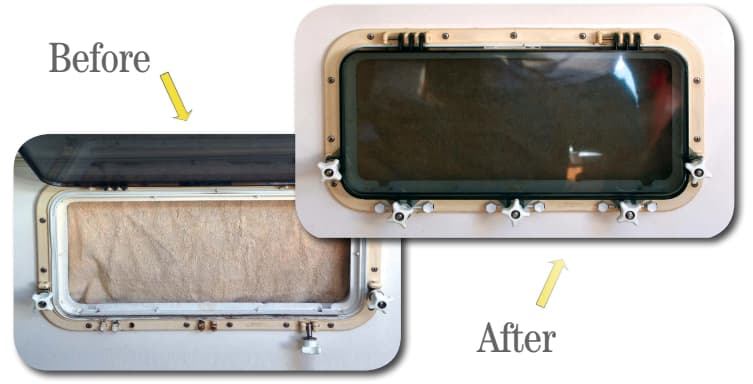
Howard Nelson’s 1983 Hunter 30 had nine opening portlights in three sizes, all from Gray Enterprises, and they had reached the familiar stage where nothing was outright dead, but nothing felt healthy either. The lenses had gone dull and crazed, the gaskets had hardened, and the plastic hinges and dog mechanisms were cracking under the pressure of being tightened over and over to chase out leaks. That is the decision point every owner of an aging production sailboat eventually faces: spend heavily on replacement, or find a way to keep the original hardware working without making the boat worse in the process.
On a mooring, with the boat not available for an easy haulout and the portlight count spread across multiple openings, the case for a full swap gets complicated fast. When the parts are custom, expensive, and visible, a thoughtful repair can buy years of useful life for far less disruption than ripping everything out.
Why cranking harder usually makes the leak problem worse
The instinct to tighten the dog screws until the drip stops is understandable, but on old Gray portlights it can be the wrong move. The problem is not always just a tired gasket. As the plastic ages, the mechanical load shifts into brittle pillars and support points, and repeated tightening can accelerate cracking right where the mechanism needs to stay strong.
That is why leak chasing needs a wider lens than simple seal replacement. The frame, the lens, and the dog geometry all matter together. If the hardware is already tired, forcing the closure tighter can turn a manageable leak into a broken hinge, a split pillar, or a port that no longer closes evenly.
What makes Gray Enterprises portlights worth saving
Gray Enterprises built its reputation on injection-molded plastic frames and opening plastic lenses secured with screw-down dogs, and Pompanette describes Arnold Gray and his team as having engineered one of the best injection-molded portlights on the market. That helps explain why so many older production boats still carry them. They were a standard choice for many OEM builders and boating enthusiasts, and Hunter was one of the first production builders to make numerous opening ports standard equipment.
That history matters now because the boats are still out there, but the materials are aging past the point where simple cosmetic fixes can hide the damage. BoatUS notes that plastic portlights lose clarity over time, and polishing cannot correct crazing and discoloration. Once the lens has gone hazy and the plastic has started to check, the owner is no longer dealing with a routine cleaning job. The hardware is telling you its service life is slipping away.
When refurbishment wins over replacement
Refurbishment makes the most sense when the basic geometry still works and the underlying opening is worth preserving. If the frame still fits the boat correctly, the opening still closes evenly, and the damage is concentrated in worn seals, cloudy lenses, or stressed dog hardware, the smart play is usually to keep the parts that still have structure and relieve the stress on the parts that do not.
That is especially true when all of these factors collide at once:
- You are dealing with multiple port sizes, not one easy direct swap.
- The boat has legacy hardware that may no longer match a modern off-the-shelf replacement.
- The owner wants to avoid the cost and downtime of pulling every opening at once.
- The old mechanism still works, even if it needs help to work without forcing itself apart.
Howard Nelson’s Hunter 30 hit all of those pressure points. A complete set of replacements for nine openings would have pushed the bill well beyond what he wanted to spend, and the boat’s position on a mooring made a leisurely tear-out project impractical. In that kind of case, keeping the old dogs working is not nostalgia. It is a practical maintenance choice.
Why matching the replacement is often the hardest part
The marine catalog can make portlight replacement look straightforward, but older Hunters rarely cooperate that easily. Hunter’s parts guidance points out that replacement can be complicated by different port configurations, prior-owner substitutions, and changes between manufacturing generations. What looks like the same port from across the dock can turn into a fit problem once you measure the opening, the frame profile, and the way the hardware actually seats.
That is why some owners do better preserving the original assembly than chasing a near-match. A Sailboat Owners forum post even noted that a full set of Gray Industries replacements could be bought as direct replacements, and that buying the whole assembly was cheaper than buying parts separately. Even so, a cheaper part is not automatically the right part if the opening is slightly different, a previous owner installed a substitute, or the boat carries a mix of generations.
The right way to think about the repair
The useful mindset is simple: inspect the whole assembly before you reach for the screwdriver. The leak is often a symptom of aging mechanical interfaces, not just a bad seal. If the frame, lens, and dog geometry are all still serviceable, then the goal is to preserve the functional parts while reducing the stress that is killing the brittle ones.
A careful repair process usually follows this logic:
1. Open the port and study how it actually clamps, not just where it leaks.
2. Look for cracks in the plastic supports, especially where the dog hardware bears down.
3. Check whether the lens is only cloudy or has crossed into crazed, permanently weakened plastic.
4. Decide whether the seal can be renewed without relying on extra clamping force to do the sealing work.
5. Reassemble in a way that closes evenly, so the dogs are not carrying more load than the old plastic can handle.
That approach keeps the repair focused on function. It also avoids the classic mistake of using brute force as a substitute for fit.
When full replacement still earns its keep
There are times when refurbishment stops making sense. If the portlight has lost clarity badly, if the crazing is deep, if the plastic structure is failing at the hinge or dog points, or if the replacement options do not match the opening without a chain reaction of modifications, then replacement may be the only durable answer. The point is not to avoid new parts at all costs. It is to avoid replacing everything before you know whether the existing hardware still has a useful life.
That is the bigger lesson from older production sailboats, especially the Hunters that came with lots of opening ports as standard. More comfort belowdecks came with more aging hardware to maintain. The boats are still desirable because those openings made them livable, but that same feature leaves owners with a real maintenance burden decades later.
Why this small repair story matters
Aging portlights are a perfect example of how older-boat ownership really works. You balance originality against cost, fit against downtime, and convenience against the risk of turning a small leak into a larger repair bill. On a 30-plus-year-old cruiser, the smartest answer is often not a wholesale refit but a targeted repair that keeps the boat dry, keeps the old hardware in service, and avoids forcing brittle plastic to do a job it can no longer handle.
This article was produced by Prism’s automated news system from verified source data, official records, and press releases, then run through automated quality and moderation checks before publishing. The system is built and supervised by the people who set the standards it runs under. Read our full AI policy.
Did this article answer your question?