Restored Sea Sprite 23 Proves Small Classics Still Sail Beautifully
A careful rebuild turns a 1975 Sea Sprite 23 into proof that small classics can still feel right. When the details are done well, old fiberglass can beat shiny new compromises.
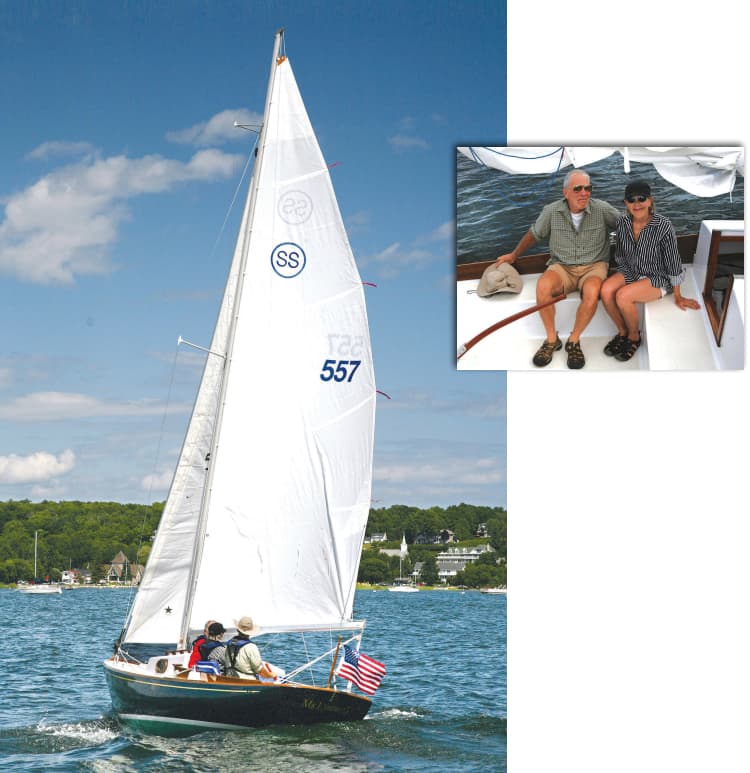
A dockside first look
The cheapest way to ruin an old cruiser is to treat a tired hull like a weekend paint project and hope filler, new varnish, and fresh hardware will hide the rest. Ms Lynne G shows the better path: start with a sound design, restore it with care, and let the boat’s original character do the rest.
That lesson lands hard at Yacht Works in Sister Bay, Wisconsin, where Joel and Lynne Schuman keep the boat for summer sailing while living in New York. Yacht Works says its Sister Bay marina started in 1983, and the setting matters. This is not a polished showroom fantasy; it is a working Door County, Wisconsin, marina on the Great Lakes, where a restored small cruiser has to earn its keep.
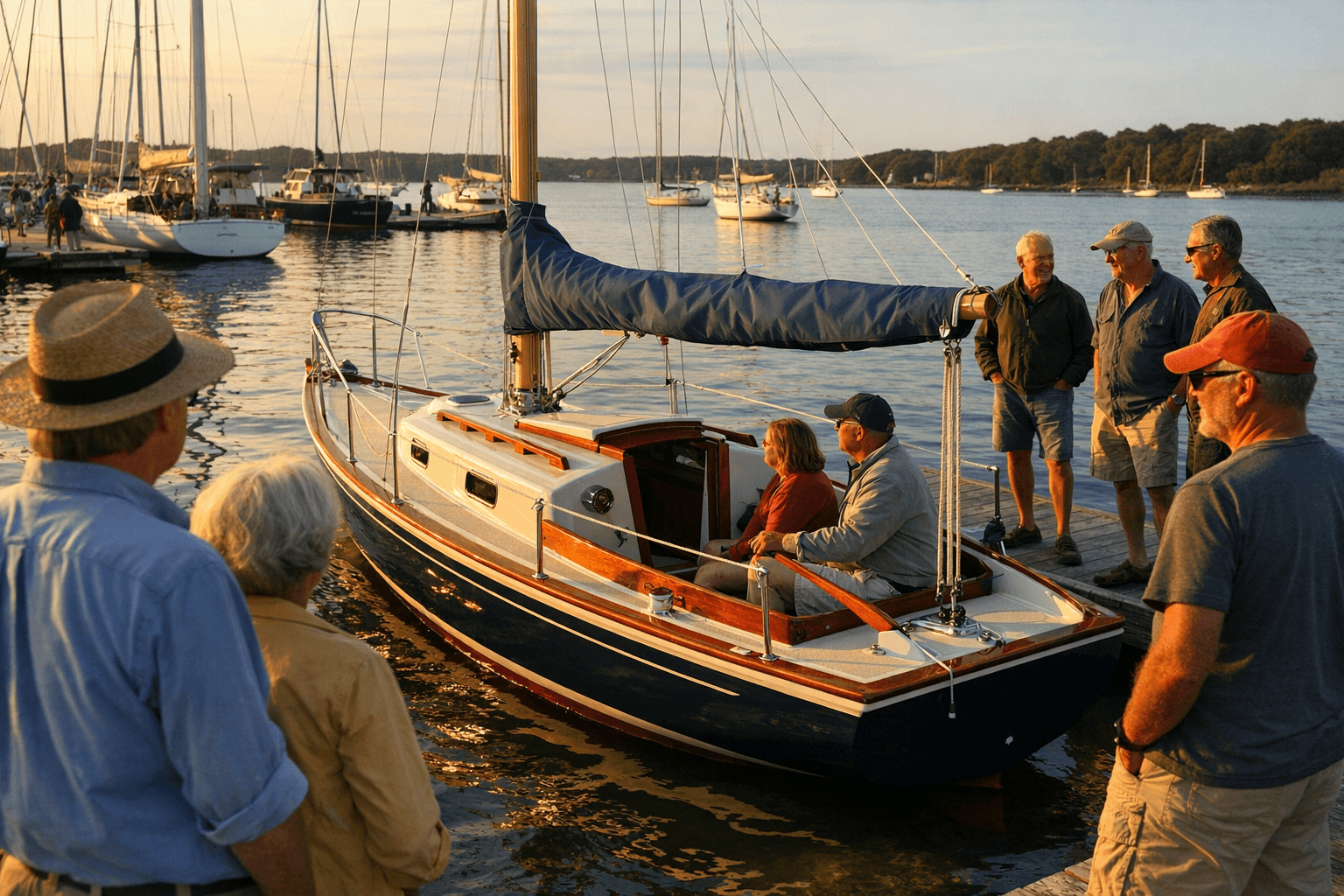
What you see first is the finish. The mast had just been lowered into a hull that looked brand-new, but the shape gave the game away immediately. This is still a Sea Sprite 23, with the old-school profile intact and the restoration sharp enough to make the boat look freshly born instead of merely repainted.
Why the Sea Sprite 23 still justifies restoration dollars
The Sea Sprite 23 comes from Carl Alberg, born in Gothenburg, Sweden, in 1900, trained in yacht design before moving to the United States in 1925. He built his reputation with the Pearson Triton in 1958, then went on to design some of the most recognized classic sailboats in the small-cruiser world, including the Alberg 30, Ensign, and many Cape Dory models.
That pedigree matters because the Sea Sprite 23 is not just pretty nostalgia. It is a classic Alberg design with a full keel, moderate draft, heavier displacement, a narrow beam, and an attractive sheer that still looks right from the dock and still behaves like a sensible little cruiser under sail. Practical Sailor describes it as a trim but rugged daysailer-overnighter that enjoyed a roughly 25-year production run under several Rhode Island builders, most notably Clarke Ryder.
That long run is the real argument for restoration. A one-off pretty boat can be a money pit. A long-lived production design with a real following gives you a known shape, known handling, and a cabin arrangement that has already proven itself over decades.
The two Sea Sprite 23 layouts are not just trim differences
The Sea Sprite 23 was built in Daysailer and Weekender versions, and the distinction is more than cosmetic. The Weekender is the one that makes the strongest case for a compact overnighter, because the layout gives you a self-bailing cockpit, molded fiberglass seats, a companionway and stairs down into the cabin, the mast stepped forward of the cabin, no traveler, the rudder post through the cockpit floor, and two sets of lower shrouds.
The Daysailer version pushes in a different direction. It has a non-self-bailing cockpit, wood seats, doors to the cabin, the mast stepped on the cabin top, a traveler, the rudder post through the aft deck, and one set of lower shrouds.
Those details are exactly why a small classic can still feel genuinely useful instead of merely charming.
- The Weekender layout favors simple coastal use and modest cruising.
- The Daysailer layout leans harder toward day sailing and a more traditional cockpit feel.
- Both versions show how a careful design can give a small boat real purpose without bloating it into a budget-killing mini-yacht.
What Tim Lackey’s rebuild got right
Tim Lackey’s project log lists Ms Lynne G as a 1975 Sea Sprite 23. The restoration ran from August 2014 to November 2014 and totaled 331.5 hours, which is the kind of number that tells you this was real work, not a quick polish.
The scope was broad and specific: hull and deck refinishing, interior freshening and brightwork, replacement of toerails and coamings, reconfiguration of the gunwale and toerail design, and replacement of deck hardware. Those are the jobs that decide whether an old boat just photographs well or actually lives well.
Lackey also reproduced classic details such as the toerails and stem plate, which is exactly the sort of craftsmanship that separates a decent refit from a forgettable one. The Sea Sprite Association called the project an “absolutely spectacular rehab project,” and that description fits because the work preserved the boat’s identity instead of sanding it away.
The project also shows why restoration is not only about labor hours. Tim Lackey’s Northern Yacht Restoration in Whitefield, Maine, treated the boat like a design problem and a woodworking problem at the same time. That is how owner-finished details start to matter again, because a toerail that belongs on the boat, a stem plate that looks right, and deck hardware that is properly replaced are not cosmetic extras. They are the difference between a boat that keeps asking for repeat repairs and one that settles down.
Why this kind of small cruiser still feels worth it
A newer boat can give you bigger numbers on paper, but a well-restored Sea Sprite 23 gives you something harder to buy: a shape that has already earned trust, a size that stays manageable, and a finish that makes the boat feel cared for every time you step aboard. The boat’s old Alberg proportions, the documented 1975 rebuild, and the attention to toerails, coamings, brightwork, and deck hardware all reinforce the same point. If the structure is right and the details are done honestly, a small classic does not feel like a compromise.
That is why this boat still resonates across the circles that care about real sailing, from Good Old Boat and Practical Sailor to the Sea Sprite Association. Even names like Bill Jacobs and Darrell Nicholson belong to the wider conversation around boats that reward knowledge, not just spending. Ms Lynne G proves the point in the clearest way possible: a Sea Sprite 23 does not need to be new to feel fresh, and it does not need to be large to sail beautifully.
This article was produced by Prism’s automated news system from verified source data, official records, and press releases, then run through automated quality and moderation checks before publishing. The system is built and supervised by the people who set the standards it runs under. Read our full AI policy.
Did this article answer your question?