Chartplotter Market to Top $1B by 2030 Driven by AI, Cloud
Market research projected the marine chartplotter market to surpass $1 billion by 2030 as AI-driven routing and cloud chart updates accelerate adoption.
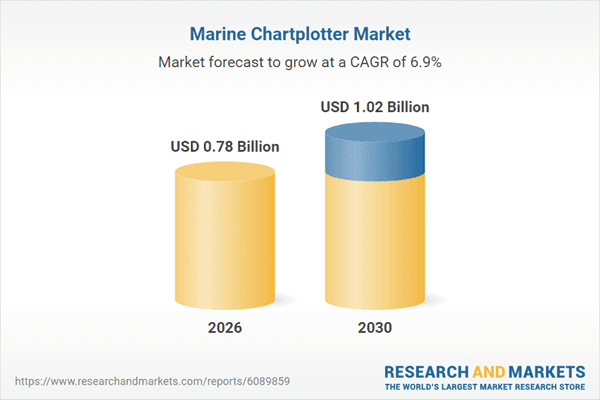
Market research projected robust growth for marine chartplotters, forecasting expansion from $0.73 billion in 2025 to $1.02 billion by 2030, a compound annual growth rate of about 6.9%. The projection puts 2026 market value at roughly $0.78 billion and signals meaningful change for sailors, anglers, and commercial operators who rely on digital navigation.
The momentum comes from rapid integration of artificial intelligence into chartplotter software and wider use of cloud-based chart updates. AI-led predictive route optimization promises smarter course planning that reduces fuel burn and helps avoid hazards, while cloud distribution makes chart and software updates more timely and less fiddly than SD cards and manual downloads. Multifunction displays that combine sonar and radar, enhanced real-time weather, tide and hazard visualization, and tighter GPS and sonar integration are also cited as adoption drivers.
Major manufacturers such as Garmin, Raymarine, Furuno, Navico/Simrad, and Humminbird are named as leading players shaping product features and standards. Chartplotters are evolving beyond simple navigation aids into central systems for safety, fishing and commercial operations. Types on the market include standalone units, integrated bridge systems and networked chartplotters that share sensor feeds and charts across multiple displays. Components span hardware and software, with an increasing share of value tied to advanced software features and subscription services.

North America remains the largest market, reflecting high penetration in recreational boating and commercial fleets. Europe is identified as poised for rapid growth, suggesting increased demand for networked systems and cloud services from Mediterranean cruising to North Sea commercial traffic. Applications listed include navigation, safety and rescue, fishing and recreational boating, indicating broad community impact across weekend sailors, tournament anglers and small commercial operators.
For Sail DIY readers, the practical implications are immediate. Expect newer chartplotters to offer AI route suggestions, hands-free hazard alerts and over-the-air chart updates. When evaluating upgrades, compare subscription costs for cloud charts, confirm compatibility with existing sonar and radar, and prioritize networked compatibility if you run multiple displays or a data-rich instrument suite. For anglers, sonar/radar fusion and real-time tide overlays will directly improve locating fishable water; for cruisers, predictive routing can shorten passages and trim fuel usage.

The market shift also affects resale and retrofit choices. Older standalone units may lose value faster as integrated, cloud-enabled systems become standard. For questions or further details contact Laura Wood, Senior Press Manager, at press@researchandmarkets.com.
Expect steady rollouts through 2025-2030 as manufacturers push software innovations and subscription models - plot a course now for upgrades that match how you use your boat and keep safety and interoperability at the forefront.
This article was produced by Prism’s automated news system from verified source data, official records, and press releases, then run through automated quality and moderation checks before publishing. The system is built and supervised by the people who set the standards it runs under. Read our full AI policy.
Did this article answer your question?