Check the gooseneck before sailing, small wear can cause big damage
A worn gooseneck can take the boom out of your hands fast. Check for cracks, play, corrosion, and bent fasteners before you leave the dock.
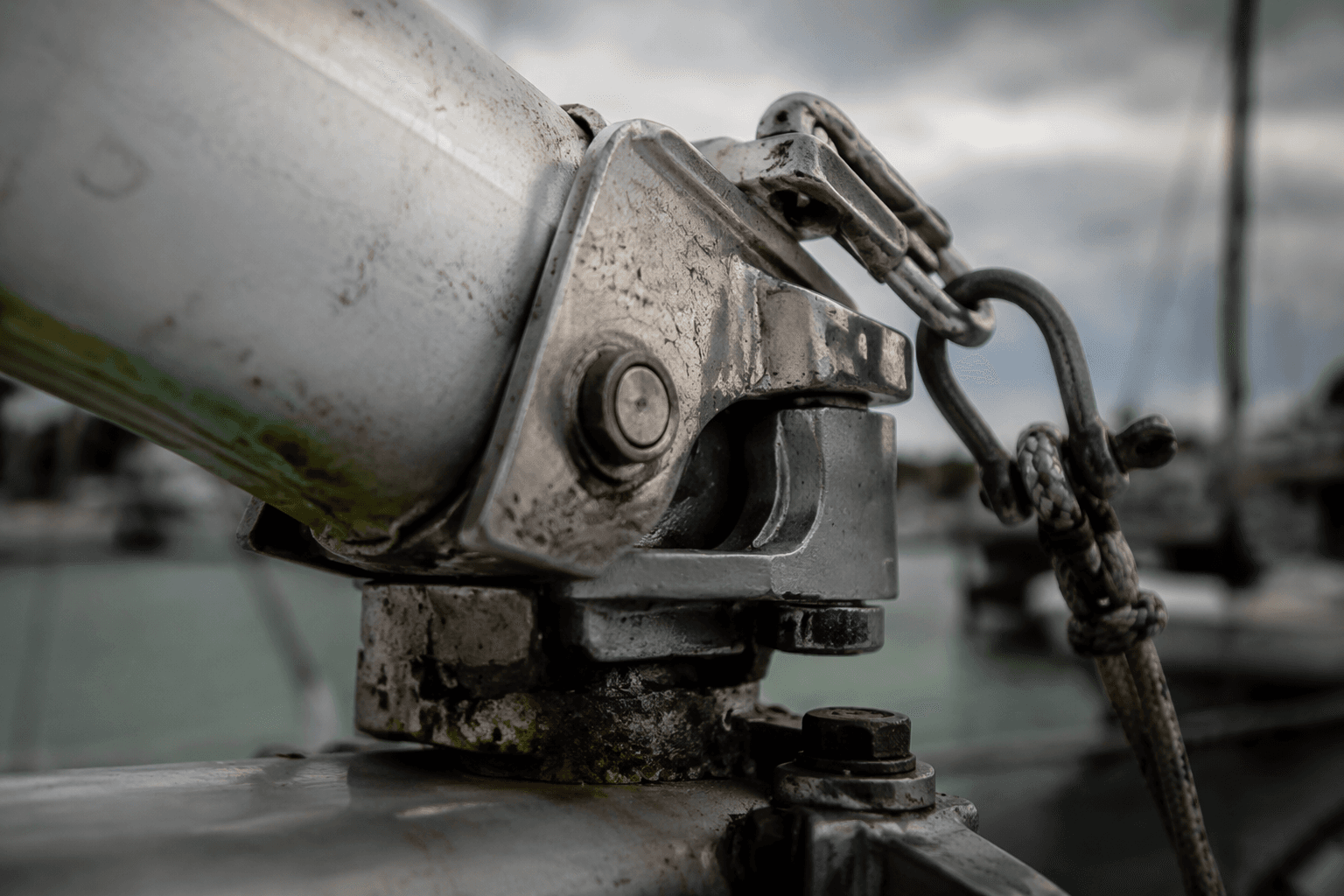
When a gooseneck lets go, the boom stops behaving like a controlled spar and starts moving like loose hardware under full sail load. That failure can shred cloth, damage mast fittings, and force you back in when you meant to be clearing the harbor. The fitting is small, but it is the link between the boom and the mast, and a few minutes with a flashlight can save you from the kind of “massive repair bill” nobody wants after launch.
Why this fitting deserves a pre-launch look
The gooseneck takes repeated punishment every time you trim the mainsail, reef, or load the rig up in gusts. On used boats, charter fleets, and any boat that changes hands often, it can hide old abuse until the day it fails under load.
Regular inspections help identify potential issues before they lead to failure, damage, or injury. Marine Surveys Canada made the same point in its Feb. 27, 2025 rigging inspection article. Safe Skipper’s rig-check guide treats the job as preventing failure at sea. Attainable Adventure Cruising published its Cruising Sailboat Rig Inspection Checklist on May 10, 2022, as a freestanding aid to memory while you make the inspections.
What a gooseneck failure looks like in practice
You do not always get a dramatic snap first. Often the warning starts small: sloppy motion at the boom-to-mast connection, corrosion staining, ovalized holes, loose fasteners, or a fitting that does not seat quite right when the boom is attached. If you see the boom twisting in a way it should not, that is not a cosmetic issue, it is the hardware telling you it has already started to deform.
Captain Curran documented a broken gooseneck on a 1976 Newport 30 MkII on Oct. 16, 2015. The cast aluminum fitting crumbled, the boat headed back to port, and the part had to be replaced.
The owner-level inspection that actually catches problems
Start with the visual check, then put hands on the fitting. The goal is to find wear before load finds it for you. Spring launch season is a good time to do this because so much rigging hardware is finally accessible after a winter of sitting still.
Look closely for:
- Cracks in the fitting body
- Bent or distorted rivets from previous work
- Elongated or ovalized holes around bolts or rivets
- Corrosion around the boom-to-mast interface
- Fasteners that are present but look suspect, loose, or mismatched
- A boom that does not seat cleanly against the mast-side hardware
- Any sign that the connection has been twisting under load
Then test it by hand. A healthy gooseneck should not feel vague or sloppy. If you can move the connection more than you expect, or if one side looks different from the other, treat that as a warning sign and not just an age mark.
Fasteners matter as much as the fitting
A gooseneck is only as good as the hardware holding it together. On owner inspections, the mistake is often assuming that because the bolts or rivets are still there, they are still doing their job. They are not sound just because they are present.
Compare both sides of the connection and look for evidence of prior repairs. Bent rivets, replacement fasteners of different sizes, or hardware that sits proud instead of flush can point to old overload or a repair that did not fully restore the fit. If the fitting has cracks, bent metal, elongated holes, or signs of unnatural twisting, stop there and bring in a rigger or spar specialist. That is the line between routine owner maintenance and structural mast-and-boom work.
Why rigging inspections belong in your launch-day routine
In a rigging video filmed at Shamrock Quay in Southampton, MDL Marinas featured Cameron Davis of VMG Technology discussing routine maintenance, common wear points, and the checks that keep the rig in top condition. You do not need a yard lift to spot many of the early signs on a gooseneck. You do need the habit of looking before you go.
The rest of the rig can look fine while one small connector is already on the edge. Regular inspection keeps a hidden defect from becoming a hard stop when the mainsail comes under load. If you are preparing for a passage, the gooseneck is one of those fittings that should be checked with the same seriousness you give the chainplates, turnbuckles, and mast step.
This article was produced by Prism’s automated news system from verified source data, official records, and press releases, then run through automated quality and moderation checks before publishing. The system is built and supervised by the people who set the standards it runs under. Read our full AI policy.
Did this article answer your question?