Choosing the Right 3M Marine Sealant for Every Boat DIY Job
Pick the wrong 3M sealant and you'll spend a weekend with a heat gun undoing what took an afternoon to do. Here's how to match every product to every job.

The wrong sealant choice doesn't announce itself right away. It shows up six months later as a weeping through-hull, a deck fitting you can't budge without destroying the surrounding gelcoat, or a cabin window that's now structurally bonded when it was only ever supposed to be watertight. 3M's marine sealant line is deep enough to solve every one of those problems, but only if you're reaching for the right tube in the first place.
The core of the confusion is this: 3M makes sealants that range from near-permanent structural adhesives to fully removable compounds, and they look similar on the shelf. Getting them mixed up is one of the most common and costly mistakes in boat DIY.
3M 5200: The one you can't take back
3M 5200 is polyurethane, and it bonds with a ferocity that surprises people who've only used silicone or polysulfide before. It cures flexible, which means it moves with the hull without cracking, but its adhesive strength is genuinely structural. That's not marketing language. 5200 is appropriate for through-hulls below the waterline, keel bolts, and any fitting where you never want to revisit the joint again. Boatbuilders use it to bond hulls to decks on production vessels because they know those joints aren't coming apart in service.
The critical thing to understand about 5200 is the removal problem. If you bed a deck cleat in 5200 and later need to relocate it, you're looking at heat guns, sharp chisels, and a real risk of gelcoat damage. The Boat Juice team, who have been advising DIY boatowners through their US-based chandlery, put it plainly: 5200 is a commitment. Use it where permanence is a feature, not a liability.
Full cure takes around seven days, though surface cure happens faster. It's available in white, black, and mahogany to blend with most boat surfaces, and it comes in both fast-cure and standard formulations. Fast-cure 5200 reaches handling strength in about an hour, but it sacrifices some of the ultimate bond strength of the standard version, so match the formulation to how much time pressure you're actually under.
3M 4200: The middle ground most boatowners miss
4200 is where a lot of experienced DIYers live, because it solves the problem 5200 creates. It's still a polyurethane, still flexible, still genuinely waterproof, but its adhesive strength is moderate enough that fittings bedded in it can be removed without destroying everything around them. Think of it as 5200 with a reasonable exit strategy.
The right applications for 4200 include deck hardware, port lights, stanchion bases, and any above-waterline through-hull where you might reasonably need access again in the next five to ten years. It's not for structural bonding where the sealant is carrying a load, but for most deck-fitting bedding jobs on a recreational boat, 4200 is the appropriate choice and the one that will cause you the least regret.
Like 5200, it comes in a fast-cure version. The full-cure window is shorter than 5200, typically around five days, and it adheres well to fiberglass, wood, and most metals. If you've been defaulting to 5200 for everything because you want a "strong" sealant, 4200 is worth a serious look. The strength difference matters far less than the removability difference for most deck jobs.
Polysulfide and the case for 3M 101
Polysulfide sealants occupy a different chemical category entirely, and they have specific strengths that polyurethanes don't match. 3M 101 is a one-part polysulfide that's been a standard in boat maintenance for decades. It cures to a firm but pliable consistency, bonds well to fiberglass and wood, and is notably easier to remove than any polyurethane when the time comes.
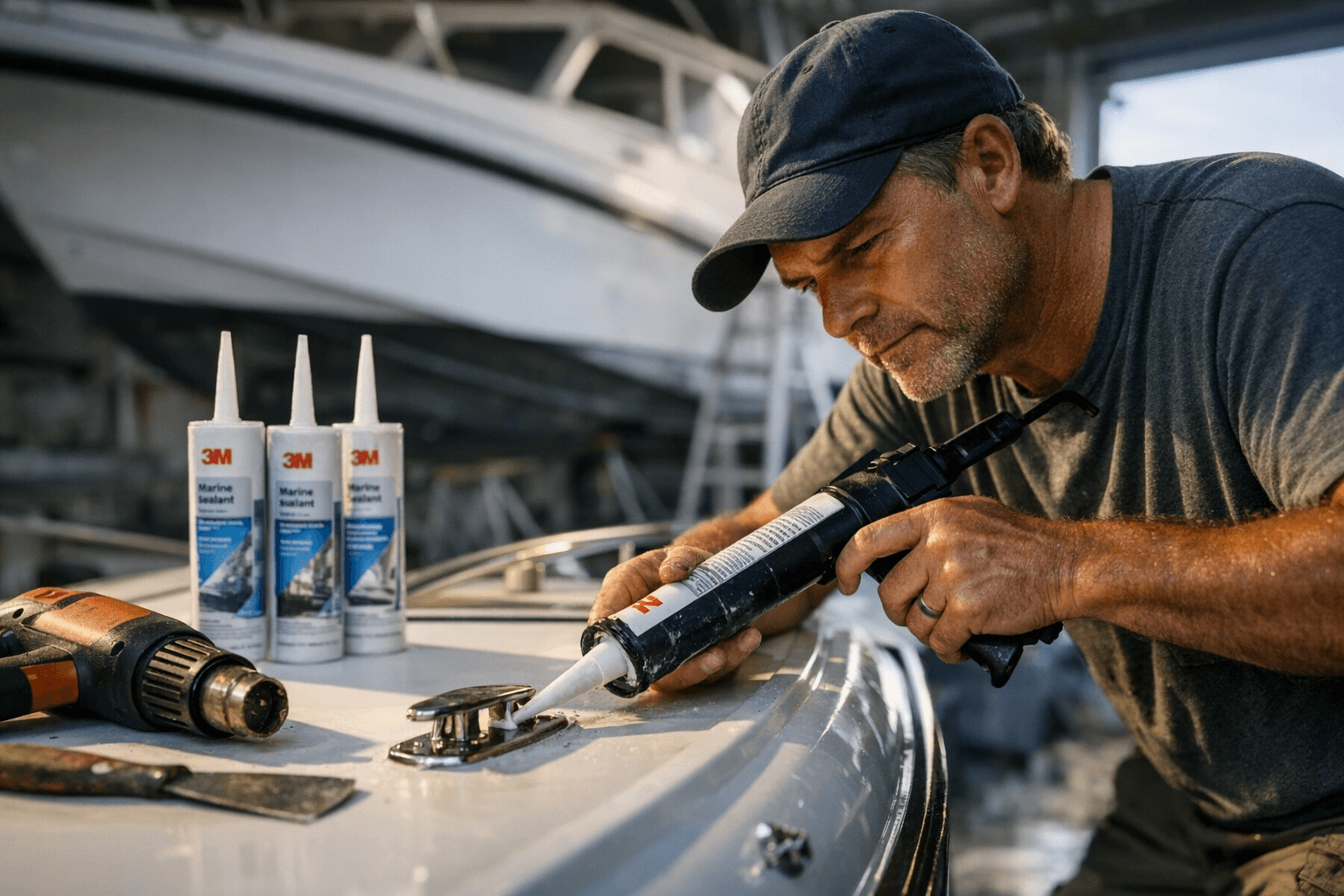
The traditional home for polysulfide is teak deck work and wooden trim. Polysulfide is compatible with teak's natural oils in a way that some polyurethanes are not, and it's the sealant of choice for the joints between teak planks on laid decks. It also works well around portlights and hatches where a moderately firm, weather-resistant seal is the goal but permanence is not. One important note: polysulfide is not compatible with some plastics, particularly acrylic and polycarbonate. If your port light has a Lexan lens, polysulfide will attack it over time. Silicone or a polyurethane is the correct choice there.
Silicone: Understand the tradeoffs before you reach for it
Silicone is the sealant most people have used somewhere in their lives, and that familiarity makes it feel like a safe default. On a boat, it's more complicated. Marine-grade silicone, including 3M's formulations in this category, is excellent at one thing: sealing. It remains flexible across a wide temperature range, it's UV-stable, and it won't harden and crack over time the way some other compounds do. For above-waterline applications that aren't load-bearing, it does the job.
The tradeoff is contamination. Silicone leaves an invisible residue on surfaces that prevents paint and gelcoat repairs from adhering properly. If you're working anywhere near a surface you might ever want to repaint or refinish, silicone is a risk. It also has poor adhesion to most substrates compared to polyurethane, which makes it a poor choice for anything that needs to stay bonded under mechanical load or regular flexing.
Use silicone for interior applications, for sealing around electrical fixtures below deck, or for temporary fixes where you know the area won't need refinishing. Keep it away from hull-to-deck joints, keel work, and anywhere below the waterline.
Matching sealant to surface and situation
The framework is simpler than the product lineup makes it look:
- Below the waterline, structural: 3M 5200
- Deck hardware, above waterline, needs future access: 3M 4200
- Teak and wooden trim, deck joints: 3M 101 polysulfide
- Interior sealing, non-structural, away from painted surfaces: marine silicone
- Never use polysulfide on acrylic or polycarbonate glazing
Surface preparation is the variable that undermines even the correct sealant choice. Every 3M polyurethane requires a clean, dry, oil-free surface to achieve its rated adhesion. On fiberglass, that means wiping down with acetone before application. On aluminum fittings, a light scuff and a wipe is standard. Don't skip the prep because the sealant seems forgiving; the bond will tell you six months later that it wasn't.
Backer plates matter too. A sealant is not a structural substitute for proper hardware installation. A stanchion base bedded in 4200 without an adequate backer plate will still pull through the deck under load. Sealant keeps water out; hardware design keeps fittings in place. Both have to be right.
The 3M marine line has been refined across decades of real-world use on production boats and long-distance cruisers alike. Knowing which product belongs where isn't esoteric knowledge reserved for professional yards; it's the kind of working fluency that separates a repair that holds for fifteen years from one that needs revisiting by next season.
This article was produced by Prism’s automated news system from verified source data, official records, and press releases, then run through automated quality and moderation checks before publishing. The system is built and supervised by the people who set the standards it runs under. Read our full AI policy.
Did this article answer your question?


