Choosing the Right Boat Propeller Can Boost Speed and Fuel Economy
The wrong prop can make a healthy boat feel tired, thirsty, and hard to handle. The fix starts with wide-open-throttle rpm, not guesswork.
The wrong prop shows up everywhere
A bad propeller does not always announce itself with a dramatic failure. More often, it shows up as a boat that struggles to climb onto plane, feels lazy in reverse, burns more fuel than it should, or makes you keep checking the engine because something seems off. West Marine’s Tom Burden and Brian Gordon frame prop choice as one of the easiest performance fixes you can make, and they are right, because this is one of those invisible upgrades that changes how the whole boat behaves.
That is why prop selection belongs in the same conversation as engine health, fuel burn, and daily usability. If you tow, cruise, or motor into a narrow harbor often, the difference between the right prop and the wrong one is not subtle. The right one can make the boat feel honest and efficient; the wrong one can make a perfectly healthy setup feel underpowered or overworked.
Start with the engine’s wide-open-throttle range
The first number that matters is not the one on the prop box. It is the manufacturer’s recommended wide-open-throttle, or WOT, rpm range for your engine. West Marine’s guide puts that range at the center of the whole decision, because it tells you whether the prop already on the boat is matched properly or whether it is forcing the engine outside its sweet spot.
The practical test is simple: run the boat at full throttle with a normal load aboard and note the rpm. Go2marine’s guidance adds the details that make that reading useful, which means testing with a tuned engine, a clean hull, an average load, and a clean, undamaged propeller. That matters because a fouled bottom or beat-up prop can trick you into chasing the wrong fix.
If the engine cannot reach its recommended WOT range, the prop is likely holding it back. If the engine spins too high, the prop is too light for the load. Michigan Wheel sums up the goal neatly: maximize performance while keeping the engine within the recommended rpm range.
Read the prop before you blame the engine
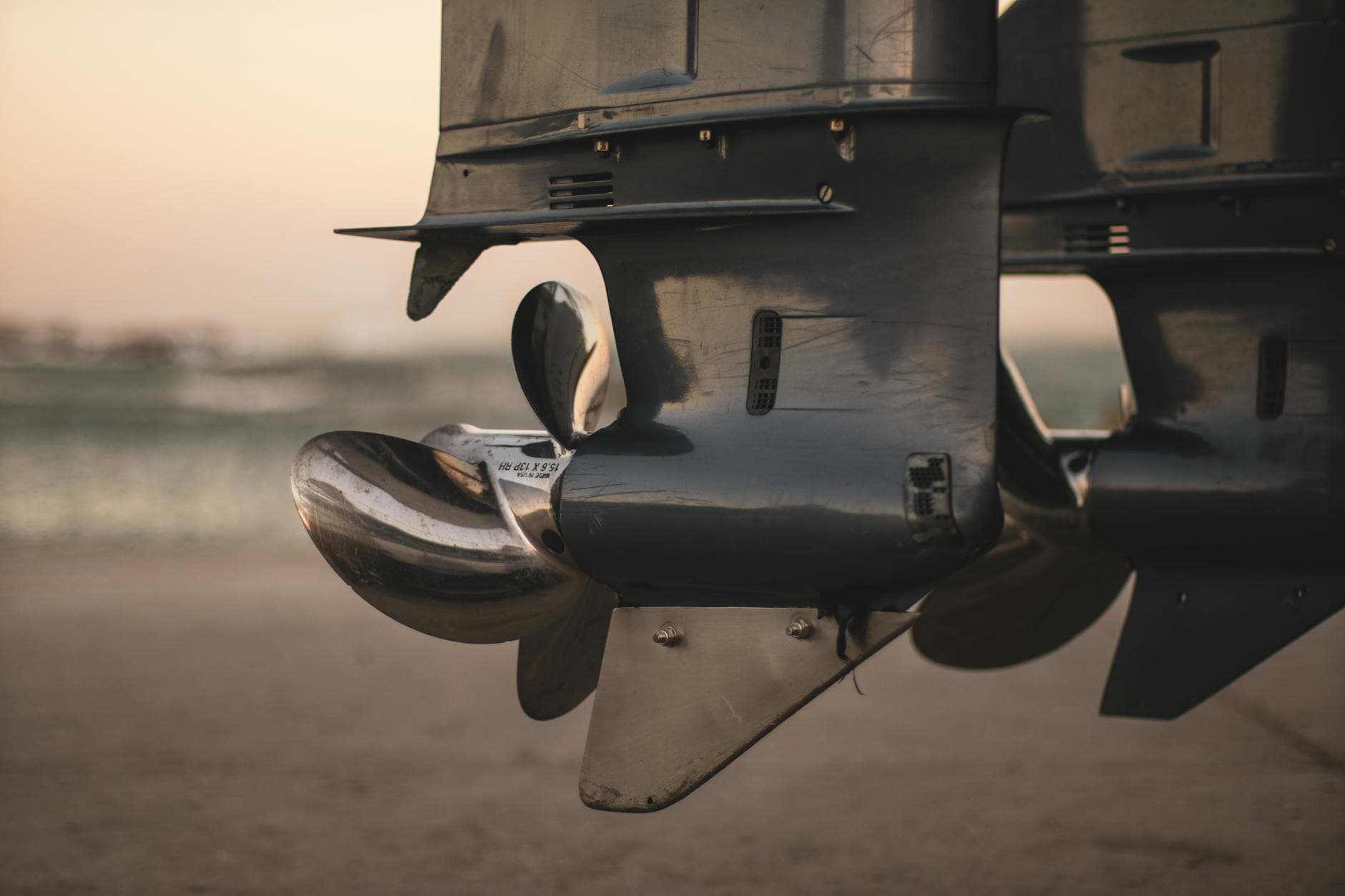
A lot of DIY owners start with carburetion, trim tabs, or engine tuning when the boat feels wrong. That can waste time and money if the real issue is sitting right on the hub. Mercury Marine says prop diameter and pitch are usually stamped on the hub or barrel, and a marking like 14 x 19 means a 14-inch diameter and 19 inches of pitch.
Pitch is the part that usually tells the story. Mercury says adding pitch lowers WOT rpm, while subtracting pitch raises it. As a rule of thumb widely used in marine prop guidance, one inch of pitch change usually shifts WOT rpm by about 150 to 200 rpm. That is a big swing, and it explains why a small hardware change can transform how the boat accelerates, cruises, and backs down.
How to diagnose a prop problem on the water
1. Confirm the engine’s recommended WOT rpm range for your exact outboard or sterndrive.
2. Check the prop stamping so you know the current diameter and pitch, not just what you think is installed.
3. Run the boat with a normal load, then record the actual WOT rpm on clean water.
4. Compare the reading to the recommended range.
Too low points to too much pitch or too much prop for the load; too high points the other way.
5. Adjust pitch, diameter, blade count, or material, then test again on the boat.
That process is exactly why West Marine offers a free Prop Selector tool and Mercury Marine offers its own Prop Selector. Mercury says its tool asks five basic questions about the boat and engine, which is a good reminder that prop choice is application-specific. Yamaha makes the same point from a different angle, saying the most effective method is to test different props directly on that boat.
Pitch, diameter, blades, and material all matter
Pitch gets the most attention because it is the easiest knob to turn, but it is not the only one. Diameter influences how much water the prop can move, blade count changes the way the boat hooks up under load, and material affects how the prop carries the load and holds up over time. That is why the best answer is not just “more pitch” or “less pitch,” but the combination that lets your engine work inside its recommended rpm range while giving you the behavior you want.
This is where the job matters. A cruiser that spends time in chop needs different behavior than a boat that lives in a harbor or spends weekends towing. If you want stronger punch out of the hole, better reverse control, or less engine strain at cruising speed, you are really asking the prop to match the way you use the boat, not just the way it looks on paper.
Do not treat prop choice like a guess
The strongest signal in the industry is that prop selection is supposed to be tested, not assumed. West Marine’s guide, updated on 2026-04-22, puts real-world WOT testing at the center of the decision. Mercury Marine’s selector turns that into a few simple inputs, and Yamaha backs it up by saying on-the-water testing is the best validation step. In other words, the brands that live closest to this problem all say the same thing: the boat tells you the truth.
That approach also keeps you out of expensive dead ends. If the prop is wrong, no amount of fiddling with trim tabs or chasing engine tuning will fully fix the feel of the boat. You might mask the problem for a while, but you will not solve the underlying mismatch between the prop, the load, and the engine’s rpm range.
This is also a safety issue, not just a performance one
Propeller choice sits inside a broader safety culture. The American Boat & Yacht Council has been developing marine safety standards since 1954, and the National Marine Manufacturers Association says more than 85% of boats sold in the United States each year are NMMA Certified. That context matters because prop selection is not some fringe owner tweak. It is part of the same ecosystem that shapes how boats are built, sold, and maintained.
It also matters because props are dangerous hardware. A U.S. Coast Guard propeller brochure says a typical three-blade propeller running at 3,200 rpm can inflict 160 impacts in one second. That is a brutal reminder that the prop at the back of the boat deserves the same respect you would give any high-speed rotating part. Keep it clean, keep it undamaged, and do not shrug off a prop that leaves the engine outside its recommended range. Mercury Marine warns that running outside that range can cause severe engine damage and may void the warranty.
The payoff is a boat that finally feels sorted
When the prop is right, the change is not abstract. You feel it when the engine reaches its proper rpm without strain, when the boat accelerates cleanly, when reverse has more authority, and when fuel burn stops feeling like a penalty for every mile. That is the real promise of the right propeller: a small hardware change that can make the whole boat feel quicker, calmer, and more efficient at once.
For DIY owners, that is about as good as an upgrade gets.
Know something we missed? Have a correction or additional information?
Submit a Tip