Clear Coat Choices Help Protect Aging Boat Hulls Before Spring Launch
A dull hull can be a warning, not a cosmetic miss. When gelcoat turns chalky, the right clear-coat choice can keep spring cleanup from becoming a full refinish.
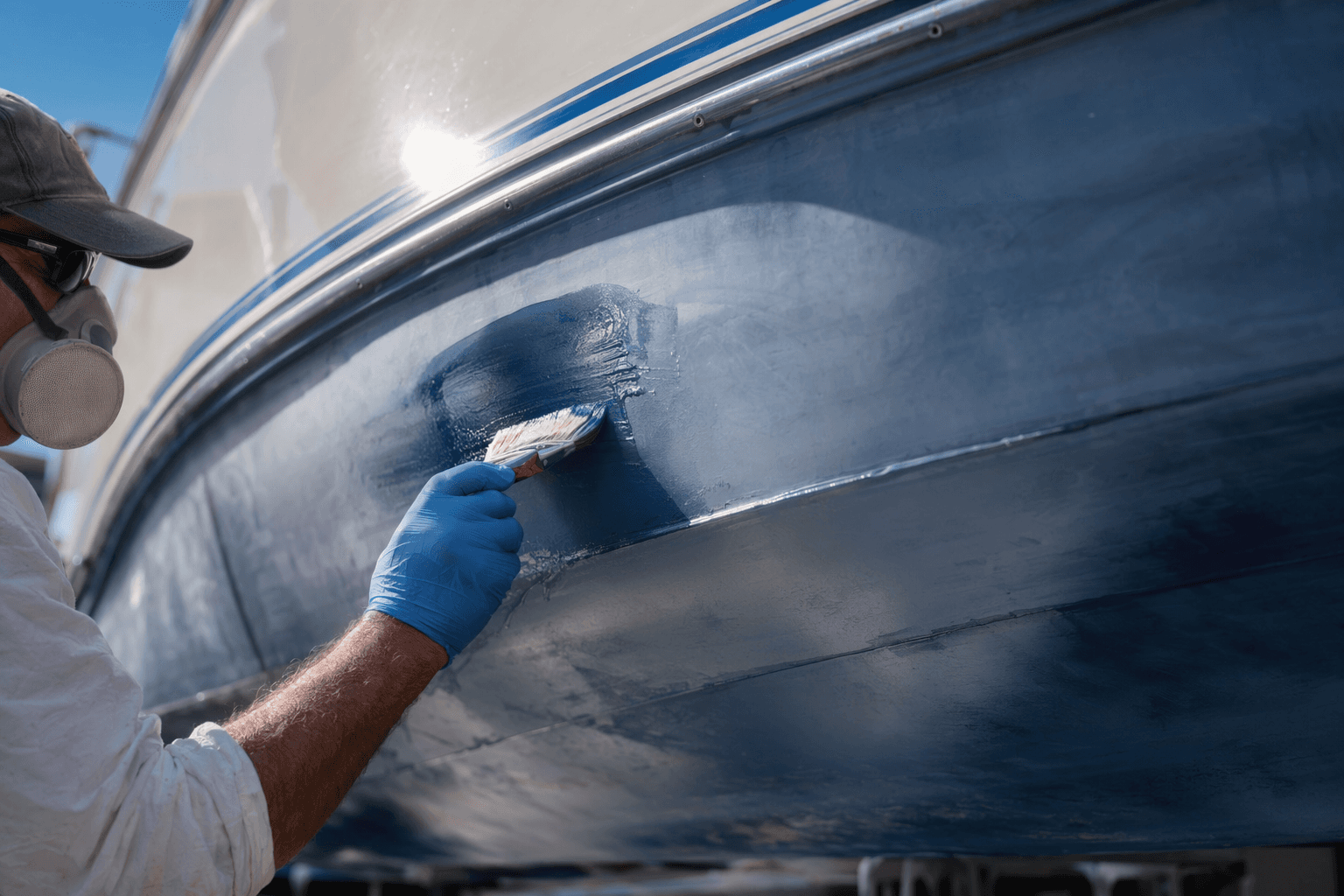
A chalky hull is telling you more than you think
The first clue is usually simple: the gloss is gone, and your hand comes away with a powdery film. That is not just dirt sitting on top of the boat. On many fiberglass hulls, West Marine says gelcoat is the smooth, mirror-like outer finish, and when it is left unprotected it oxidizes, turns chalky, and becomes more porous and stain-prone.
That is why the right clear-coat decision is really a surface-health decision. A protective outer layer can preserve appearance, reduce cleanup effort, and slow the march toward heavier restoration work, but only if the underlying finish is still sound enough to accept it. Nearly all gelcoat can be restored if it has not been completely worn through, which is a powerful reminder that dull does not automatically mean doomed.
What failure mode you are actually trying to stop
Once the finish starts to fail, everything else gets harder. Oxidation, salt, sun, and grime keep attacking the same weak spots, and the longer the surface stays open, the more likely you are to be chasing damage instead of maintaining a healthy hull. Interlux says aging gelcoat becomes porous and brittle, which can lead to cracking and blistering, and West Marine also notes that gelcoat is not a perfect moisture barrier.
That matters because a clear coat or protective restoration system is not there just to make the boat look better at the dock. It is there to slow the chain reaction that starts when UV exposure breaks down the surface and water, dirt, and contamination begin working into that weakened layer. BoatLIFE describes oxidation as UV-driven damage to gelcoat rather than simple staining, which is the key distinction owners need before they reach for polish, sealant, or a more aggressive refinish.
If you want the short version, read the surface like this:
- Dull and chalky, but still intact: likely a restoration job.
- Heavily oxidized and stubborn: the surface may need deeper oxidation removal.
- Cracking, peeling, or separating: the old finish has failed and should come off before anything new goes on.
The most important decision is whether the substrate is still stable
The biggest mistake is treating a failing surface like a cosmetic problem. West Marine’s repair guidance is clear that if a previous finish is cracking, peeling, or separating from the substrate, old coatings should be removed and the surface primed rather than simply coated over. That is the line between smart maintenance and sealing trouble in under a fresh layer.
For a DIY owner, this is where the job gets practical. If the gelcoat is still there and still bonded, you can work with it. If the finish is lifting or breaking apart, the better choice is not another shine product, it is a more honest repair plan. The goal is to preserve the hull, not hide the fact that the top layer has already given up.

This is also where spring commissioning exposes the truth. After winter storage, UV exposure, and saltwater use, the hull often makes the decision for you. A quick wash may reveal a finish that just needs renewal, or it may expose a surface that has moved beyond quick cleanup and into restoration territory.
Why gelcoat restoration is a process, not a shortcut
West Marine’s gelcoat-care guidance treats restoration as a multi-step process, and that approach fits the material. A single pass rarely solves oxidation that has been building for months or years. 3M’s marine finishing procedures specifically call out heavy oxidation removal for chalky, heavily oxidized gelcoat, which shows how common this condition is in real repair work.
That means the sequence matters. First comes the diagnosis: is the finish merely dull, or is it chalky and heavily oxidized? Then comes the work itself, which may involve cleaning, oxidation removal, and polishing before any protective layer is applied. BoatLIFE also points owners toward marine-grade formulas for cleaning and polishing without removing the gel coat, which is exactly the kind of restraint you want when the original finish is still salvageable.
The practical advantage is ease of repair. A stable, restored surface is easier to clean, easier to keep looking good, and less likely to force you into a full refinish later. A rushed coating over unstable gelcoat does the opposite. It buys a little shine and borrows a bigger problem from the future.
How to think about clear coat choices on an older hull
On an aging boat, the real choice is not between shiny and dull. It is between a protective system matched to the condition of the surface and a cosmetic fix that ignores what the hull is already telling you. If the gelcoat is intact, a restoration process can bring back protection and appearance without stripping away healthy material. If the finish is brittle, cracking, or failing at the edges, the right move is to step back and repair the base first.
That logic applies all over the boat, from broad fiberglass panels to the exposed edges that weather fastest. The surface that takes the most sun and spray is usually the first to go chalky, and it is also the first place you can see whether maintenance has stayed ahead of damage. The better the match between product and substrate, the longer the repair lasts.
For spring launch prep, the smartest owners are not chasing showroom gloss. They are deciding whether the hull needs cleaning, restoration, or a more aggressive refinishing step, then choosing the least invasive method that still protects the boat. When the finish is healthy, clear-coat-style protection helps keep it that way. When it is not, covering failure only delays the real work.
This article was produced by Prism’s automated news system from verified source data, official records, and press releases, then run through automated quality and moderation checks before publishing. The system is built and supervised by the people who set the standards it runs under. Read our full AI policy.
Did this article answer your question?