Rope Ladders Give Small Boats Safer Emergency Reboarding Options
A rope ladder only earns its keep if a tired, wet person can climb it back aboard. On the wrong boat, the wrong design can turn a rescue into a second emergency.
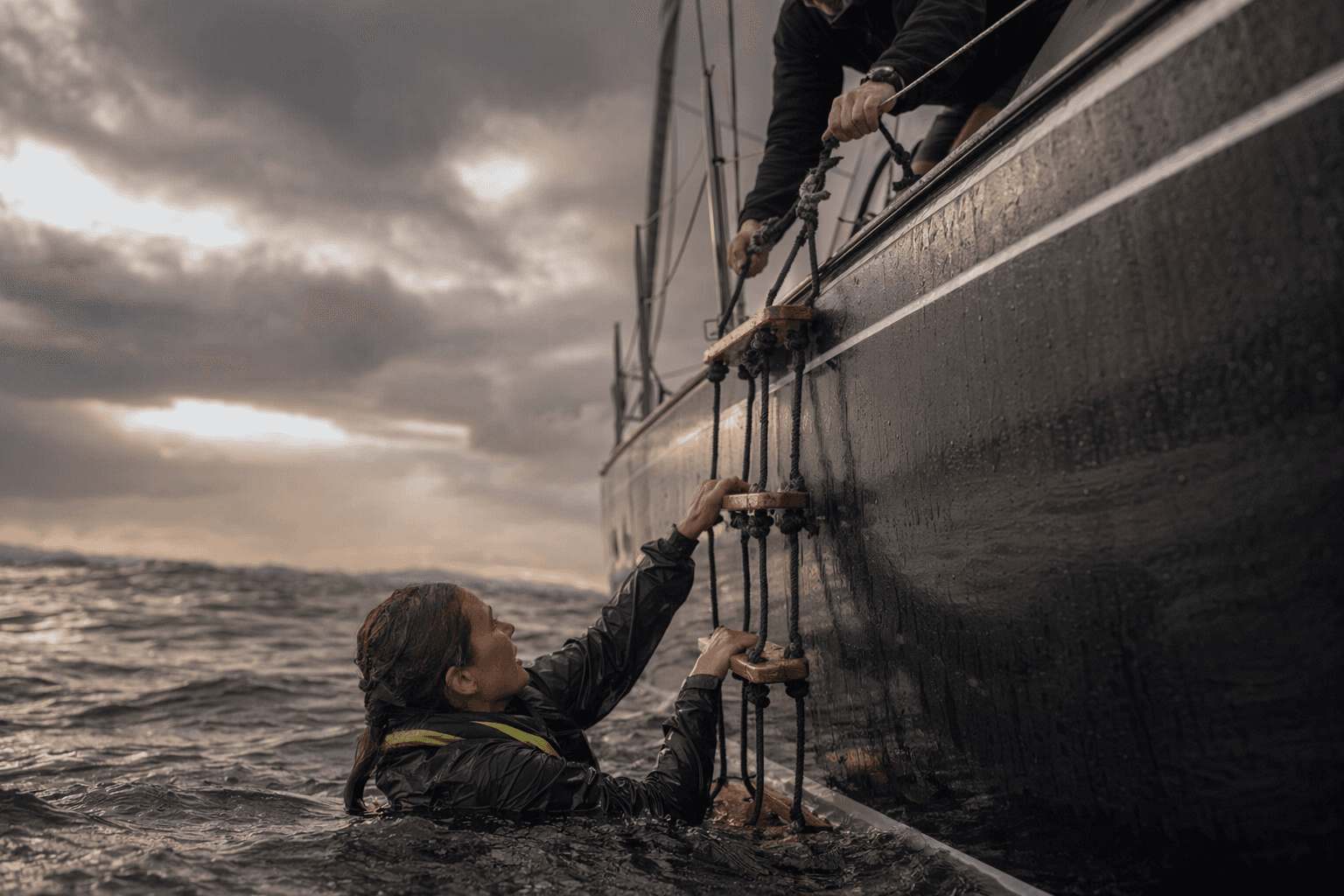
The real test is not whether the ladder hangs there, but whether you can climb it when everything has gone wrong
The hard part of an overboard recovery is rarely spotting the person. It is getting a cold, tired, wet body back onto a hull that suddenly feels much taller than it looked from the cockpit. That is the problem Jonathan Eldridge puts front and center in Better Boat’s rope-ladder guide: a boarding ladder is not a convenience item on a small boat, it is the difference between a manageable swim and a full emergency recovery.
That framing matters because the conditions are ugly in exactly the ways boaters know too well. Freeboard feels higher from the water than it does from the deck. The rub rail is slick. Bare feet lose grip. A life jacket helps keep someone alive, but it does not make climbing easier. If the person in the water is solo, exhausted, older, young, or carrying the shock of a man-overboard fall, the ladder has to do more than exist. It has to work on the first try.
Why rope ladders make sense on small craft, and when they do not
Rope ladders have a real place on boats where storage is tight. They can serve as emergency reboarding gear, a secondary access point if a fixed ladder is blocked or damaged, and temporary side access on tenders, dinghies, and older sailboats. That flexibility is why they show up in do-it-yourself setups so often. They stow small, they cost less than many rigid systems, and they can fit boats that never had a proper transom ladder in the first place.
But the tradeoff is obvious once you are in the water: a rope ladder is only as good as its deployment, its steps, and the strength of the mounting point. If it is hard to reach, slow to unroll, or mounted to weak hardware, it can fail at the exact moment you need it. The safest approach is to treat the ladder as part of a larger recovery plan, not as a bolt-on accessory.
The ladder has to be tested in real boarding conditions
BoatUS Foundation testing makes the point plainly: a ladder that works well on one boat may fail entirely on another. That is not a small caution, it is the whole decision. Hull shape, freeboard, where you mount the ladder, and how the steps hang in the water all change the boarding experience.
In BoatUS Foundation in-water tests, an emergency rope ladder with plastic steps took 22.3 seconds on average for a four-person team to board, while several rigid or platform-style options were substantially faster. That timing gap is more than a comfort issue. In a real overboard recovery, seconds matter, and the slower option can become the one that leaves the swimmer hanging on the side of the hull, drained and unable to finish the climb.
The practical takeaway is simple: do not buy or build a ladder based on how neat it looks on the dock. Test it on your own boat, in the water, with the conditions and people you actually sail with. Check whether the steps hang low enough to reach, whether they stay open under load, and whether a barefoot climber can get stable purchase without hunting for the next rung.
What to look for before you trust it with your crew
If you are choosing a rope ladder for a small boat, the useful questions are mechanical, not cosmetic. You want to know whether it can be deployed from the water, whether it is easy to grab with wet hands, and whether it gives the climber enough stability to keep moving upward.
Pay close attention to these points:
- Mounting strength: the attachment point has to handle real recovery loads, not just the ladder’s own weight.
- Step design: plastic steps may be compact, but comfort and stability matter when someone is shivering and barefoot.
- Deployment path: if the ladder is buried under gear or tied off awkwardly, it is not emergency-ready.
- Reach from the water: a ladder that hangs too high above the surface can be impossible to start.
- Solo use: assume the person in the water may be acting alone, with no one aboard able to lower a line or assist from the deck.
This is where many small-boat setups go wrong. A ladder is installed with good intentions, then it gets stowed where it is hard to reach, or attached to hardware that was never meant for a full body load. The solution is not more gear. It is a better setup, mounted where it can be reached fast and built around the way the boat actually sits in the water.
ABYC gives the problem a formal safety standard
This is not just a matter of personal preference. The American Boat & Yacht Council’s H-41 standard covers reboarding means, ladders, handholds, rails, and lifelines, which puts rope ladders in the same safety conversation as the boat’s other recovery features. ABYC recommended compliance for boats and related equipment manufactured or installed after July 31, 2010, and the most recent listed edition is H-41-2022, which continues to address the design, construction, and installation of reboarding means and related safety features.
That standard matters because it reinforces the key point in the Better Boat guide: the ladder is only one part of the system. The system has to be planned, installed, and staged before the emergency happens. A good rope ladder mounted badly is still a bad recovery tool.
Recovery is easier when the whole crew is already thinking about it
BoatUS says lifeslings, swim platforms, ladders, and brute strength are all methods of bringing someone back aboard, and crews should practice before an emergency. That advice is especially relevant on smaller boats, where a fixed ladder may be blocked by gear, a swim platform may not exist, and brute strength alone may not be enough once the person in the water is cold and tired.
That is why a rope ladder should be treated as backup in a broader reboarding plan. If a fixed ladder is available, it may be faster. If a swim platform helps, it may lower the effort. If neither is realistic, the rope ladder becomes the most practical answer. The point is not to declare one method perfect. The point is to make sure you are not improvising while someone is already in the water.
Life jackets and children change the equation, but not the obligation to practice
The U.S. Coast Guard keeps wearable life jackets at the center of boating safety, and federal recreational boating rules generally require a child under 13 aboard a recreational vessel under way to wear a Coast Guard-approved PFD unless the child is below decks or in an enclosed cabin. That rule does more than set a legal baseline. It shows how much the system depends on flotation, restraint, and preparation working together.
A PFD can keep a child or adult afloat long enough for recovery, but it does not replace the need for a usable ladder. In fact, life jackets can make the climb awkward because they change body position and add bulk. That is one more reason to test the ladder with the crew you actually carry, not just with an idealized loadout in your head.
The smartest small-boat safety upgrades are often the least glamorous ones. A rope ladder, chosen carefully and tested on your own hull, can turn a man-overboard situation from a desperate scramble into a controlled recovery. On a small boat, that is not a minor accessory choice. It is the difference between a close call and a rescue that finishes the job.
This article was produced by Prism’s automated news system from verified source data, official records, and press releases, then run through automated quality and moderation checks before publishing. The system is built and supervised by the people who set the standards it runs under. Read our full AI policy.
Did this article answer your question?