Cruising Bougainville, where charts fail and yachts still turn heads
Bougainville rewards prepared cruisers, but only if you’re ready for uncertain charts, local canoe traffic, and a place where a yacht still feels like an event.
Why Bougainville belongs on a real cruiser’s short list
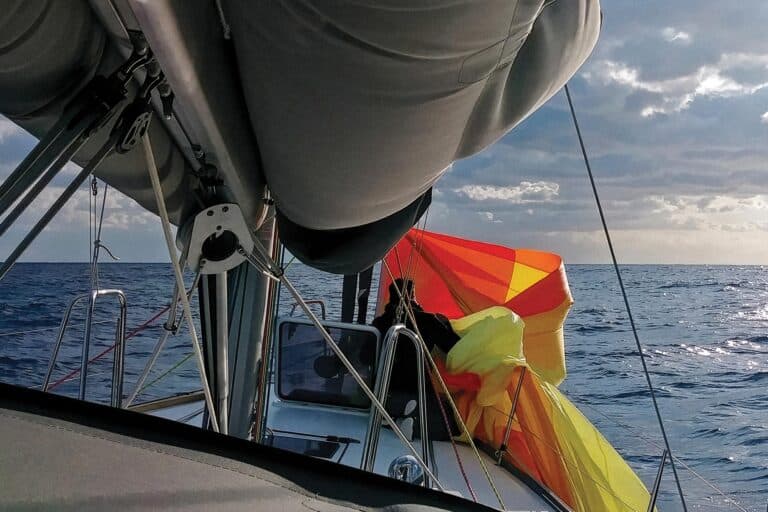
Bougainville is not the kind of place you sail to for easy logistics. It is the kind of place you earn with good seamanship, patience, and a willingness to move without the comfort blanket of perfect chart data. The Cruising World story captures that tension clearly: where Navionics charts can fall short and carved canoes still outnumber fiberglass, a visiting yacht does not blend in, it arrives as a small but very visible guest.
That visibility starts with scale. Bougainville sits in Papua New Guinea’s Autonomous Region of Bougainville and includes Bougainville Island, Buka Island, and a scattering of smaller islands and atolls. The region’s 2024 census population is 367,093, a number that helps explain why a cruising boat can still feel like a novelty in many anchorages and coastal stops. For a DIY cruiser, that matters because you are not moving through a heavily optimized yachting corridor. You are entering a living, working coastal world where your arrival is noticed.
Read the chart, but do not worship it
The practical takeaway for anyone planning a passage here is simple: do your homework, then stay humble. The story’s sharpest warning is that digital charting can be incomplete or unreliable, so you need to be ready for uncertainty in the water, not just uncertainty on the screen. That means thinking like a navigator and an improvisor at the same time, with an eye on local knowledge, sound judgment, and the kind of calm that keeps a sailor from forcing a decision just because the plotter drew a line.
In Bougainville, seamanship goes beyond making landfall. You need to be comfortable reading water, evaluating anchoring options, and adjusting plans when the expected harbor does not look the way your software suggested. The reward for that discipline is access to a cruising ground that still feels unfiltered, but the tradeoff is obvious: this is not a place for passive cruising or cockpit complacency. The better your self-sufficiency, the better your odds of enjoying the coast without stress.
Expect company at anchor, and not the marina kind
One of the most memorable parts of the story is the reception. Wherever the boat anchored, locals came out in boatloads to take pictures, tell stories, and trade fruit and vegetables grown nearby. That is not a side note, it is part of the cruising reality here. In Bougainville, a yacht does not just sit at anchor, it becomes a temporary attraction.
For a cruiser used to slipping quietly into an out-of-the-way bay, that kind of attention can feel intense at first. It also offers a useful reminder that courtesy matters just as much as line handling. Slow down, make eye contact, listen before you assume, and be ready to exchange greetings as naturally as you would a mooring line. The interaction is not a nuisance to work around, it is part of the seamanship of arriving well.
Bougainville’s official tourism messaging reinforces that public-facing energy. The region is promoted as the “Jewel of the South Seas,” and its tourism content includes cultural material and cruise-ship welcomes in Buka. That does not make the place polished in the conventional marina sense, but it does underline that visitor encounters are part of how the region sees itself. For a visiting sailor, the lesson is clear: arrive prepared to be seen.
The canoe traffic is part of the navigation picture
The visual contrast in Bougainville is striking for a reason. Local carved canoes are not decorative background, they are living craft with real cultural weight, and the National Cultural Commission of Papua New Guinea describes the Mona as a traditional ocean-going canoe used by ancestors for centuries. The Mona Festival keeps that heritage active, with carved and painted canoes paddled across the Buka Passage. If you want to understand the waters here, you need to understand that the local traffic is not incidental to the scene, it is central to it.
That is why respectful movement around canoe traffic should be high on your prep list. Give small craft space, keep your speed under control, and do not assume your vessel has priority just because it is bigger or louder. In a place where canoes remain part of the daily and ceremonial seascape, good manners on the water are also good seamanship. The yachts may be unusual, but they are still guests.
Why the politics matter on the water
Bougainville’s setting is not just geographic, it is political and deeply local. The region held a non-binding independence referendum from November 23 to December 7, 2019, as part of the broader Bougainville Peace Agreement process that followed the civil war of 1988 to 1998. Official results showed 176,928 votes for independence and 3,043 for greater autonomy, with 181,067 ballots counted in total. The International Foundation for Electoral Systems described the result as 97.7 percent for independence, which tells you how strong the local mandate was.
For cruising sailors, that background is not abstract. It helps explain the sense of identity and pride you encounter ashore, and why a respectful attitude goes a long way. This is a place where history, governance, and local visibility are woven tightly together. When you come in from sea, you are not just entering a remote archipelago, you are entering a region that understands itself very clearly.
A remote cruising ground that still feels responsive
Despite the remoteness, Bougainville is not closed off to visiting yachts. A 2025 cruising report noted that officials were responsive and locals were friendly, which lines up with the easy human encounters described in the Cruising World piece. That combination, friendly on the water and responsive ashore, is a strong signal for DIY cruisers who value places where a problem can still be solved by conversation rather than paperwork alone.
Still, the appeal here is inseparable from the complexity. Bougainville is a place where a trip can become part repair project, part navigation exercise, and part cultural exchange. If you show up expecting polished infrastructure, you will miss the point. If you show up ready to be self-reliant, observant, and respectful, the place opens up in a way that more standardized cruising stops rarely do.
Bougainville’s biggest draw is not that it makes things easy. It is that it makes you earn the reward with chartwork, patience, and a willingness to meet local life on its own terms. That is exactly why the first sight of carved canoes, and the attention a lone yacht still draws, feels so unforgettable: in Bougainville, the passage matters as much as the destination.
Know something we missed? Have a correction or additional information?
Submit a Tip