New sailor gains offshore confidence on 750-mile passage to Antigua
A 750-mile passage to Antigua turned impostor syndrome into real offshore confidence. The lesson: watch discipline, gear prep, and calm problem-solving matter more than bravado.

First offshore passages teach you more by repetition than by theory
A 750-mile run from Virginia to Antigua can feel like a leap into deep water, especially when you are still wondering whether you belong offshore at all. On an Allures 45.9 in the Salty Dawg Rally, nurse and new sailor Jill Gallin found that confidence did not arrive as a sudden revelation. It built watch by watch, sail handling by sail handling, and through the kind of small, practical decisions that every first-timer needs to learn before the boat is miles from shore.
What makes her story useful for the Sailing DIY crowd is that she was not drifting along as a casual guest. She had earned a U.S. Coast Guard captain’s license and had already been cruising the East Coast with her husband, yet she still felt impostor syndrome before departure. That tension is familiar to a lot of new offshore sailors: you may have training, time on the water, and plenty of enthusiasm, but the first real passage still tests whether all of that holds together when the horizon gets wide and the schedule becomes a cycle of watches.
Watchstanding is where offshore confidence starts
The most transferable lesson from this passage is how structured offshore watchkeeping can steady both the boat and the sailor. Gallin describes a night routine built around checking sails, instruments, weather, sea state, AIS, and even the bilge every 15 minutes. That kind of discipline is not busywork. It is what keeps a watch from drifting into complacency, and it gives a new offshore sailor a concrete rhythm to follow when fatigue and darkness start to blur the edges of the experience.
For first-timers, the takeaway is simple: make your watch a checklist, not a vibe. A repeatable scan helps you notice changes before they turn into problems, and it keeps you mentally engaged when the boat is driving itself and the sea looks deceptively steady. In Gallin’s case, that repetition created a turning point when she realized she was handling offshore watchkeeping comfortably, not just enduring it.
Build a watch rhythm you can repeat
A beginner offshore routine should be boring in the best possible way. Every watch should include the same core scans so your brain does not have to reinvent the process in the middle of the night.
- Check sail shape and trim
- Confirm instruments are reading normally
- Watch weather and sea state for changes
- Keep an eye on AIS traffic
- Inspect the bilge during each round
- Repeat the scan every 15 minutes if that is the cadence the boat and conditions demand
That steady loop is what turns offshore sailing from an intimidating unknown into a set of manageable habits.
Fatigue is real, but the work is designed to be survivable
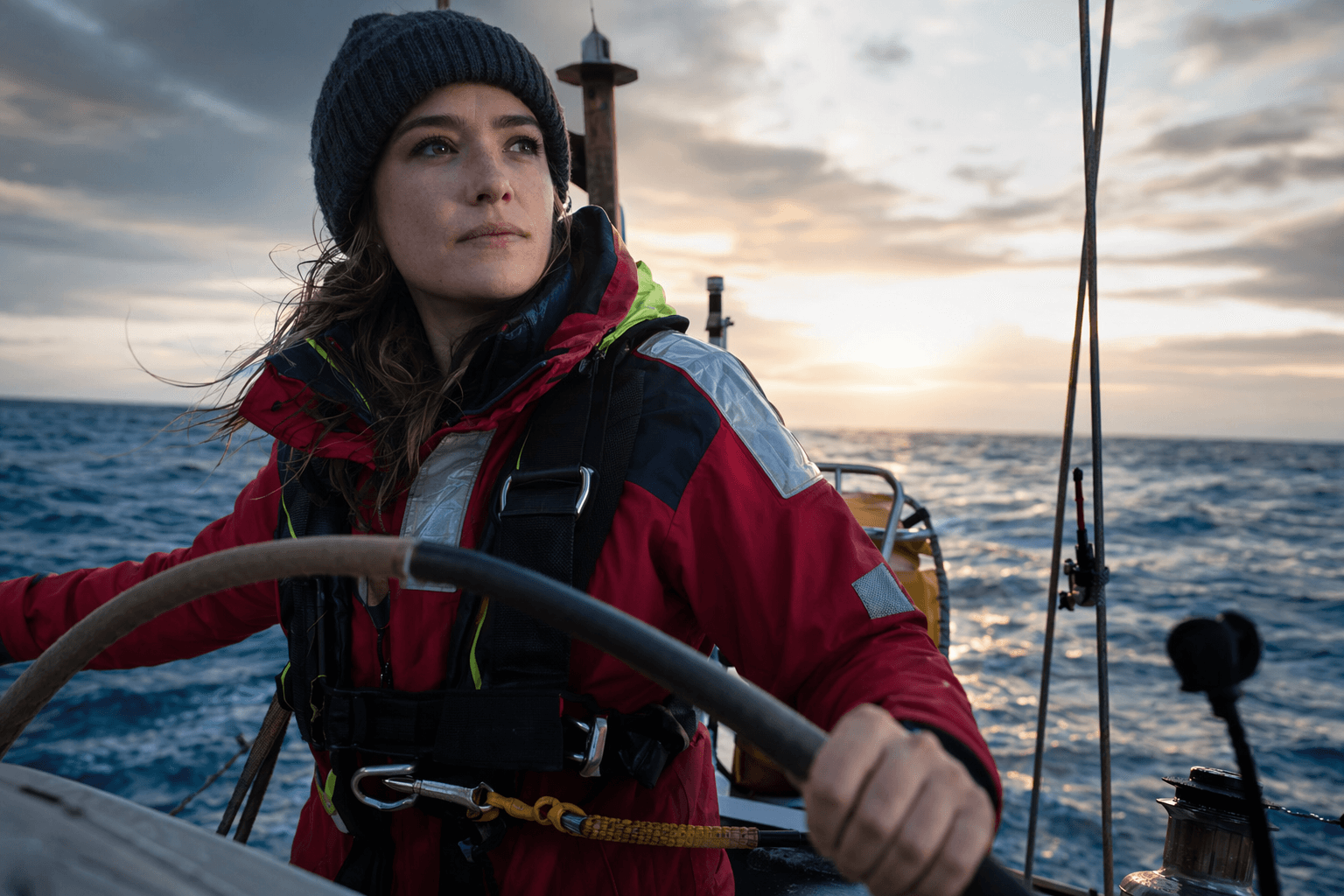
The passage from Virginia to Antigua also shows why fatigue management matters so much. Offshore sailing is not one long heroic stretch. It is a series of watches, rests, and returns to duty, and the crew’s ability to settle into life at sea depended on accepting that rhythm instead of fighting it. Gallin describes leaving behind the stress of the world they knew and settling into life aboard, which is exactly what new sailors need to aim for: not a perfect day, but a sustainable routine.
That routine becomes especially important once darkness, motion, and sleep deprivation start to pile up. New offshore sailors often assume the hard part is seamanship alone, when in fact the strain is often psychological and physical at the same time. The lesson from this passage is to protect your energy early, because confidence offshore is hard to build when you are exhausted and playing catch-up.
Seasickness can surprise you, but it is not the only thing that matters
One detail that stands out is Gallin’s ability to read a computer screen at sea without getting sick. For a beginner, that is more than a small comfort. It shows that offshore adaptation can be very specific, and that your body may tolerate some tasks better once it settles into the motion and routine of the boat.
At the same time, this story does not suggest that seasickness is irrelevant. It suggests that one of the biggest surprises for new sailors is how your physical response can change once you move from uncertainty into competence. The more comfortable Gallin became with her watchkeeping, the more normal the whole environment felt. That is useful to remember if your first offshore leg feels rough at the start: sometimes the breakthrough is not a magical cure, but a few successful watches that convince your body the boat is under control.
Fear management offshore is about procedure, not bravado
The most human part of the passage comes when a routine maneuver goes wrong. While poling out the jib, the pole swung across the foredeck and struck Gallin’s husband Michael in the forehead, splitting open a bump above his eye. In that instant, the situation stopped being about sailing as an abstraction and became about safety, injury, and the possibility of a worse outcome.
Her immediate fear that he might pass out or fall overboard is the kind of reaction every offshore sailor should be prepared to have. It is not panic if it leads you straight to assessment and action. Offshore confidence does not mean feeling fearless; it means knowing that when something breaks, you can think clearly enough to keep the crew safe and the boat under control.
A first offshore checklist should include damage control thinking
New sailors often focus on sails, navigation, and weather, but this passage shows that you also need a damage-control mindset. A gear failure can happen during what feels like a routine evolution, and once it does, your response matters more than the fact that it happened.
- Immediate injury assessment
- Securing the deck area
- Keeping the injured person from moving unnecessarily
- Accounting for man-overboard risk
- Stowing damaged gear so it cannot create a second problem
Prepare for:
A shredded spinnaker photo and the need to stow damaged sailcloth may sound minor compared with an injury, but together they underline the same truth: offshore sailing is not a polished performance. It is a chain of managed problems, and the boat rewards sailors who treat each one seriously.
The biggest surprise for beginners is how competence changes the emotional load
What surprises a new offshore sailor most is often not the sea itself, but the feeling that competence can arrive faster than expected once the work becomes repetitive and real. Gallin’s shift from impostor syndrome to calm watchkeeping happened because she was doing the job, not because she had perfected it in her head beforehand. That is a crucial lesson for anyone preparing for a first offshore leg.
The Salty Dawg Rally passage also shows why group passages can be such a strong classroom. The west-northwest blow gave the boat a brisk but manageable departure out of the Chesapeake, which meant the crew had to handle conditions that were lively without being overwhelming. For a first-timer, that is exactly the kind of environment that builds skill: enough pressure to force good habits, but not so much chaos that learning gets buried under survival mode.
What first-timers should carry away from this passage
If you are preparing for your own first offshore leg, the real checklist from this story is less about gear lists and more about habits. Know your watch routine before you need it. Expect fatigue, and plan for it. Assume a maneuver can go wrong even when it has been done before. And understand that confidence offshore usually arrives only after you have already proven, hour by hour, that you can keep the boat and crew moving safely.
That is the enduring lesson from the Virginia-to-Antigua passage on the Allures 45.9. The leap from impostor syndrome to offshore confidence was not dramatic in the moment. It was built one 15-minute check, one steady watch, and one hard-earned response to a foredeck mistake at a time.
Know something we missed? Have a correction or additional information?
Submit a Tip