Cunningham use explained, trim your mainsail for changing wind
The Cunningham is the small control that changes the whole mainsail. Pull it when the breeze builds, and you can flatten the main before the boat starts loading up.
The little line that fixes a too-full main
You feel it before you always see it: the boat starts to heel harder, the helm loads up, and the mainsail gets a little baggy in the wrong place. That is the moment the Cunningham earns its keep. It is not some dusty race-only gadget, it is a straightforward luff-tension control that moves the draft where you want it, either giving the main more power in soft air or flattening it when the wind starts pushing back.
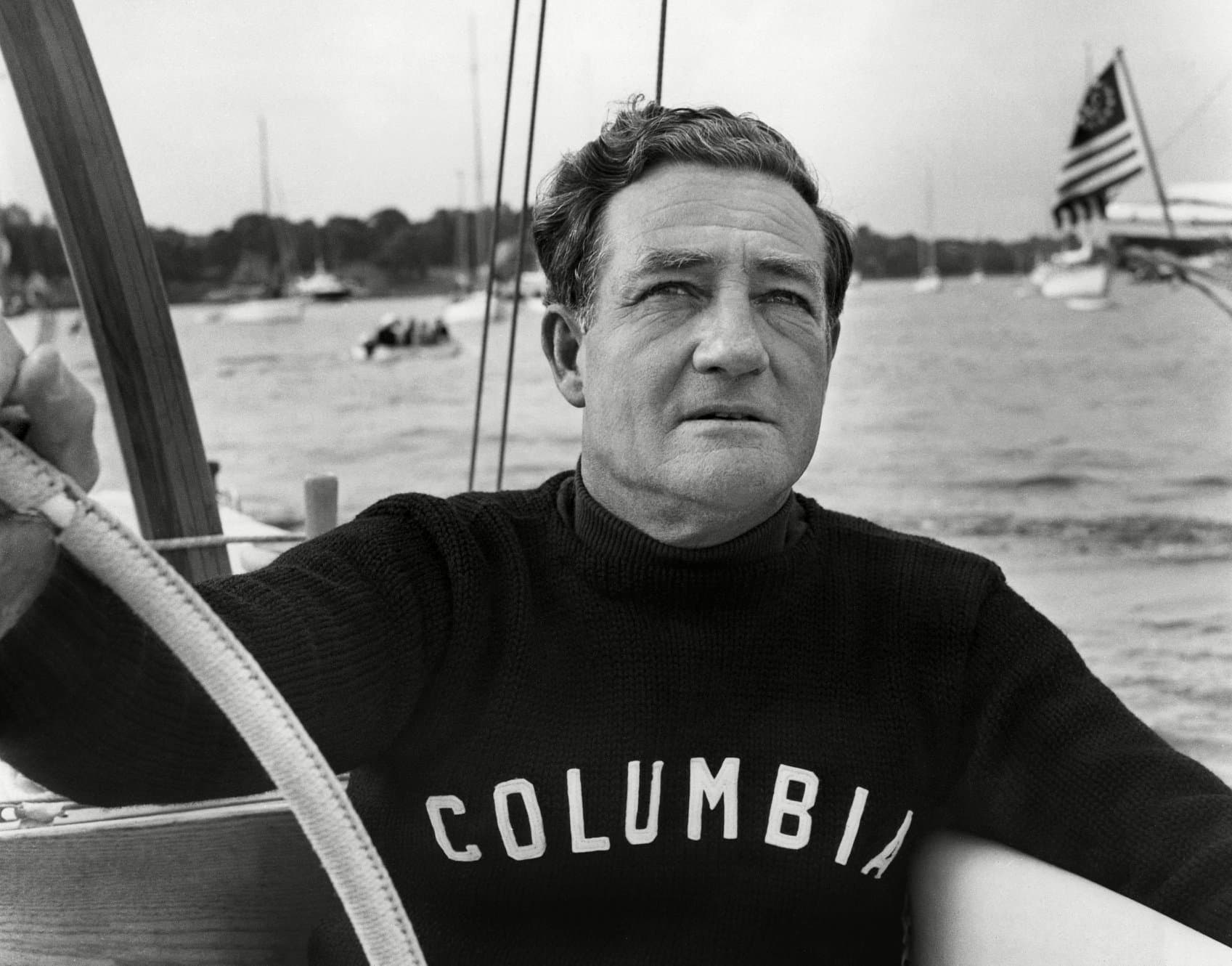
The Cunningham gets its name from Briggs Cunningham, the New York sailor who won in America’s Cup circles and had a serious 6-Meter résumé as well. He was born on January 19, 1907 and died on July 2, 2003, was inducted into the America’s Cup Hall of Fame in 1993, crewed on Dorade when she won the 1931 Fastnet Race, and later helmed Columbia in the 1958 America’s Cup defense against Sceptre. That pedigree matters less for the trivia than for the lesson: this was a sailor who understood that small adjustments in sail shape change the whole feel of the boat.
What the Cunningham actually does
Think of the Cunningham as one of the main ways to control luff tension on the mainsail. Quantum Sails describes halyard tension and Cunningham tension as doing the same basic job from opposite directions, and that is the simplest way to think about it. Add tension and you pull the draft forward, flattening the sail; ease off and the sail can carry more depth, with the maximum draft sitting farther aft and making the main fuller.
That shape change is not abstract. In light air, a fuller main gives you more power because the sail carries more depth. As apparent wind increases, more luff tension becomes useful, because a flatter sail is easier to keep on its feet and under control. Quantum also points out that when the sail gets fuller, the leech and luff move closer together, and when they move farther apart the sail flattens, which is why the Cunningham is so useful when the lower luff starts showing horizontal wrinkles.
When to pull it
Light air
Leave the Cunningham mostly alone when the breeze is soft and you want depth. Quantum’s trim guidance says it is normal to leave just a hint of wrinkles in the lower third in light air, and that is the cue I trust most. If you crank hard in a drifter, you can strip away the very fullness that helps the boat keep moving.
As the breeze builds
This is where the control starts paying rent. When the wind comes up, add Cunningham tension until those horizontal wrinkles in the luff disappear or nearly disappear. That pulls the draft forward, takes some belly out of the sail, and gives you a flatter shape that is easier to manage as the boat loads up.
When you are overpowered
If you are sailing upwind, the boat is heeling too much, or the helm is starting to feel heavy, flatten the main before you reach for bigger solutions. Quantum’s trim guide is clear that a flatter sail is better when you are overpowered and heeling too much, and it also links too much heel with weather helm. The Cunningham is one of the quickest ways to move the sail toward that flatter, more controlled shape.
Don’t ignore the other controls
The Cunningham does not work alone. The outhaul controls the depth in the lower third of the mainsail, and when you pull it on, it flattens and depowers the sail. That means the Cunningham and outhaul often work as a pair: the Cunningham fine-tunes luff tension and draft position, while the outhaul takes shape out of the bottom of the main.
If your mast bends, the relationship gets even more important. More bend generally means you need more luff tension, so the Cunningham becomes part of a broader bend-and-flatten system rather than a standalone trick. On a well-trimmed boat, you are not just yanking one line harder, you are coordinating halyard, Cunningham, outhaul, and mast bend so the sail carries the shape the wind actually wants.
How to rig it so it works underway
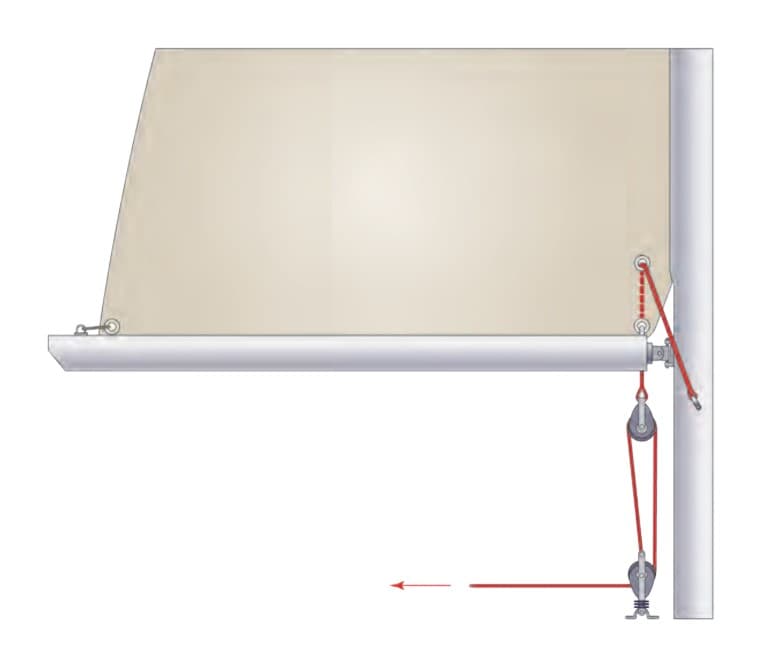
The basic setup is simple. A Cunningham line usually runs through a cringle or reinforcement in the luff near the tack, then leads to a fitting on the mast, boom, or deck so you can tension it quickly while sailing. On smaller boats, you may see a line led from a fixed point on the mast or boom, through the cringle, and back down. On larger boats, extra purchase may be needed, or the control may be led aft to the cockpit so you can adjust it without leaving your wheel or tiller.
You will also see some boats use a Cunningham hook instead of a full downhaul arrangement. That keeps the system simple, but it can pull the sail a little off center. The fact that West Marine still sells Cunningham hooks, along with cleated line versions of the control, is a good reminder that this is not obsolete hardware. It is still very much a living part of modern sail trim.
The practical test on your next sail
The easiest way to understand the Cunningham is to watch what happens to the luff. In soft air, let the sail carry a little shape and keep the lower third just slightly wrinkled. When the breeze builds, tension the Cunningham until those wrinkles fade and the draft moves forward. If the boat starts to heel harder than you want, keep flattening the main in small steps instead of overhauling it all at once.
That last part is where sailors get it wrong. Overdo the Cunningham and you can strip the main of the depth it needs in lighter air, turning a useful sail into a flat, stubborn one that feels dead. Use just enough tension to change the sail shape, not so much that you are chasing every wrinkle out of the cloth.
A control you already own
Modern mainsails often come with trim devices like a Cunningham or a flattening reef, because fine control of sail shape has a direct effect on performance. That is the real takeaway here. The Cunningham is not a special racing-only add-on and it is not there for decoration. It is a small, practical control that lets you move the draft forward when the wind rises, keep the main flatter when the boat starts to load up, and carry the right amount of power without turning the helm into a wrestling match.
This article was produced by Prism’s automated news system from verified source data, official records, and press releases, then run through automated quality and moderation checks before publishing. The system is built and supervised by the people who set the standards it runs under. Read our full AI policy.
Know something we missed? Have a correction or additional information?
Submit a Tip