DIY Anchor Light Switch Keeps Boats Compliant at Anchor
A simple relay and solar panel make masthead anchor lights wake up at dusk, saving battery, sparing mast climbs, and helping boats stay legal after dark.
The problem a cruising boat keeps running into
Leave a boat on a mooring or at anchor for a night and the masthead light becomes more than a checkbox. It is the difference between a boat that stays visible after dark and one that quietly disappears into the background while nobody is aboard to catch a dead battery or a forgotten switch. Cliff Moore’s solution was aimed at that exact headache: make the anchor light turn itself on at dusk and off in daylight, so the boat stays compliant without anyone having to babysit it.
That matters because the rules are not vague about what an anchored vessel must show. U.S. Coast Guard Rule 30 requires a vessel at anchor to exhibit an all-round white light where it can best be seen, and U.S. reference material says that light should be visible for 2 nautical miles on vessels under 50 meters. For skippers who leave the boat ashore for a day or two, that is not just a safety detail. It is the difference between meeting the rule and hoping the batteries hold out.
What Moore built, and why it is so practical
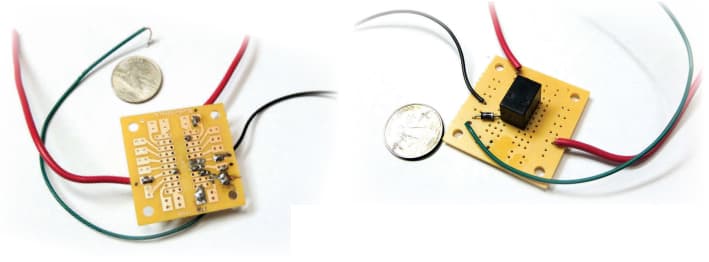
Moore did not build a fussy electronics project that needed constant attention. He put the circuit together on a breadboard so the parts stayed put while his hands stayed free for soldering, then used a mechanical relay and a solar panel to let the system sense darkness on its own. In plain cruising terms, the relay is the middleman that lets sunlight and darkness decide whether the anchor light should be on.
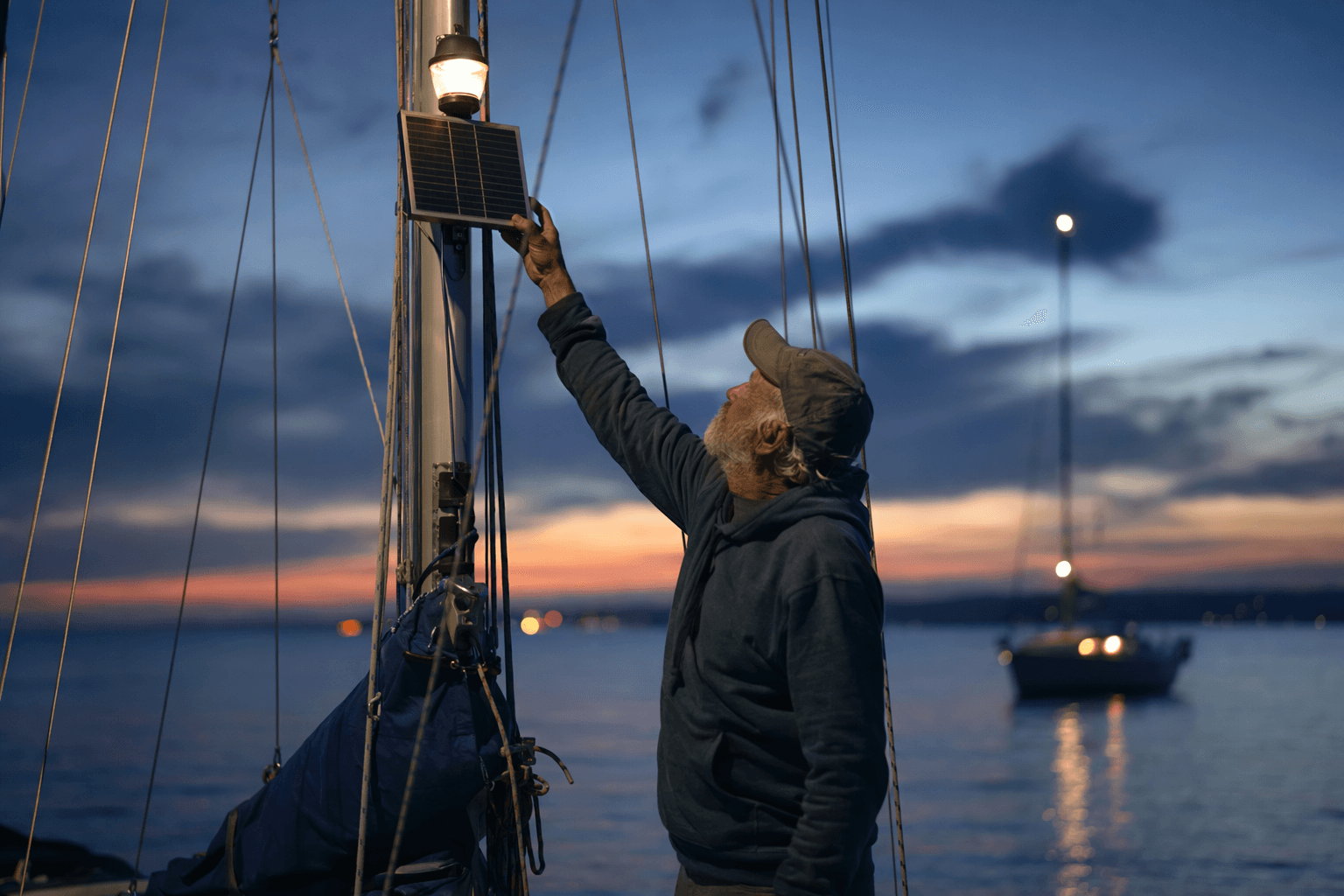
The beauty of the setup is how little discipline it asks from the skipper. There is no manual toggle to remember at sunset, no midnight walk to the dock, and no need to wonder whether the light was left burning all day and flattening the house bank. Moore says the relay turns the anchor light on at sunset and off again in daylight, which is exactly the kind of set-it-and-forget-it behavior a cruising boat needs when nobody is aboard.
For liveaboards and owners who leave the boat for extended periods, that automatic behavior is a real quality-of-life upgrade. It reduces the chance of human error, preserves battery capacity, and makes the boat feel less like a machine that needs checking and more like a system that can manage one basic safety task by itself.
The small parts that make the system more trustworthy
Moore’s circuit includes a diode, and that tiny part carries more weight than its size suggests. Its job is to prevent the solar panels from back-feeding at night, which would otherwise muddle the circuit when the sun goes down and the system is supposed to be deciding that it is dark. He used a 1-amp diode for the job, a modest component that fits the spirit of the whole project: keep it simple, keep it marine-practical.
He also recommends leading the wires to a barrier strip at the solar regulator so the relay can be bypassed if necessary. That is the kind of detail sailors appreciate because it assumes the real world will eventually intervene. Relays fail, connections corrode, and someone at some point will want a clean way to isolate the automatic switch without tearing the whole system apart.
There is another useful bit of flexibility tucked into the design. Moore notes that the same relay could control a masthead tri-color running light if it draws less than 1 amp. That makes the idea more than a one-off anchor-light trick. It becomes a small pattern for handling low-draw masthead lighting with the same automatic logic.
Why the compliance angle is not just paperwork
The reason this project resonates is that it sits right at the overlap of seamanship and common sense. The International Maritime Organization’s COLREGS require an anchor light visible at two miles, and the U.S. Coast Guard’s Rule 30 spells out the all-round white light requirement for vessels at anchor. For larger vessels, Coast Guard reference material also distinguishes other masthead and all-round light visibility ranges, including 6 miles for masthead lights and 3 miles for certain all-round lights on vessels of 50 meters or more.
For the average cruiser, the takeaway is simple: an anchor light is not decorative. It is part of the boat’s nighttime identity. When a boat is left on the hook and nobody is aboard, an automatic switch lowers the chance of a compliance miss and raises the chance that the boat will still be seen exactly when it needs to be.
That is where the real payoff lands. It is not only about avoiding trouble. It is about arriving the next day knowing the boat spent the night visible, legal, and not quietly draining the battery because someone forgot a switch.
A solution sailors have been reinventing for years
Moore’s approach is not a novelty in the wider DIY world. A much older homebuilt guide described the same basic idea, using an existing solar panel and a 12-volt SPDT relay rated at 5 amps or higher to automate an anchor light. More recently, another electronics project used a light sensor and a 12-volt LED light to create a compact automatic anchor-light circuit.
That continuity says something useful about boat life. This is a small problem that refuses to go away, and the answer keeps coming back to the same place: a cheap, reliable way to let the boat handle its own nighttime visibility. The parts may change, but the need does not. Cruisers still want fewer owner visits, less battery anxiety, and one less reason to climb the mast or make a dockside check after dark.
The real value of the setup
A project like this earns its place because it does not try to do too much. It solves one very specific cruising headache with a circuit that is easy to understand and easy to live with. The anchor light comes on at sunset, goes off in daylight, and does it without consuming attention from the person who should be thinking about weather, tides, or the next passage.
That is the best kind of marine DIY: modest on the bench, outsized in the slip. One relay, one solar panel, one diode, and a boat that stays visible and compliant while the owner is ashore.
This article was produced by Prism’s automated news system from verified source data, official records, and press releases, then run through automated quality and moderation checks before publishing. The system is built and supervised by the people who set the standards it runs under. Read our full AI policy.
Did this article answer your question?