Wind Wanderer refit forces route change, turns cruise plan workable
Wind Wanderer looked ready for Australia until the failures started. Vic and Sandy Hankins turned a risky dream into a workable cruise by moving the refit where the hard work could actually happen.
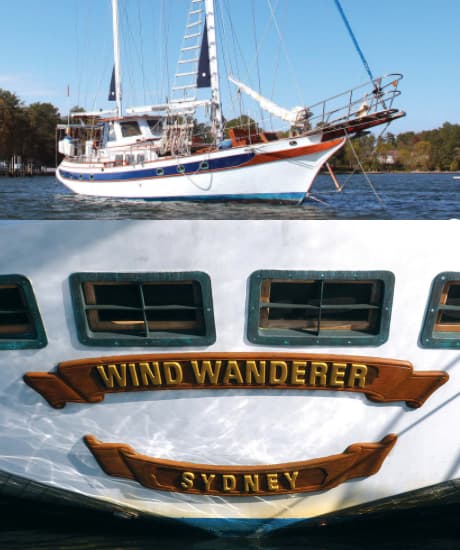
A boat that looked ready, then proved otherwise
A transmission that quit a day into the trip can turn a cruising dream into a moving repair lesson fast. That is what happened to Vic and Sandy Hankins after they took over Wind Wanderer in the Cayman Islands and tried to push ahead with their plan to sail to San Blas, then across the Pacific to Australia.
What looked like a ready-made passagemaker quickly exposed the truth every serious boat buyer eventually learns: a cruising boat is not the same thing as a finished boat. The Hankinses were not dealing with a blank-slate project. They had bought a heavy, full-keel CT-54, a boat with ocean-going bones and the kind of presence that makes people assume the hard work is already behind them. The refit showed how wrong that assumption can be.
Why Wind Wanderer was such a tempting buy
Wind Wanderer is a Robert Perry-designed CT-54 built by Ta Chiao Shipbuilding Co., a 54-footer with a 15.25-foot beam, about 57,000 pounds of displacement, 16,500 pounds of ballast, and a masthead ketch rig. The design first appeared in 1975, and the published specifications make clear why it has the look of a serious passage boat: long waterline, big keel, plenty of ballast, and the kind of proportions that suggest stability offshore.
There is another detail that matters to buyers who shop by reputation as much as by hull shape. The CT-54 was originally intended to be called the Hans Christian 54, though none were sold under that name. That kind of pedigree can make an older boat feel even more proven. But pedigree does not erase deferred maintenance, and it does not tell you what has quietly aged while the boat was still moving from one cruising season to the next.
That is the trap Wind Wanderer exposed. She already looked like a proper small ship, but the systems hidden behind that reassuring profile still needed real work. For anyone shopping for a used offshore boat, that is the exact place where optimism has to give way to a hard inventory.
The smartest move was not to keep going
The Hankinses had originally planned to work their way from the Cayman Islands to San Blas and then head across the Pacific home to Australia. Within days, they realized the list was too long for that schedule. That decision point matters more than most buyers want to admit. The best refit move is often not another weekend of patching, but a change of base.
A buddy pointed them toward the Sassafras River at the top of Chesapeake Bay, and that suggestion turned the project from a stressful passage into a workable repair campaign. The river is about 22 miles long and reaches the bay near Betterton, Maryland and Grove Point, which gives a cruising boat access to marinas, service yards, and a much better chance of getting real work done instead of improvised work done at anchor.
One yard there, Georgetown Yacht Haven, says it can haul boats up to 110 tons. That matters because a boat in the 57,000-pound displacement class still needs the kind of yard support that can handle a serious offshore cruiser without drama. If your refit needs haul-out access, room for trades, and enough infrastructure to tackle big systems, the repair base is not just a convenience. It is part of the project plan.
Separate the safety list from the dream list
Wind Wanderer’s story is useful because it shows how to divide refit work without letting the whole project swallow you. The must-do list is the part that keeps the boat moving and the crew safe. The nice-to-have list is everything that can wait without turning the boat into a hazard.
In the Hankinses’ case, the hard reality came in pieces:
- The transmission failed a day into the trip, so they had to continue under sail.
- The freshwater pump failed later in North Carolina.
- A stainless-steel boom bracket holding three mainsheet bails let go one night in 20-knot winds, forcing them to drop the sail without engine support.
Those are not cosmetic annoyances. Each failure directly affects the boat’s ability to keep moving, keep water flowing, or keep the rig under control when conditions turn ugly. When the transmission dies, propulsion is gone. When the freshwater pump fails, daily life becomes harder and morale starts to slip. When the boom hardware fails in 20 knots, the problem is no longer about comfort. It is about getting the sail down safely.
That is the real takeaway for anyone planning a refit on a boat that still needs to cruise. The first budget should go to the systems that decide whether the boat can operate, not the projects that simply make it prettier. If a repair affects propulsion, rig control, watertight reliability, or basic living systems, it belongs at the top of the list. If it only improves the finish line, it can wait.
What an eight-month refit really buys you
By the time Wind Wanderer reached the work site, the original plan for a few repairs had become an eight-month transformation. That timeline says a lot about the hidden cost of buying an already-cruising boat. The work does not just take money. It takes patience, extra hands, and enough time to keep making decisions without getting buried by them.
The Hankinses’ success came from accepting that delay early, instead of fighting it all the way to a breakdown at sea. They did not start from scratch, and that is the important nuance. Wind Wanderer was already set up as a capable cruising boat, not a dockside ornament. Even so, the hidden maintenance burden was large enough to force a major route change and a serious reset.
For buyers dreaming of a cheap fixer-upper that can become a cruiser, that is the reality check. The smartest refit blueprint is the one that protects the mission first, then trims the wish list until the boat can actually leave under its own steam, under sail, or both. Wind Wanderer’s path to a workable cruise was not shorter because the boat was bigger or older. It became workable because the Hankinses moved the project to the right place, sorted the work honestly, and let the boat tell them what had to happen next.
This article was produced by Prism’s automated news system from verified source data, official records, and press releases, then run through automated quality and moderation checks before publishing. The system is built and supervised by the people who set the standards it runs under. Read our full AI policy.
Did this article answer your question?


