Simple DIY rig cleans and lubricates sticky mainsail tracks
A sticky mainsail track is more than a nuisance, it can slow hoists and make reefing risky. Michael Facius solved it with spare line, pipe cleaners, and SailKote.
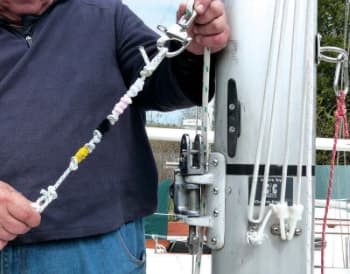
Why a sticky mainsail track matters
A sluggish main track is a performance problem and a safety problem. When the sail has to go up cleanly, come down fast, or reef without a fight, friction turns a simple maneuver into a deck struggle. In tight weather or with little room to maneuver, that extra drag can be the difference between staying in control and wrestling the boat at exactly the wrong moment.

That is why a dirty or sticky slot deserves real attention instead of a shrug. A mainsail that hoists easily and drops quickly reduces fatigue, speeds sail changes, and cuts wear on the slugs or slides that do the actual work inside the mast track. If the track is packed with grime, you feel it every time you grind.
Michael Facius’s cheap fix that actually works
Michael Facius came at the problem the right way: he looked for the simplest tool already on board. Sailing his 1979 C&C 30, *Callisto*, out of Bayfield, Wisconsin, on Lake Superior, he needed a cleaner sized for round barrel-type slugs. The key detail was the diameter, about half an inch, which gave him a target for the homemade rig.
Instead of hunting for a specialty gadget, he built a cleaning and lubrication wand from short spare lines. He tied overhand knots into the line, and those knots, roughly half an inch across, became the scrubbing body. Between several knots, he packed in very large pipe cleaners, turning the assembly into a flexible, dirt-grabbing tool that could ride the track without needing elaborate hardware.
He finished the rig with a bowline at the top and another at the bottom so he could control it with a halyard and a downhaul. That mattered. The line was not just a crude scrubber, it was a controlled piece of deck gear that could be moved up and down the mast without losing contact or wandering out of the slot.
Once assembled, he soaked the whole thing with SailKote and ran it up and down the mast several times. The result was exactly what you want from a maintenance job like this: a clean, well-lubricated sail slot, done with common parts and almost no drama.
What you should inspect before you blame the sail
Before you reach for lubricant, look closely at the track and the slugs. Practical Sailor has long pointed out that mast tracks collect more than just plain dirt. Spider webs and wasp cells can gather inside the slot, and the black grime sailors call mast mud can build up along the mainsail luff area, mixed with oxidized aluminum and general deck grit.
That matters because not every sticky track has the same cause. If the slot is dirty but the slugs are intact, you may only need a proper cleaning and a dry lubricant. If the slugs themselves are nicked up or misshapen, cleaning will help, but it will not fix a part that no longer runs true. Damaged plastic slugs should be replaced, not merely polished and hoped into service.
- black, sooty grime inside the track
- spider webs, wasp cells, or other debris that catch in the slot
- white oxidation on aluminum track surfaces
- slugs that are flattened, nicked, twisted, or ovalized
- hoists that get worse in certain sections of the mast, which often points to a localized obstruction or worn hardware
Look for these signs:
When cleaning is enough, and when you need a bigger fix
If the mast track is just dirty and the slugs are sound, cleaning and lubrication are the fastest win. That is the whole appeal of Facius’s setup: it gets you back to smooth movement without buying a specialty cleaner or tearing into the rig. For cruisers, especially, that is a practical field solution that can be repeated whenever the track starts to feel gummy.
If the track still binds after a thorough cleaning, the problem is probably beyond surface grime. A kinked slot, badly worn slugs, or hardware that no longer matches the mast profile can create a persistent drag point. At that stage, the issue stops being maintenance and becomes replacement or repair.
A good rule is simple: if the track feels gritty, clean it. If it feels dry but still drags, lubricate it. If it still hangs up after both, inspect the slugs and track geometry more seriously.
How to use the DIY wand without making a mess
Facius’s method works because it keeps the cleaning surface in the slot while giving you control from both ends. The halyard handles upward movement, the downhaul manages the return, and the knots plus pipe cleaners do the scrubbing. That lets you work the full length of the track instead of smearing lubricant in one spot and calling it done.
The other reason the method is smart is that it fits the way SailKote is meant to work. McLube describes SailKote as a high-performance dry lubricant for sails, hulls, rigging, deck hardware, and sail tracks, and Sailrite notes that it bonds to a clean, dry surface and is built for smoother, longer-lasting movement. That means the real trick is prep. Get the grime out first, then apply the lubricant so it can bond where it belongs.
How this approach fits into the bigger sailtrack toolkit
Facius’s rig is homemade, but it is not some one-off hack with no precedent. It sits in a long line of sailor-built solutions for stubborn tracks. A previous Good Old Boat approach, the Sailtrack Lubricator by Don Launer, pointed in the same direction, and Forespar has also described using a short piece of luff tape with grommets and a retrieving line as a way to clean a luff track.
That matters because it confirms the basic lesson: the best tool is often the simplest one that fits your mast and your slugs. If you already have a track that uses round barrel-type slugs, you do not need to overcomplicate the job. You need something that matches the slot, reaches the dirt, and lets you control the motion from deck level.
The practical payoff
The value of Facius’s setup is not just that it saved money. It made an annoying maintenance chore fast enough to do before the problem got worse. That is the real edge with sticky mainsail tracks: if you stay ahead of the grime, hoists stay easy, reefing stays manageable, and the sail does not turn into a fight when conditions tighten.
For sailors who have been at this a long time, that is familiar wisdom. Facius and his wife Patty have been sailing since 1986, starting with an O’Day 20, and the solution he found feels exactly like the kind of fix that comes from years of living with a boat instead of reading about one. It is cheap, repeatable, and built from gear you can reasonably have on board already. When the main has to move cleanly, that is the kind of repair that earns its keep.
This article was produced by Prism’s automated news system from verified source data, official records, and press releases, then run through automated quality and moderation checks before publishing. The system is built and supervised by the people who set the standards it runs under. Read our full AI policy.
Did this article answer your question?


