DIY mast boot fix tackles stubborn sailboat deck leaks
Duct tape, mast-boot tape, and Spartite all gave way to the same leak. David Lynn’s rubberized DIY boot shows how to seal the mast partners without trapping the rig.
The worst kind of cabin leak is the one that comes back right at the mast collar, after you have already patched it once, then patched it again. David Lynn’s answer was to stop treating the partners like a temporary inconvenience and build a real boot around them, using a flexible waterproofing compound that holds up in sun, rain, and repeated mast work. On a keel-stepped boat, that gap is not just annoying. It sits at a structural choke point where water can work into the interior and into the area that supports the rig.
Why the mast partners are such a stubborn leak
Keel-stepped masts create a problem that deck-stepped rigs do not: the mast has to pass through the deck at the mast partners, but the deck itself cannot carry the rig’s compression loads without support from below. That means the opening has to be sealed cleanly even though the mast is constantly moving a little, the boat flexes, and the hardware around it is rarely a simple flat surface. Once water gets past that collar, it is not just a cosmetic drip. It can reach liners, wiring, and the structure around the step, which is why this is one of those leaks that demands a proper fix instead of another swipe of goop.
Lynn’s story reads like a lot of real-world boat ownership does. He tried duct tape first, and it lasted about 10 months. He moved up to mast-boot tape, which cost more and still began leaking after about a year and a half. Spartite worked, but it was expensive and came with the kind of mistake you only get to make once: apply it badly and you can bond the mast to the boat.
Why Spartite helped, and why it was not the final answer
Spartite has a strong following because it is designed to be more than a bandage. Industry retailers describe it as a reusable mast wedge and collar system that stays attached to the mast, creates a custom chock, and is intended to virtually eliminate water leaks. Catalina Direct presents it as a permanent, structural, watertight fitting that forms a reusable plug attached to the mast, while West Marine says it supports the mast and largely ends the leak problem when the rig is out.
The catch is in the installation. Boats.com notes that Spartite can be the best way to support and seal the mast partners, but it also warns that petroleum jelly is needed to keep the mast from accidentally bonding into place. That matters even more when the mast comes out. After Lynn’s refit in New Zealand, the old Spartite boot could not simply be reused, which pushed him back into the world every DIY sailor knows well: find something that seals, survives the weather, and does not turn a simple re-step into a yard bill.
The DIY boot Lynn built around the problem
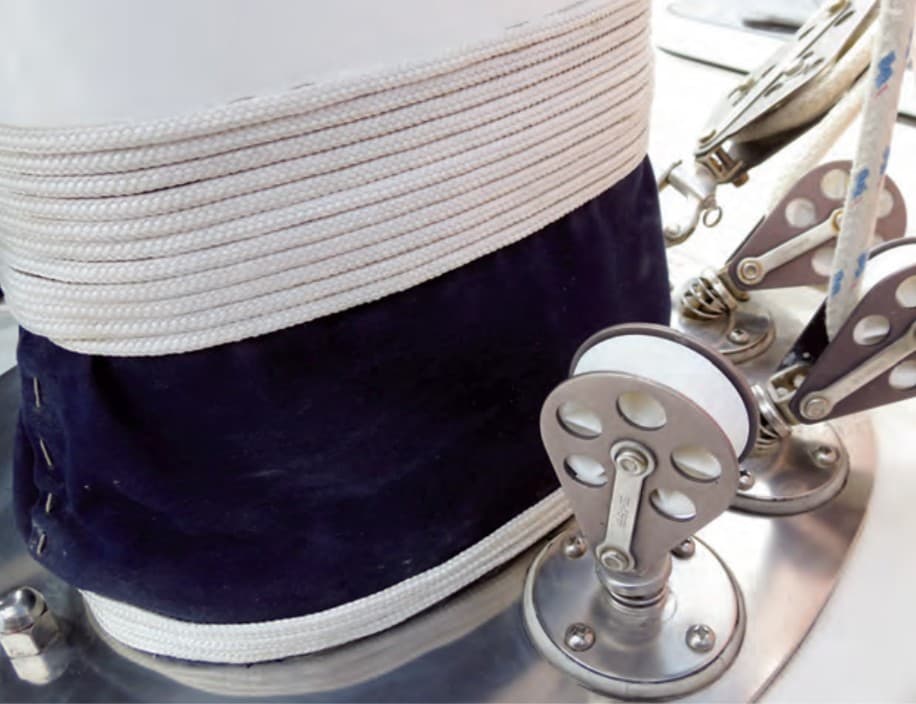
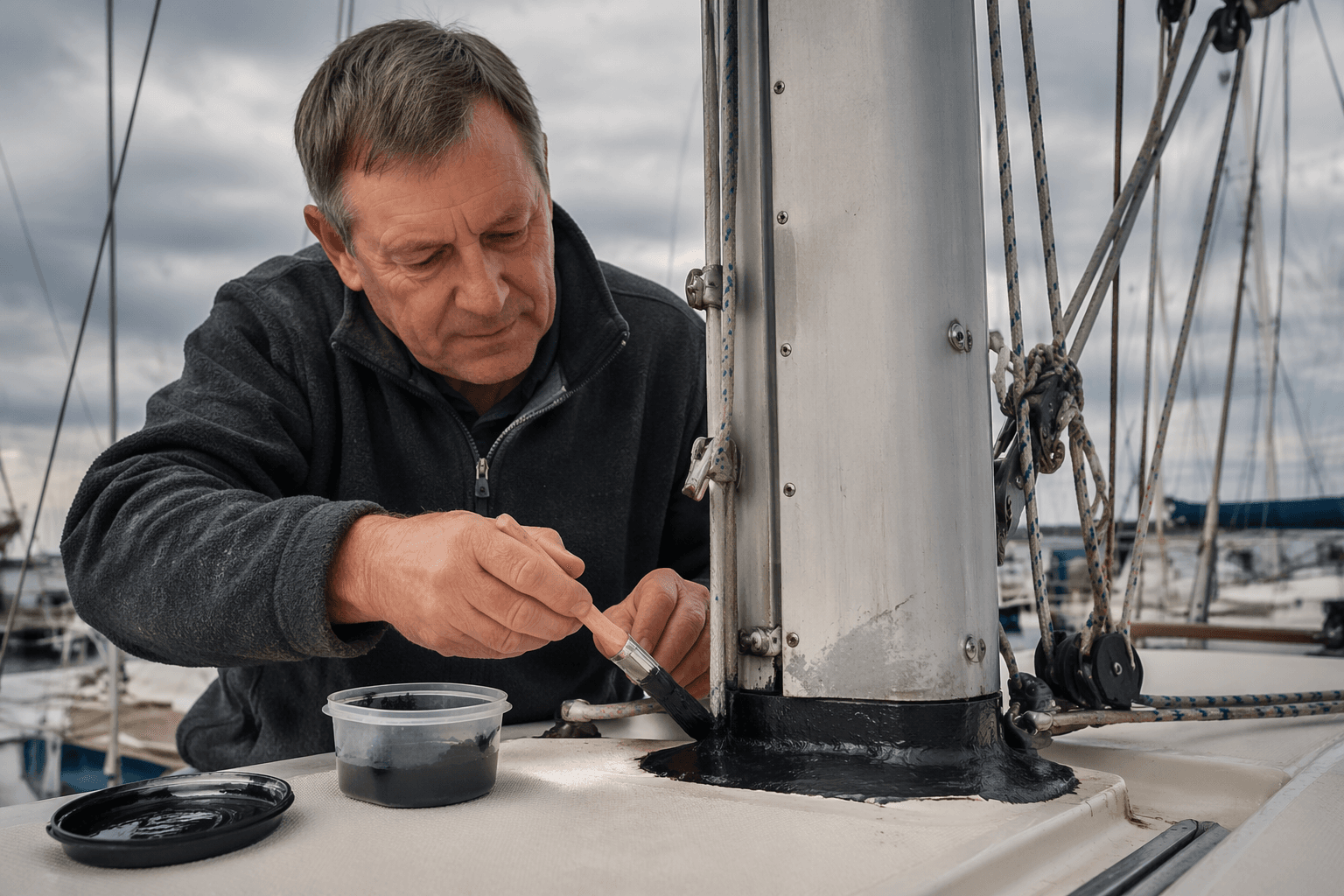
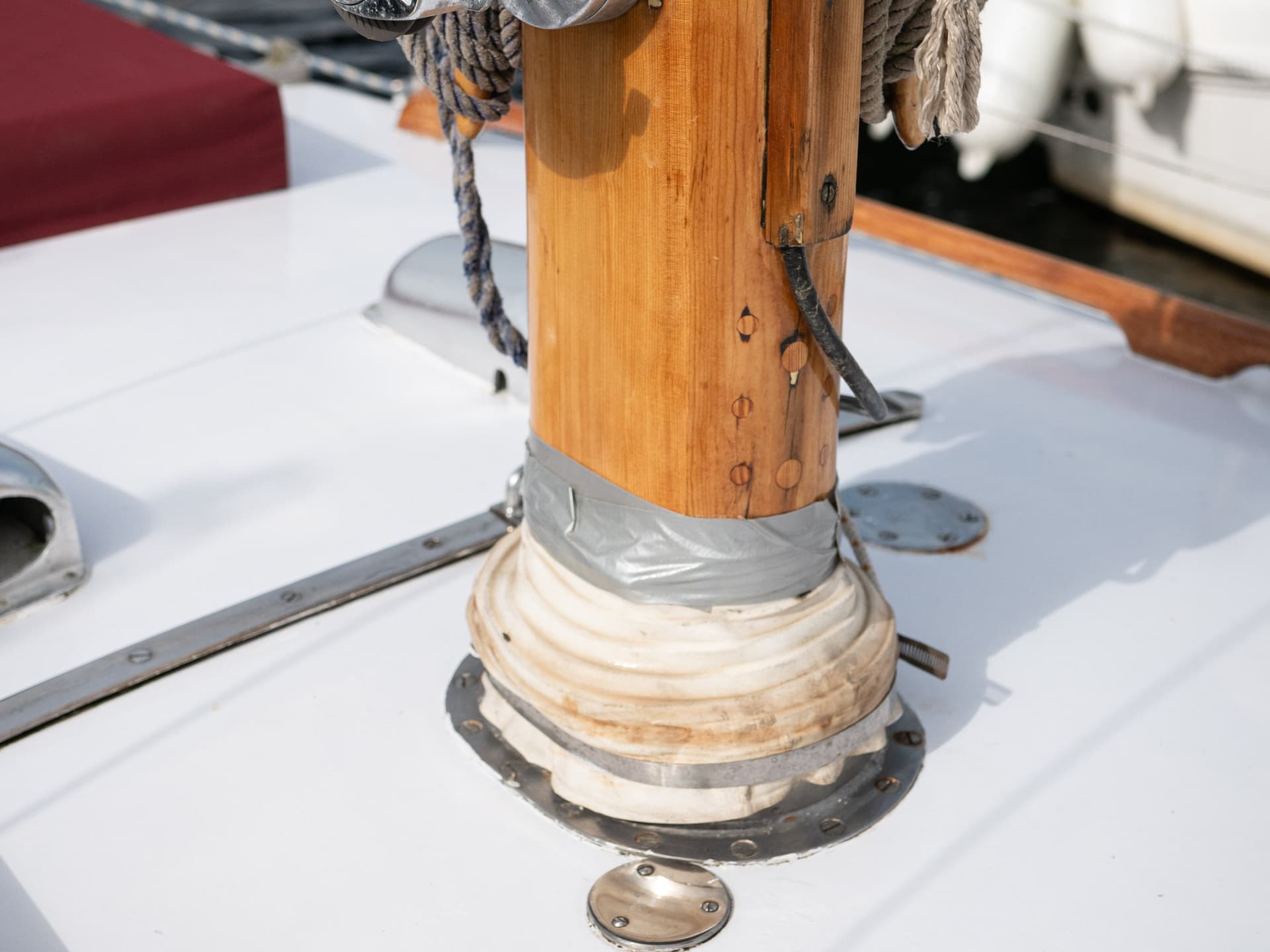
A local rigger pointed Lynn toward a one-part waterproofing compound normally sold for roof and gutter repairs. Instead of trying to cast a complicated custom collar from scratch, Lynn made a cone-shaped mold with duct tape and masking tape, leaving a short section of bare mast above the deck collar. He then brushed on three thick coats of the rubbery compound and let it cure.
That simple sequence is the heart of the fix. The mold gives the boot its shape, the bare mast section gives the material room to seal cleanly, and the multiple coats build enough thickness to cope with movement and weather. Once the compound cured, Lynn finished the boot with a Sunbrella dress cover and whippings at the top and bottom, so the result looked deliberate instead of improvised. It is the sort of detail sailors notice immediately, because a boot that works is good; a boot that works and does not look like a roadside repair is better.
What makes this approach appealing is how little drama it asks for in return. The compound is flexible, UV-resistant, and it adheres to metal and painted surfaces, which is exactly what a mast partner seal needs. For anyone who steps or unsteps a mast seasonally, that combination matters as much as the watertight seal itself.
How this compares with other DIY mast boots
Lynn’s version fits into a long tradition of low-cost mast-boot experiments. Practical Sailor has pointed to materials like EPDM roofing rubber, PVC sheet, Hypalon-coated bandages, and even cut-up truck inner tubes as workable boot material. One example it highlighted used a common Ace bandage coated with Hypalon paint, and that boot was said to have lasted more than four years without a leak.
The common thread is not the material alone. It is the idea that a mast boot should be removable, affordable, and tolerant of the real conditions around a partner opening. That is why these fixes continue to show up in sailor conversations year after year. They are not glamorous, but they buy time, reduce maintenance stress, and keep water where it belongs.
- Flexible materials work best when the mast still needs to come out later.
- UV resistance matters because the boot lives in full sun as often as in rain.
- A clean finish helps you spot the difference between a sound seal and a cracked one.
How to tell if the leak is really the boot
The easiest clue is location. If the water shows up around the mast collar or runs down from the partners during rain or washdown, the boot is the first suspect. If you already know the mast has been stepped and re-stepped, and especially if an old Spartite collar was removed or could not be reused, the seal around that opening deserves immediate attention.
The next clue is condition. A boot that has lost flexibility, started separating from painted surfaces, or simply aged out after years of sun and movement is telling you it is done. A leak that appears even when the boot looks intact may be pointing to the same area, but not necessarily the same surface, which is why the opening, the collar, and the fit of the boot all need to be checked together before you chase the wrong problem.
That is what makes Lynn’s fix so satisfying. It answers the exact failure point, without demanding a permanent bond, a huge budget, or another season of cleanup around the partner. When the next hard rain hits a keel-stepped boat, the goal is simple: keep the water out of the mast collar and keep the rig free to come apart when it has to. Lynn’s boot does both, and that is why it feels like the kind of fix sailors keep in the back of their minds for the next time the leak returns.
This article was produced by Prism’s automated news system from verified source data, official records, and press releases, then run through automated quality and moderation checks before publishing. The system is built and supervised by the people who set the standards it runs under. Read our full AI policy.
Know something we missed? Have a correction or additional information?
Submit a Tip