Stuck seacock on Columbia 10.7 highlights hidden through-hull risks
A seized seacock can strand an engine and leave a through-hull uncaged. On this Columbia 10.7, the fix became a smarter, more serviceable plumbing system.
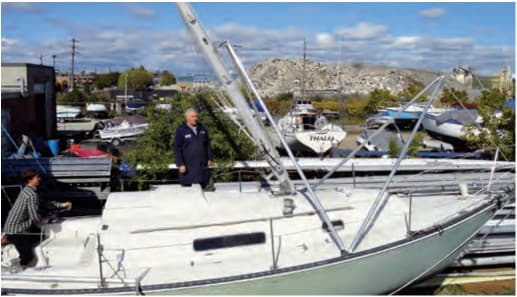
A stuck seacock is not just annoying hardware. On Paul Esterle’s Columbia 10.7, the engine-cooling inlet valve seized so badly that the handle broke off, leaving the boat with the opening effectively stuck in the open position and no clean way to shut it down. That is the moment a through-hull stops being a small maintenance item and becomes a risk decision: keep patching around it, rebuild it, or replace the whole setup with something you can trust offshore.
When a valve no longer turns, the problem is already bigger than the handle
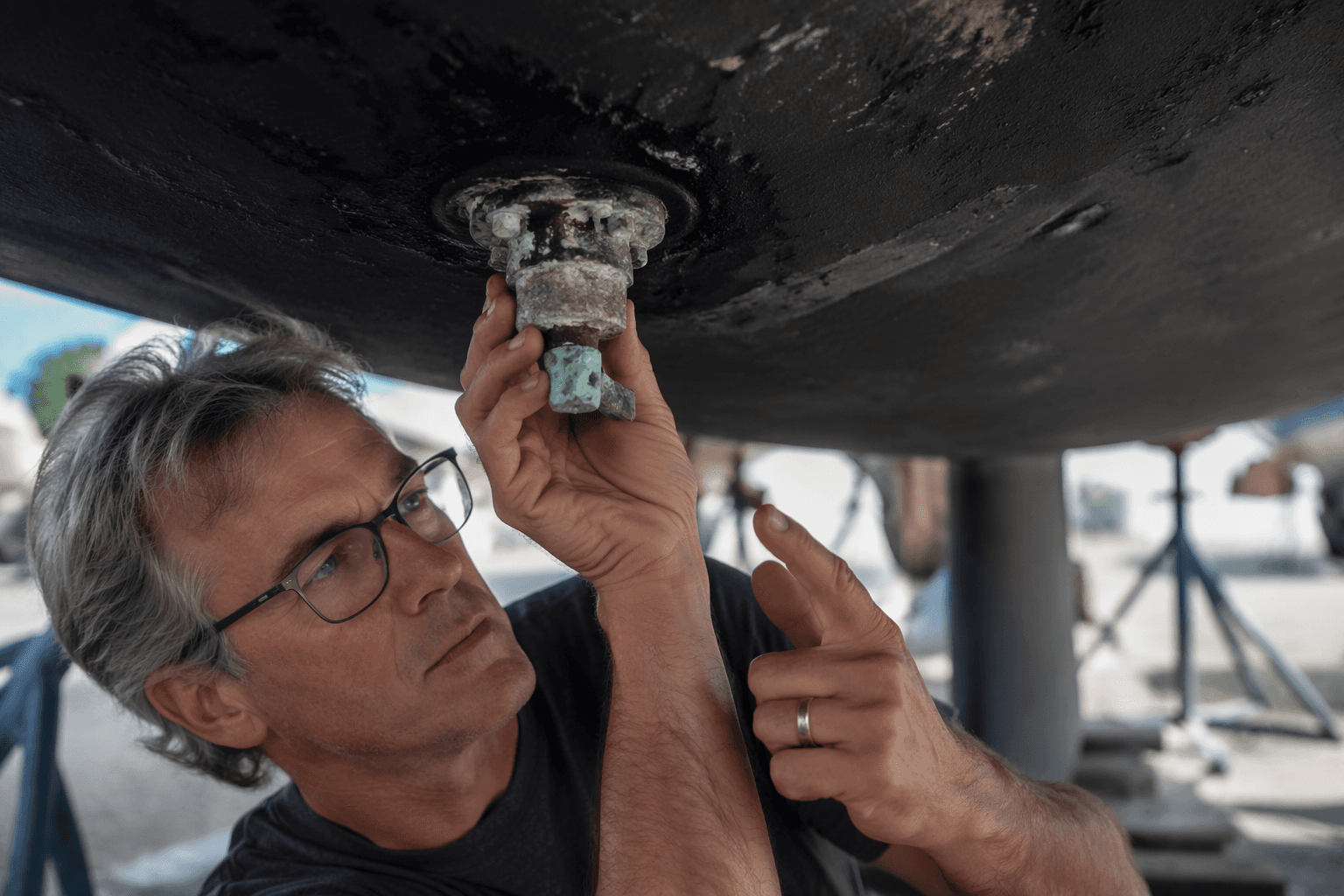
Esterle’s boat carried an old Groco SV seacock, the rubber plug-core style built for the marine market from 1960 through 1993. Groco says those SV-series valves work on an expanding plug principle, and if the valve becomes hard to turn, the plug should be removed and inspected. The company also warns that long periods of non-use can create bumps in the rubber because it does not quickly return to shape, which fits the kind of failure that shows up on older boats that sit between outings instead of getting exercised regularly.
That detail matters because a stiff seacock is often treated like a nuisance until it fails at the worst possible time. Esterle kept the boat going by squeezing the hose shut with Vise-Grips until haulout, a temporary workaround that buys time but not confidence. Once a hose, clamp, or fitting becomes the only thing standing between the sea and the bilge, the decision is no longer whether the valve works a little poorly, but whether the whole through-hull arrangement deserves a reset.
Why the old through-hull was due for a full rethink
ABYC H-27 covers seacocks, thru-hull fittings, and drain plugs below the maximum heeled waterline, and ABYC recommends compliance for boats and systems manufactured after July 31, 2009. ABYC also says every through-hull fitting below the heeled waterline should have a seacock. In other words, the standard is not just about a part on the hull, it is about building a controllable barrier wherever water can get in when the boat is pressed over.
ABYC describes its standards as consensus-based guidance from government, industry, and public-sector representatives, which gives the recommendation practical weight for owners trying to separate acceptable old-school hardware from gear that should be brought up to current expectations. On a 35-foot cruiser like the Columbia 10.7, designed by Alan Payne and built from 1976 to 1979 by Columbia Yachts, that often means confronting original plumbing that was good enough when new but now lives in a very different maintenance reality. Older boats are where these hidden through-hull risks tend to linger longest.
Replacement was the obvious call, but serviceability shaped the choice
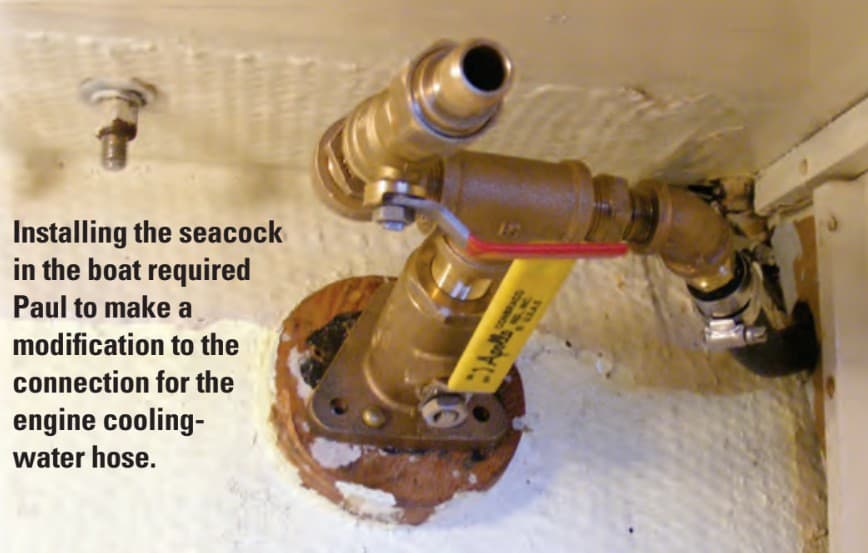
At haulout, Esterle replaced the failed assembly with a modern bronze BV750 seacock. Groco’s current BV-series literature describes the valve as full-flow, bronze, and serviceable while installed, with a stainless-steel ball and stem, PTFE seats and seals, and a bonding attachment; it is also UL Listed 647B and made in the USA. That combination shifts the decision from “Can I make this old valve keep working?” to “Can I service this valve without creating another crisis?”
Groco’s own BV-750 3/4-inch flanged seacock is described as completely field serviceable with a solid stainless ball, which matters in real-boat terms because serviceability is what keeps a maintenance job from turning into a fiberglass surgery project. A modern bronze ball-valve seacock is not just a stronger shutoff, it is an easier system to inspect, maintain, and trust when the boat is off the dock and the sea is the only backup plan.
The smartest part of the refit was not the valve, but the way it was used
Esterle did not stop at replacing the hardware. He repurposed a flush-valve setup he had used in testing and added quick-disconnect capability, then arranged the hose so it could either feed antifreeze into the engine or, if dropped into the bilge, let the cooling pump act as an emergency bilge pump. That turns a single through-hull from a one-job fitting into a multi-purpose system, which is exactly the kind of practical ingenuity that makes a refit worth more than the sum of its bronze parts.
Groco’s BVS-750 combo points in the same direction by describing a space-saving seacock and strainer combination with one access point for winterization and maintenance. The logic is simple and appealing: one location, fewer contortions, and more than one useful configuration when the boat needs cooling water, winterizing fluid, or emergency pumping. The best plumbing upgrade is often the one that solves the maintenance headache and adds a useful function at the same time.
How to judge rebuild, replace, or redesign around an old through-hull
The Columbia 10.7 example makes the decision tree easier to read. If a valve is merely stiff, Groco’s guidance suggests removing and inspecting the plug before the problem escalates. If the handle is broken, the valve is seized, or the boat is being held together by a hose clamp and good luck, replacement is already overdue.
From there, the smarter question is whether the new setup can do more than the old one ever did. A bronze, full-flow, serviceable seacock with modern seals is better on its own, but a quick-disconnect winterizing arrangement or emergency bilge-pump routing turns that upgrade into a small system redesign. That is the real lesson buried inside Esterle’s workaround: a neglected through-hull is a liability until you make it easy to service and useful in more than one mode.
A stuck seacock tends to announce itself at the most inconvenient time, and that is why the Columbia 10.7 story lands so hard. Once the old SV valve seized and the handle broke off, the boat needed more than a fix, it needed a rethink, and the best refit used that moment to turn one of the boat’s most exposed points into one of its most versatile and serviceable systems.
This article was produced by Prism’s automated news system from verified source data, official records, and press releases, then run through automated quality and moderation checks before publishing. The system is built and supervised by the people who set the standards it runs under. Read our full AI policy.
Know something we missed? Have a correction or additional information?
Submit a Tip