DIY Queen Berth Refit Transforms a 1979 Cheoy Lee's Tired Cabin
A 1979 Cheoy Lee's cramped quarter berth gets a full DIY makeover, proving any awkward offset bunk can become a proper queen cabin with patience and the right materials.
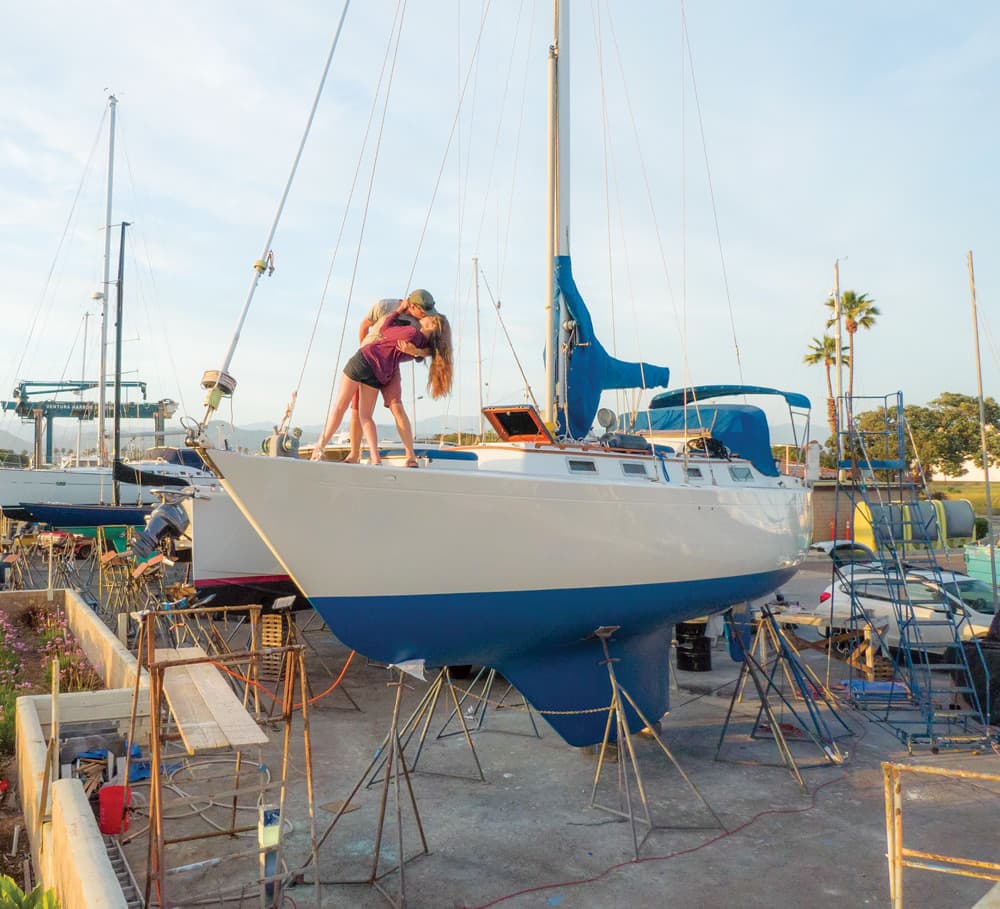
When Marissa Neely and her husband Chris bought their 1979 Cheoy Lee Avocet, the boat's generous interior was a major selling point. A 41-footer that could comfortably host six people and swallow all their gear without complaint is genuinely rare, and Avocet delivered on that promise almost everywhere below decks. Almost.
The trouble revealed itself during a family sail to California's Santa Cruz Island, when it became undeniably clear that the quarter berth wasn't cutting it for guests. The berth had been originally designed as an offset double bunk for crew under sail: functional for a watchkeeper grabbing a few hours of sleep, but a long way from comfortable for a couple trying to share the space. That realization set the refit in motion, with a goal to "convert that awkward bunk setup into a proper (sort of) queen berth, one where a couple could actually cuddle comfortably."
What followed was a project that, as Neely puts it, "took twice as long, made twice the mess, and taught us twice as much as we expected." The finished berth is worth every hour of it.
Building the Bones: Removing the Upper Bunk
The first structural move was removing the upper bunk's large teak beam. As Neely describes it, the beam "acted as a lip along the top level," and getting rid of it was the critical step that opened up the space. But this wasn't a case of reaching for a pry bar: the teak was too valuable to sacrifice. "Knowing we wanted to reuse that beautiful piece of teak to upgrade our nav station, we took extra care to remove each bung and screw without a scratch." That kind of discipline at the disassembly stage is what separates a clean refit from a costly one, and it pays forward when the salvaged material finds its second life at the nav station.
With the upper bunk gone, Chris spotted an opportunity that any thorough refit sailor will recognize immediately. "Once the upper bunk was gone, my husband, Chris, had the idea to clean and repaint the lockers beneath the lower bunk with white Rust-Oleum, because if you're already knee-deep in a refit, what's one more coat of paint?" The answer, of course, is nothing: those lockers had been hidden long enough, and a coat of white Rust-Oleum transformed them into something presentable while the space was already torn apart.
Tackling the Teak Veneer and Building a Shelf
Old teak veneer on a boat this age carries its own set of problems, and Avocet's was no exception. Years of toe-rail leaks had taken their toll, leaving the veneer damaged and past saving. Chris removed it entirely, painted the bare fiberglass underneath, and then built a shelf above the berth that, in Neely's words, looked "so tidy it looked like it had been there all along."
The shelf is more than an aesthetic upgrade. "While we were at it, we added a new shelf above the berth, a long-overdue upgrade for guests and gear alike. It holds radios, flashlights, flags and the occasional bag of chips." For any guest cabin on a cruising boat, having that kind of dedicated stowage within arm's reach makes a real difference to liveability overnight. To finish it properly, the woodwork received a few coats of Man-O'War varnish, and the result speaks for itself: "voilà, factory finish achieved."
Relocating the Battery Charger
With the berth itself taking shape, a separate but related issue came into focus. The battery charger had been mounted to the bulkhead between the lazarette and the cabin, technically functional but visually intrusive. Neely's take on it is direct: "It worked fine, but I hated seeing it every time I looked aft." The solution was to relocate it into the electronics locker, which conveniently doubles as her overflow closet. It's a small change that cleans up the sightline considerably and consolidates the boat's electrical gear in a more logical spot.
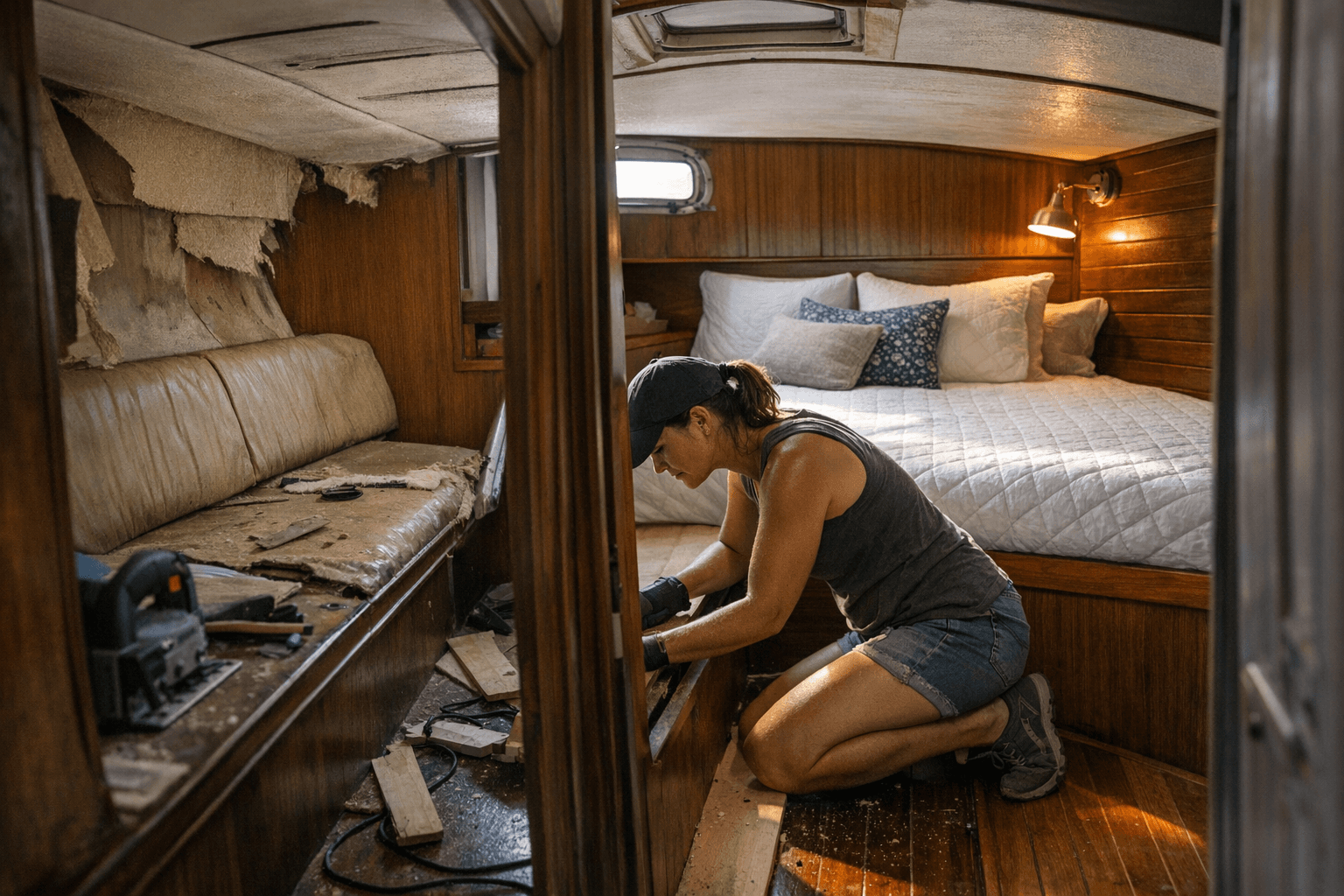
This kind of secondary decision, tidying up systems and aesthetics in the same pass, is one of the underrated benefits of tackling a refit comprehensively rather than piecemeal. When the tools are already out and the space is already disrupted, it costs very little extra effort to get the details right.
Materials That Made It Work
For anyone looking to replicate this refit on their own boat, the material choices here are worth noting:
- White Rust-Oleum for repainting the locker interiors: practical, durable, and easy to apply in the confined spaces beneath a berth
- Man-O'War varnish, applied in several coats, for the shelf and teak work: delivers a hard-wearing finish that reads as factory-original when done carefully
- The salvaged teak beam from the upper bunk, earmarked for reuse on the nav station: a reminder that careful deconstruction can offset future project costs significantly
The decision to paint the bare fiberglass after removing the damaged teak veneer also deserves attention. Rather than replacing like for like, the team cleaned the surface and painted it, keeping the finish consistent with the new white lockers and reducing the risk of future moisture problems behind new veneer.
The Result
The quarter berth on Avocet is now, by Neely's honest assessment, "a proper (sort of) queen berth." The qualifier is part of the charm: this is a 1979 Cheoy Lee, not a modern production boat with purpose-built queen cabins, and the result reflects what's achievable through smart, careful work rather than a full structural rebuild. Guests can actually sleep comfortably. Couples can actually share the space. The shelf keeps essential gear organized and accessible. The lockers are clean and bright. The charger is out of sight.
"The quarter berth is finally finished, for real this time, thanks to patience, persistence and partnership." That closing line from Neely carries the weight of anyone who has lived through a boat refit: the "for real this time" is earned, and the three qualities she credits are exactly the ones this kind of project demands.
The work Marissa Neely and Chris put into Avocet's quarter berth is a practical blueprint for what's possible when a 40-plus-year-old offshore boat gets owners who take the time to do it right. The teak beam waiting at the nav station suggests this particular crew isn't done yet.
This article was produced by Prism’s automated news system from verified source data, official records, and press releases, then run through automated quality and moderation checks before publishing. The system is built and supervised by the people who set the standards it runs under. Read our full AI policy.
Did this article answer your question?