Easy removable cockpit lights for sailors without rewiring
A cheap solar-and-battery cockpit light setup gives you anchor-night ambience without drilling, rewiring, or flattening the house bank.
Dark cockpits make every small job worse. If you want a little light for an evening drink, a gear check, or a late arrival at anchor, the wrong fix is a permanent wiring job that turns a simple comfort upgrade into a project.
A cockpit light that stays out of the boat’s way
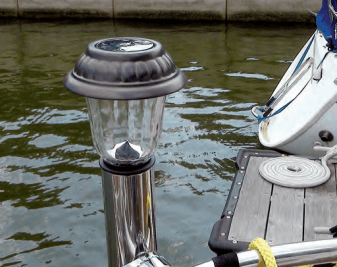
The appeal of Good Old Boat’s casual cockpit-light idea is how little it asks of the boat. The setup combines passive-solar garden lights with magnetically mounted battery-powered spotlights, then lets those lights drop into a winch socket or a fishing-pole holder. No drilled holes, no hardwired circuits, no permanent panel switch.
That matters on cruising boats, where the cockpit is still a working space. You need room for sheets, winch handles, moving crew, and hardware that does not like getting cluttered up by semi-permanent accessories. A light that disappears when you are done with it is often the better sailing answer than one that is always hanging around.
What to use, and why sailors keep coming back to it
The basic parts are easy to source from hardware stores and big-box stores. Off-the-shelf solar garden lights charge during the day and run for several hours after sunset, which is exactly the kind of low-drama performance you want for casual cockpit use. Good Old Boat has leaned into that idea more than once, including a 2026 “Night light” item that points out how many off-label uses solar LED landscape lights have aboard.
There is also a practical budget angle here. In a separate Good Old Boat piece, “Versatile portable lighting,” the lights were described as costing about $5 each and clipping to any place on the boat with a 1-inch rail. That is the right mindset for a low-commitment upgrade: cheap enough to experiment with, simple enough to remove, and useful in more than one spot on board.
A setup like this works best when you think in layers:
- Solar garden lights for soft ambient glow in the cockpit.
- Battery-powered spotlights for task light when you actually need to see what you are doing.
- A removable mount, such as a winch socket, fishing-pole holder, or clip-on rail fitting, so nothing has to be drilled in place.
That combination gives you enough light for a relaxed evening at anchor without turning your electrical system into the main character.
What works at anchor, and what gets shaky in motion
This is a cockpit-lighting hack, not a full-time deck system. It shines when the boat is relatively settled, the cockpit is being used socially, and you want just enough light to keep drinks, plates, and faces visible without blasting the whole boat. For that use case, the low draw is the point, because you are not leaning on the house bank for a feature that may only get used a few nights a season.
Where it starts to lose charm is in spray, heel, and general underway chaos. Anything that lives in a winch socket or clips to a rail has to survive real boat motion, and anything magnetic depends on a clean, stable surface. If you need the cockpit lit while you are actively sailing in rough conditions, a temporary comfort light is the wrong tool for the job.
That is the key pitfall with this kind of DIY. People hear “simple lighting” and start imagining a permanent solution, but the better use is to treat it like removable gear. If the boat is about to get busy, or the weather is going to make the cockpit wet and active, the lights should come off and go back in the box.
Do not confuse courtesy light with required lighting
The U.S. Coast Guard is clear that recreational vessels must display navigation lights between sunset and sunrise and during periods of restricted visibility. The Coast Guard also emphasizes that navigation lights and anchor lights have specific visibility and installation requirements, including the sectors in which those lights must be seen.
That is why a removable cockpit light is such a clean idea. It stays in the comfort category, not the compliance category. You are not trying to improvise a navigation-light system or turn an anchor-light arrangement into a project; you are adding temporary courtesy lighting that leaves the required lighting untouched.
That distinction matters because sailors often reach for “one light to do everything,” and that is where boats get messy. A quick cockpit hack should stay separate from any light that has to meet federal requirements for visibility and installation.
Why this little trick keeps showing up in sailing DIY
This is not a one-off gimmick. The Boat Galley has long recommended small solar lights for cockpit and boarding-area lighting, and Stingy Sailor published a 2020 cockpit-lighting DIY post that pushed solar-powered flood lights for cockpit use. Good Old Boat has also returned to the same theme in multiple pieces, which says a lot about how well the idea fits real cruising life.
The reason is simple: boat electrical systems are finite, and convenience loads have a way of multiplying. A solar light that runs itself is often more sensible than another hardwired circuit, especially when the cockpit only needs occasional light and the rest of the time it needs to stay clear, dry, and ready for sailing.
So the best version of this upgrade is not the fanciest one. It is the one you can drop into place for dinner at anchor, pull out before the boat gets lively, and forget about when you are back to the business of sailing. That is the whole point of a good removable cockpit light: better evenings, no new holes, and no permanent baggage attached to the boat.
This article was produced by Prism’s automated news system from verified source data, official records, and press releases, then run through automated quality and moderation checks before publishing. The system is built and supervised by the people who set the standards it runs under. Read our full AI policy.
Know something we missed? Have a correction or additional information?
Submit a Tip