Easy-store winter frame makes boat covers simple to stash
A PVC winter frame that breaks down to a 12-foot bundle solves the bigger off-season problem: where to store the cover support.
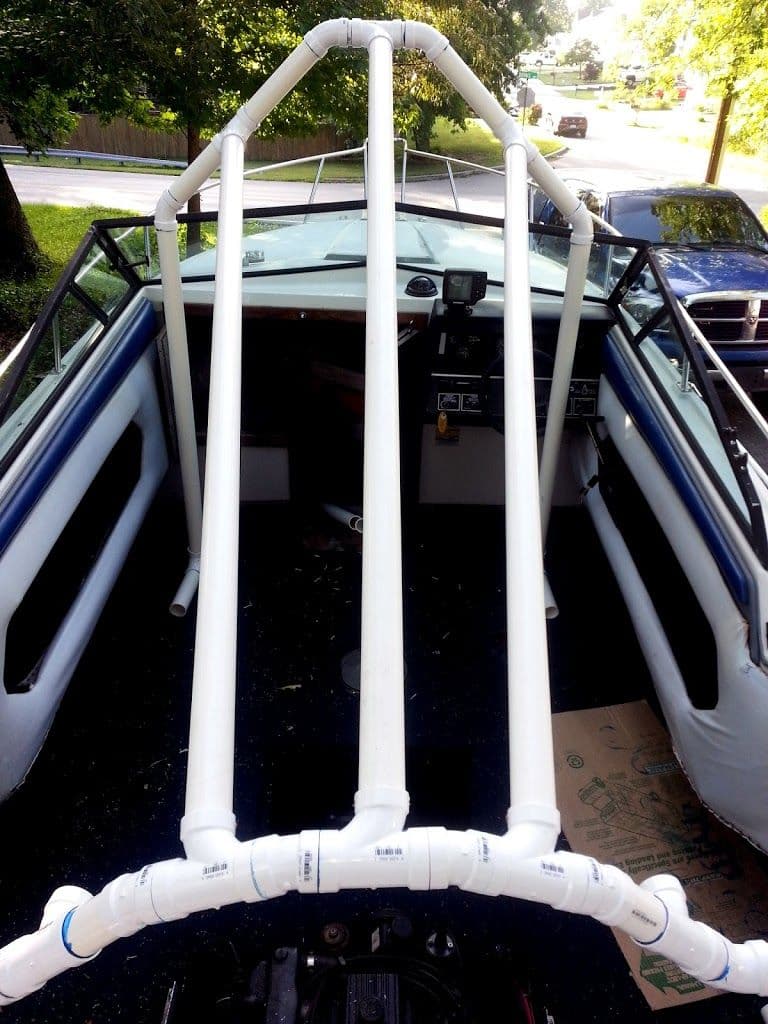
A winter cover only works if the support system is just as easy to live with as the tarp itself. Jim Hildinger’s easy-store winter frame gets that part right: it holds a cover up, sheds snow, and then disappears into a bundle small enough to stash until next fall. That storage-first idea is what makes the design worth copying, because the real headache is not building a winter cover once. It is finding a way to keep the frame from becoming another pile of awkward gear for the rest of the year.
Why this frame sticks with you
Hildinger’s frame landed in Good Old Boat Issue 86, Sept./Oct. 2012, where the magazine described it as a “nifty boat-cover support that packs to nothing.” The phrase fits because the system is built around one simple advantage: it can be taken apart and stored without turning the garage into a graveyard of odd-shaped parts. Good Old Boat’s archive page identifies Hildinger as the author, and the magazine later classified the piece as a Sailing Tips article, which is exactly how it reads in practice, useful, direct, and focused on the job at hand.
The part that makes the story feel real is how it started. Hildinger spotted the framework while driving by a boat, thought it looked clever, and then went back with a camera to photograph it for future reference. That is the right kind of obsession for a do-it-yourself sailor. Good ideas usually announce themselves with a simple visual clue: something that looks sturdy enough for winter, but not so permanent that you curse it in July.
How the structure works
The frame uses inexpensive PVC pipe, which keeps the material cost down and the parts familiar. Instead of a fixed canopy or a one-off wooden contraption, the design is modular. The bows are connected with another pipe run through tees, then secured with cable ties at the deck fittings, so the whole thing becomes a tube structure that is easy to assemble and just as easy to pull apart when the season changes.
The support is meant to form a curved arch over the cockpit or deck area. That curve matters because it takes the weight off the mast and gives the cover a slope that helps water and snow slide off instead of pooling. The ends are tied to a cleat, rubrail, or another handy point with plastic wire ties, which is a small detail but an important one. The frame does not need fancy hardware to work; it needs enough hold to keep the arch where you put it.
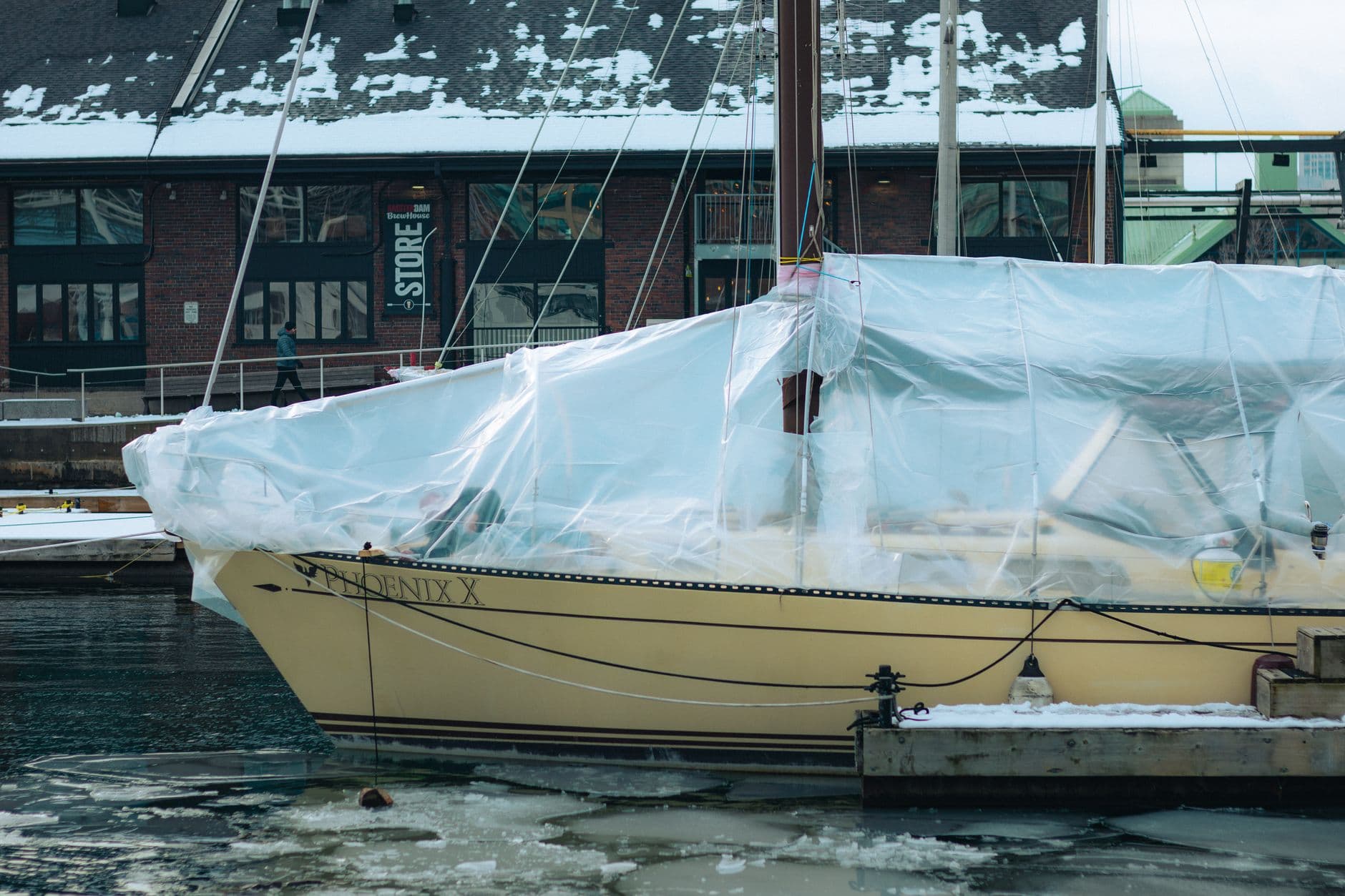
Once the arch is up, the cover goes over the top. A tarp or shrinkwrap can be thrown over the frame, and the shape does the rest. That is the practical genius here: the frame is doing two jobs at once, supporting the cover and creating the pitch that winter weather demands.

The storage payoff is the whole point
A lot of winter-cover systems fail in the same annoying way. They work fine in January and become a storage problem in April. Hildinger’s frame answers that by breaking down into a bundle roughly 12 feet long and about 8 inches in diameter, small enough to tuck in a garage, attic, or under a porch until the next fall. That is the kind of detail that matters when you are deciding whether to build something yourself. A support system that saves time in November but eats space all summer is not really a solution.
The low-cost angle helps too. PVC is cheap, the connectors are straightforward, and the fastening method leans on wire ties and cable ties instead of custom parts. In Good Old Boat’s September/October 2012 issue, that fits neatly alongside product-adjacent DIY items like a complete wire tie kit and a rapid shrink heat gun tool kit for boats up to 26 feet. The magazine was clearly speaking to sailors who like practical canvas-and-shrinkwrap work, not theory.
That matters because the value is not just that the frame works. It is that the frame can be reused season after season without becoming a storage headache. If you have ever fought a winter cover frame that was too bulky to save, you already know why that matters.
Snow load is the test that counts
The slope is not a cosmetic detail. A later Good Old Boat piece, “A winter cover for all seasons,” in Issue 110, Sept./Oct. 2016, said a tarp-and-frame cover had been used for 20 winters before being replaced by shrink wrap. It also noted that the shrink wrap eventually deteriorated and collapsed under heavy snow. That is the kind of failure that reminds you why support shape and durability matter more than a clean first-season install.
That later story is useful because it puts Hildinger’s simpler frame in context. Winter gear in a snowy climate has to survive repeated load, not just look tidy on launch day. A reusable support system with a proper slope gives you a better shot at avoiding the ugly surprise of a sagging cover after a storm.
The same logic showed up years earlier in an iboats forum discussion about PVC boat-cover frames. One poster described making a frame from 1-inch PVC tubing and tee fittings, then recommended making the uprights high enough to produce a fair slope in the tarp so it would shed snow. Different boat, different builder, same basic rule: if the roof is too flat, winter finds it.
What makes this design worth copying
The appeal of Hildinger’s frame is that it treats winter cover storage as part of the build, not an afterthought. It is cheap enough to justify, simple enough to assemble, and compact enough to live with once the tarp comes off. That combination is what so many homemade cover systems miss.
If you want a winter frame that earns its keep, this is the formula to steal:
- PVC pipe for low cost and easy disassembly
- Tee fittings and cable ties to keep the structure modular
- Plastic wire ties at cleats, rubrails, or similar anchor points
- A curved arch that creates runoff instead of a flat snow shelf
- A breakdown package small enough to store in the off season
That is why the easy-store winter frame still lands as more than a clever one-off. It solves the part of the problem that usually gets ignored, which is not how to cover the boat in November, but how to make the whole system disappear cleanly when the boat is uncovered again.
This article was produced by Prism’s automated news system from verified source data, official records, and press releases, then run through automated quality and moderation checks before publishing. The system is built and supervised by the people who set the standards it runs under. Read our full AI policy.
Did this article answer your question?