Energy-recovery watermakers, are they worth it for solar cruisers?
Energy-recovery watermakers can slash power draw enough for solar cruisers, but only if your batteries, automation, and install budget can keep up.
The first time your water plan threatens to drag the generator back into the routine, the boat gets louder and the cruising math gets uglier. That is why Adam Morris’s look at energy-recovery watermakers lands so well with solar-and-battery sailors: the promise is not just making water, but making water without reopening the fossil-fuel loop.
Practical Sailor, the independent boat-testing publication with more than 50 years of history, treats the subject as a real systems decision rather than a shiny gadget review. Morris writes from life aboard SV Confianza and goes straight at the claim that energy-recovery designs can cut power use by 75% to 80% compared with conventional watermakers. That is the right frame for generator-light cruising, where every amp-hour matters and every “quick fix” has to earn its place in the electrical budget.
What the energy-recovery numbers actually mean
The appeal starts with the power math. If a conventional watermaker is a heavy electrical draw, an energy-recovery unit is trying to turn the same job into a much smaller load, one that fits the rhythm of solar charging and battery storage. Morris’s article asks whether that 75% to 80% reduction is real enough to matter in daily cruising life, not just on a spec sheet.
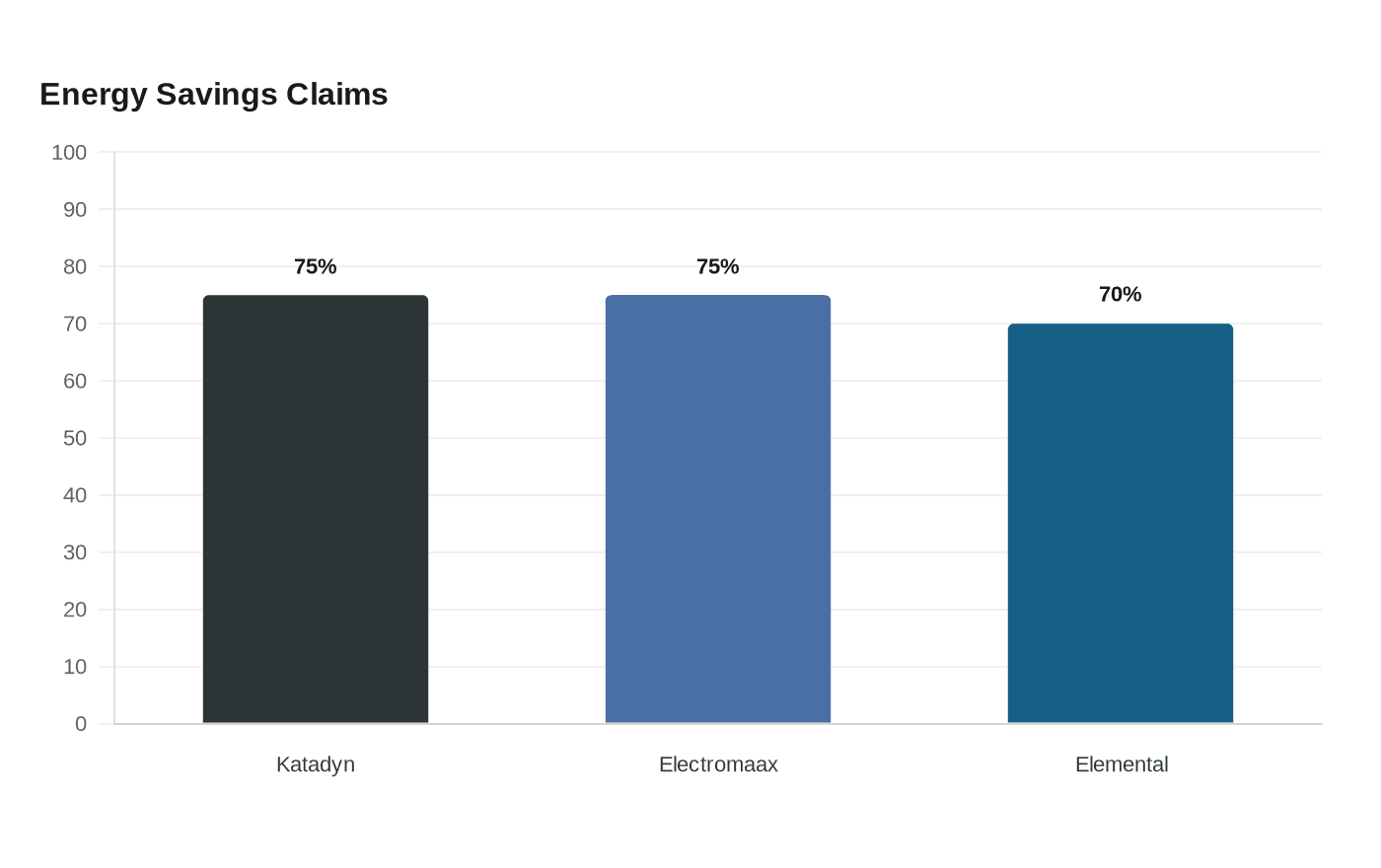
The broader manufacturer claims all point in the same direction. Spectra says its energy-recovery technology can recover 90% or more of the available energy. Katadyn says its pressure amplifier can reduce energy use by as much as 75% over conventional systems. Electromaax says its Solarmaax unit can use up to 75% less energy than earlier conventional systems. Elemental Water Makers says its systems use 70% less energy than standard desalination and can require three times less solar panel area. For a cruiser trying to build a self-sufficient electrical system, that is not a small efficiency bump. It is the difference between a specialty appliance and something that can live inside the boat’s normal energy envelope.
Why this matters so much for solar cruisers
A watermaker only closes the loop if it fits the rest of the boat. On a solar cruiser, that means the watermaker has to work with the batteries, the solar array, and the charging schedule instead of constantly pulling the boat back toward generator use. The attraction is obvious: less time hunting for fuel, less noise at anchor, and less planning around when the engine has to run just to make drinking water.
That is also why realistic daily water use matters. If your onboard water demand is steady, predictable, and modest, a low-draw watermaker can become part of the daily solar cycle. If your water use is spiky, or if you want to make a lot of water in a short window, the system starts to look less like a neat upgrade and more like another load to manage. The upgrade works best when the boat’s energy storage and charging plan can absorb the production run without forcing a backup generator into service.
The hidden cost is not just power, it is complexity
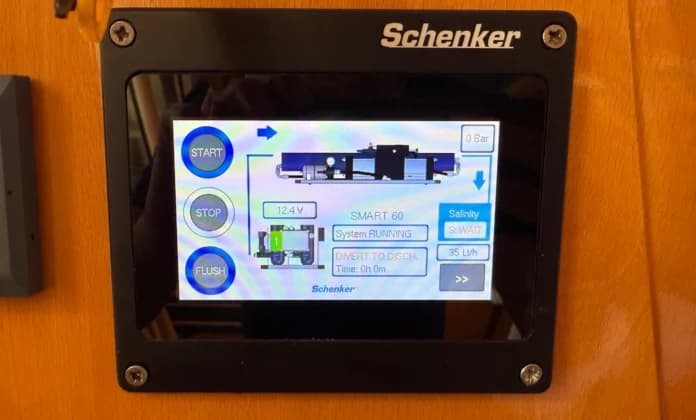
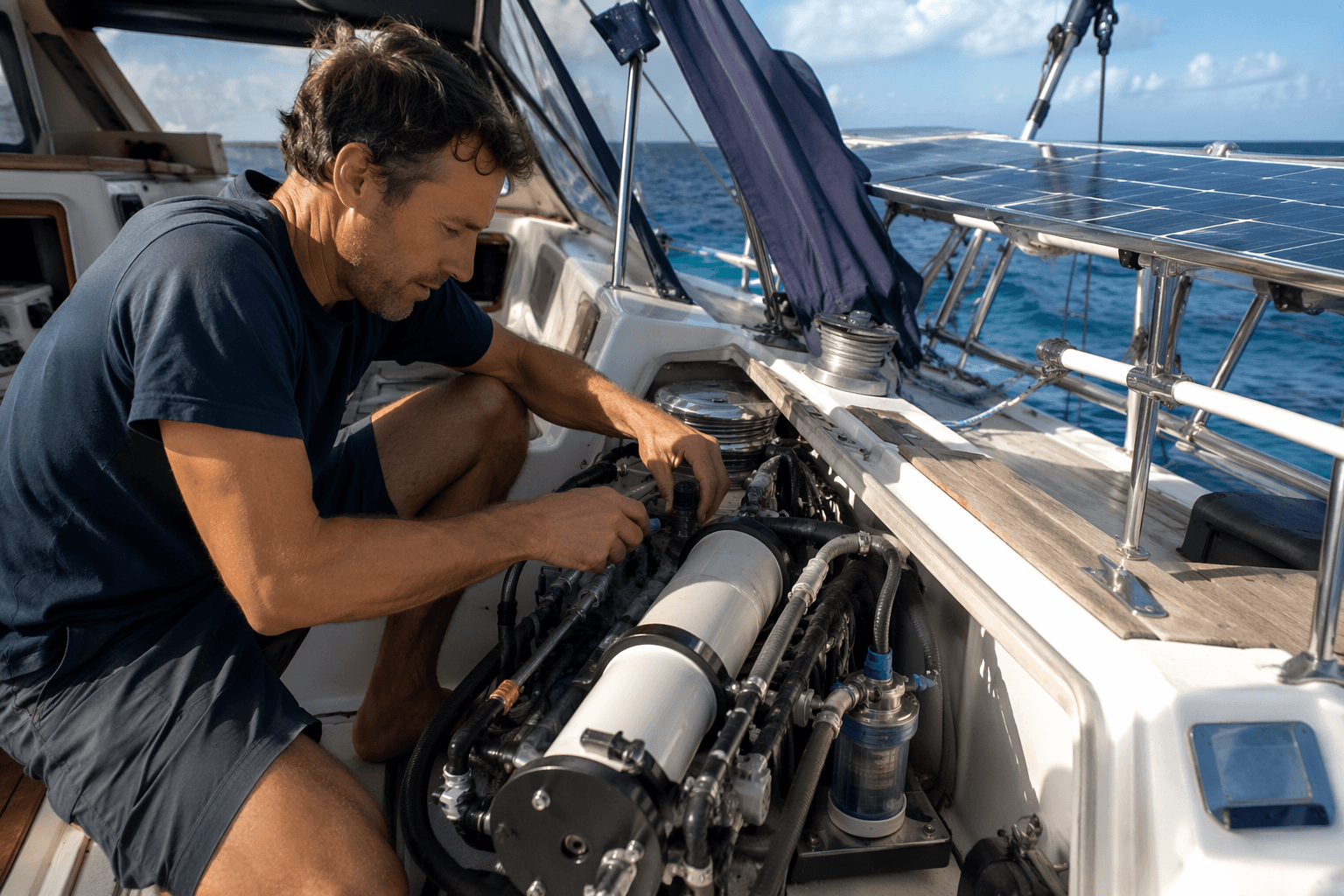
Morris’s most useful detail may be the one that has nothing to do with membranes or pressure pumps: Schenker’s optional touch panel, which costs about $2,000 with sensors, automates salinity diversion and post-run flushing. That turns a complicated setup into something closer to a two-button process, and that matters because many watermakers fail in the real world for exactly that reason. They are not rejected because they cannot make water. They are rejected because they ask too much of the operator.
Schenker says all of its marine watermakers use an Energy Recovery System, and the company says it was established in 1998 and holds four patents for small-scale energy-efficient solutions. Its FAQ also says the smaller 30 and 50 liter-per-hour models are DC only, and that the power demand is so low AC power does not make sense for those units. That is an important clue for DIY owners: the smaller and more efficient the system, the more it rewards a boat that is already built around DC loads and careful energy management.
A practical decision framework for DIY owners
If you are deciding whether the upgrade is worth it, the question is not simply whether the watermaker saves power. It is whether your whole boat can support the watermaker without inviting generator creep back through the side door.
1. Start with your water demand, not the brochure.
If your daily usage is light enough that a modest production run keeps tanks topped up, an energy-recovery system has a chance to shine.
2. Check whether your battery bank and solar array can cover the run comfortably.
The whole point is to avoid making water by starting a generator just to refill the batteries afterward.
3. Decide how much automation you need.
A $2,000 touch panel that handles salinity diversion and flushing may be cheaper than the frustration of a more hands-on system that nobody wants to babysit.
4. Match the electrical architecture to the unit size.
Schenker’s smaller 30 and 50 liter-per-hour units are DC only for a reason, and that fits the kind of boat trying to live quietly on renewables.
5. Be honest about install burden.
The savings can be substantial, but only if the budget, the plumbing, and the wiring all support the plan.
The bigger takeaway for cruising boats
Electromaax says the Clark Pump process was developed in 1997 and was shown at a boat show that same year, and Schenker’s company history starts in 1998. That tells you the core idea is not new. What has changed is the cruising context around it: better solar, better batteries, and a growing expectation that a boat can live well without burning fuel for every domestic task.
That is why energy-recovery watermakers now feel like more than a clever niche. On the right boat, with the right load calculations and the right support systems, they can turn watermaking into a quiet part of the solar routine. On the wrong boat, they are just a more sophisticated way to discover that the generator is still in charge.
This article was produced by Prism’s automated news system from verified source data, official records, and press releases, then run through automated quality and moderation checks before publishing. The system is built and supervised by the people who set the standards it runs under. Read our full AI policy.
Know something we missed? Have a correction or additional information?
Submit a Tip