Engine failure leaves Quest drifting toward Lavan Sands off Beaumaris
Quest lost drive when drive-plate bolts sheared off, then a weak tow and a ripped jib clew left Bob Angell easing a 10-ton gaffer toward shelter.
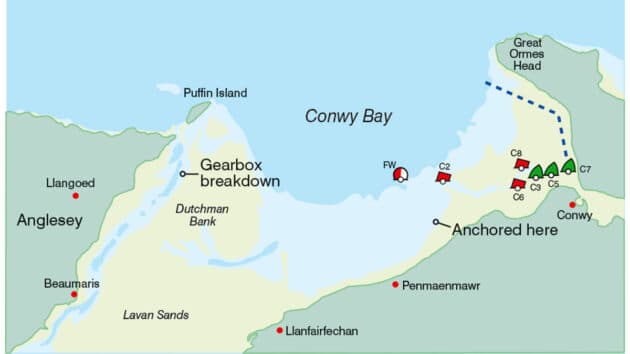
Bob Angell’s passage out of the Conwy River turned into a real-time decision tree when Quest lost drive about 1½ miles from Beaumaris and started drifting toward the Lavan Sands on a falling tide. The 1902 9.7m, 32ft Morecambe Bay prawner had left near the top of the tide with a plan to motor out and then continue under sail toward Moelfre, but the weather had already pushed the crew toward a more conservative route.
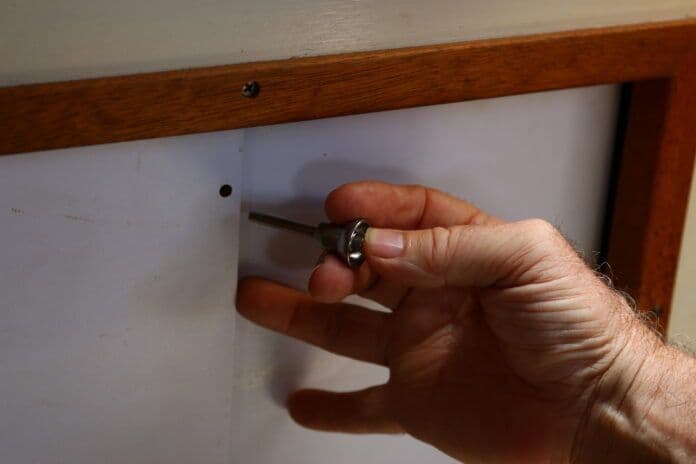
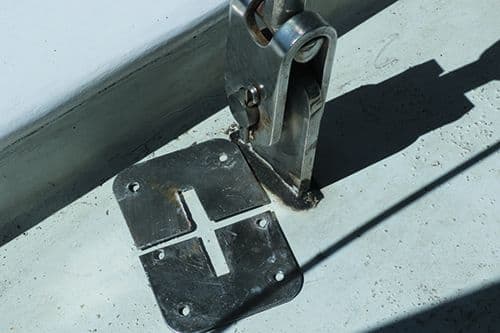
The forecast shift was enough to change the whole passage. Angell said the original outlook called for south-west Force 3-4, but Holyhead Coastguard later upgraded that to south-west Force 4-5 rising to north-west Force 5-6. That made Moelfre look exposed and uncomfortable, so the crew chose the more sheltered Menai Strait route around Puffin Island instead. Then the engine tone changed, drive was lost, and Angell found that all the bolts had sheared off the drive plate between the engine and gearbox, cutting the transmission between power and water.
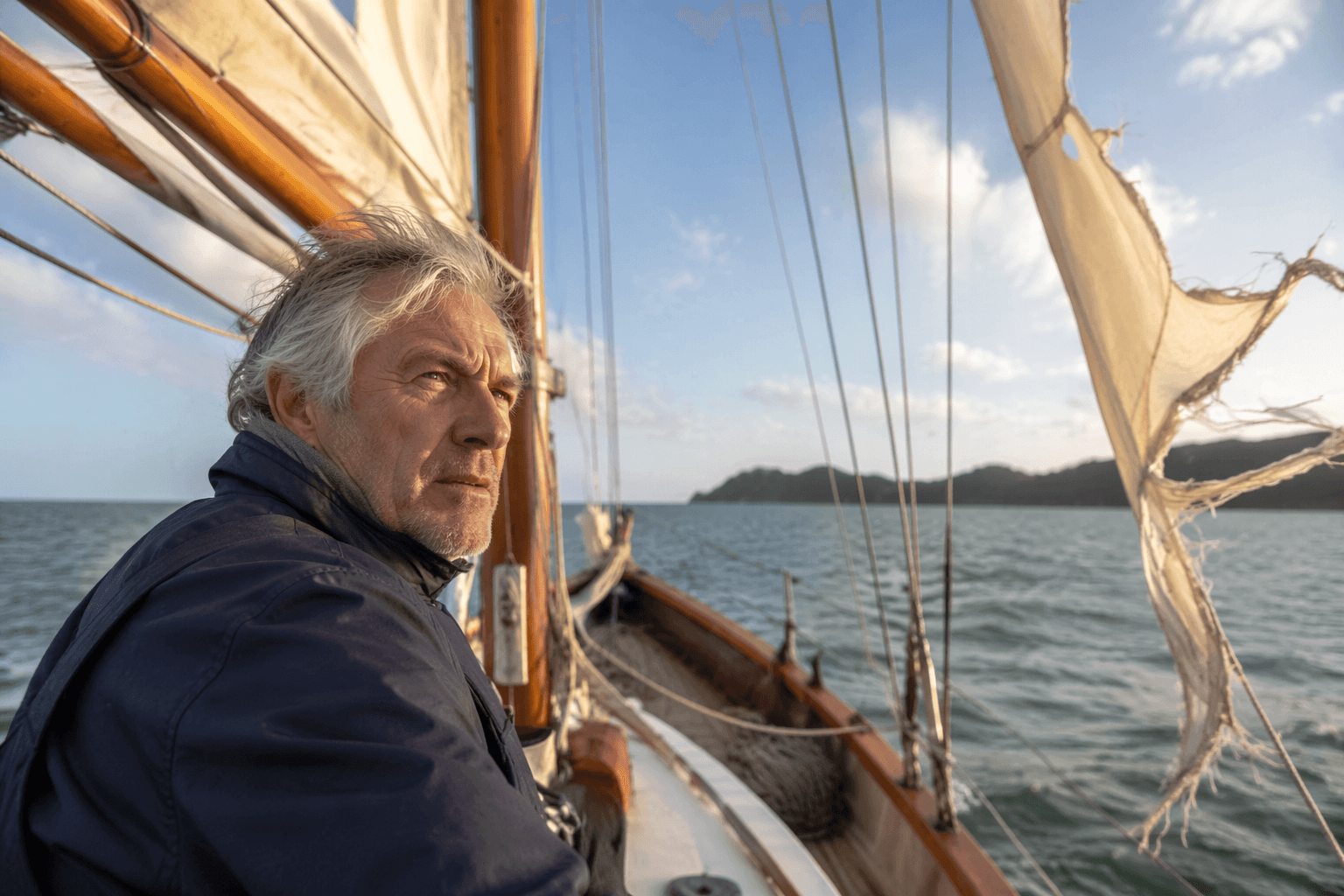
With Quest still moving but no longer making reliable way, the problem became time, depth and shelter. A tow from the Westerly Centaur Rosie did not have enough punch to shift the 10-ton gaffer against wind and tide, a sharp reminder that the towing boat has to match the load and conditions. General towing guidance is clear that open-sea towing in swell and wind is best avoided with a vessel larger than your own, and that anchor warps, tow lines and deck gear can be asked to take serious loads in a hurry.
Angell then worked the problem the way a cruising sailor has to when the plan is already broken. He used what shelter he could, anchored where possible, and judged that removing the gearbox at anchor in a choppy sea was not realistic. The safer answer was to rely on sail and work back toward deeper water and the lee of Puffin Island, whose northeastern end marks the entrance to the Menai Strait. That is where the incident sharpened again: a big gust ripped the clew from the jib and the sheet wrapped, forcing him to keep the boat moving with damaged canvas as well as a dead drivetrain.
Quest’s pedigree makes the story land even harder. A Morecambe Bay prawner is a Lancashire nobby type, developed in the late 1840s for trawling brown and pink shrimps, and the surviving boats are kept alive by a small preservation world that still sails them. On Quest, that heritage met the oldest lesson in seamanship: when the engine quits, the tide does not wait, and the only safe answer is the next best move, made quickly and calmly.
This article was produced by Prism’s automated news system from verified source data, official records, and press releases, then run through automated quality and moderation checks before publishing. The system is built and supervised by the people who set the standards it runs under. Read our full AI policy.
Know something we missed? Have a correction or additional information?
Submit a Tip