Failsafe mooring pickup method for single-handed and short-handed sailors
A pre-rigged line and a slow, windward-side approach turn a mooring pickup into a repeatable solo job, not a foredeck scramble.
Why this pickup method earns its reputation
The best mooring pickup is the one that does not turn into a foredeck wrestling match. Chris Hitchins’ approach, shown aboard Wild Wind III, is built to keep the buoy in sight, the load on the boat controlled, and the skipper out of the worst of the chaos, which is exactly why Practical Boat Owner describes it as virtually failsafe for single-handed and short-handed sailing.
The real value here is not just convenience. It is the way the method strips out failure points one by one: the line is prepared before the approach, the boat is lined up from a position of information rather than guesswork, and the pickup happens on the side that gives the helmsman the cleanest control. That is a very different mindset from charging in, hoping the buoy stays where you want it, and trying to improvise while the boat keeps moving.
Set the system before you commit
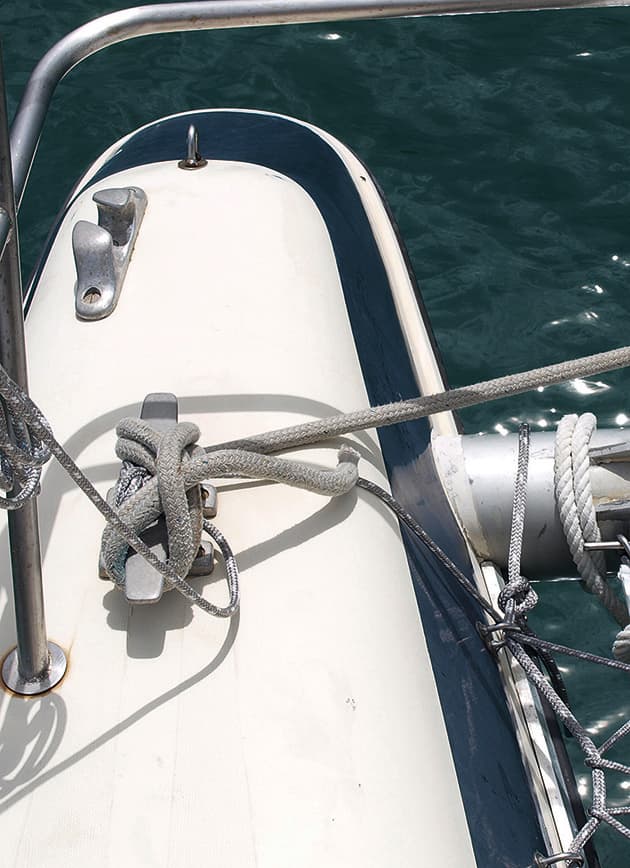
Hitchins’ first rule is simple: the setup happens before the final approach. A strong line, roughly 3 metres longer than the boat’s overall length and width, is readied in advance so there is enough working length to deal with the pickup without strain or last-minute fumbling. The line starts from the forward cleat on the side opposite the pickup side, runs outside everything around the bow, and comes back to the helm ready to deploy.
That routing matters because it removes clutter from the working side and keeps the line clear of stanchions, pulpit, and other snags. It also means the skipper is not trying to thread rope through hardware while steering with the other hand. On a catamaran with an offset helm, the side choice is adapted to the helm position; on a monohull or a twin-helm boat, either side can work if it gives the cleaner angle.
A boathook stays ready, but the real system is the line layout. If the gear is already led correctly, the pickup becomes a controlled transfer instead of a scramble.
Choose the approach side, not just the buoy
The method starts well before the buoy is alongside. Hitchins stops some distance off first, giving enough time to read wind, current, and traffic rather than rushing straight at the mark. That pause is the difference between a tidy first attempt and a messy correction, because it lets you decide whether the windward side or the current side gives the better pickup.
That choice is the heart of the whole procedure. Approaching from the side that keeps the boat settled against the buoy, rather than swept away from it, gives you a more stable pickup and a much better view of what the buoy is doing. Similar modern seamanship guidance points in the same direction, keeping the mooring buoy near the shrouds, having a long line ready from the bow, and avoiding a careless angle of approach.
For short-handed sailors, the point is not to be aggressive. It is to be deliberate. The slower, more measured the last few boat lengths are, the easier it is to keep the buoy where you can see it and where the line can be taken cleanly.

Make the final move slow and deliberate
Once the side is chosen, the last move should be calm and narrow in scope. The buoy is brought down the chosen side and lifted aboard as it passes, rather than being chased across the bow. That keeps the pickup in the helmsman’s field of view and avoids the frantic reach that usually happens when the buoy slips out of sight.
This is also where the method earns its “single-handed” label. If the line is already led and the boathook is in hand, the skipper is not juggling competing tasks. Steering, line handling, and buoy control are arranged as one sequence, not three emergencies happening at once. The payoff is a first attempt that looks boring, and in seamanship, boring is often the goal.
If the first attempt fails, reset instead of forcing it
A good solo mooring method has a recovery plan. If the buoy is missed or the angle is wrong, the answer is not to lunge at it and risk tangling gear or drifting into a worse position. Back off, reassess the wind and current, and make the approach again with the same calm setup.
That is where the line preparation pays off. Because the line is already rigged from the forward cleat and routed clear of the bow, you can reset without re-inventing the whole operation. You are not starting from a loose coil on deck or a line trapped underfoot, which is where solo pickups often unravel. The method reduces workload spikes because the hard thinking has already been done before the boat gets close.
Why this matters beyond convenience
There is a bigger reason this technique deserves attention. Visitor mooring buoys are likely to become more common as concern grows over anchor damage to sensitive ecosystems. NOAA says mooring buoys help boaters access sites while protecting coral reefs, seagrass beds, and historic shipwrecks from anchor damage, and a 2020 peer-reviewed study found moorings can be an effective management tool for reducing anchor damage to reefs.
That makes a clean pickup skill more than a comfort issue. If moorings are becoming a larger part of how cruisers anchor out responsibly, then knowing how to pick one up without drama is part of normal seamanship. A reliable solo pickup is also a cleaner one for the environment, because it keeps sailors from drifting around and fumbling where they should be settled and secure.
Why the safety details matter
The article’s advice to wear a lifejacket during the pickup is not decorative. The Royal Yachting Association’s safety guidance stresses choosing the right buoyancy aid or lifejacket for the activity, the conditions, and the buoyancy level you need. Mooring work is close-quarters boat handling, often with one person moving between helm and line, and that is exactly when a proper lifejacket belongs on.
The same logic applies to the rest of the setup. A secure pickup depends on reducing the number of things that can go wrong at once, and safety gear is part of that system. A lifejacket, a ready boathook, a pre-rigged line, and a deliberate approach all serve the same aim: keep the operation under control.
Why not just motor straight at it?
Other seamanship guidance points out a common mistake that Hitchins’ method avoids: trying to motor between the buoy and the pickup. That can foul the prop, or at least tangle on the keel or rudder, which is the kind of mistake that turns a simple job into a genuine headache.
A related solo technique from eOceanic uses a deep bight of mooring line outside the pulpit to form a lasso, again showing the same principle at work: prepare the line outside the danger zone and let the boat come to the buoy in a controlled way. BoatUS makes the broader point even more plainly, saying mooring pickups become easy with preparation, communication, and coordination. Hitchins’ version just packages those ideas into a sequence that works especially well when there is no extra hand to clean up mistakes.
A method shaped by a proper test boat
Wild Wind III is a 15-metre Prout 50 catamaran, and that matters because multihulls reward careful handling when close to fixed gear. Public records identify the boat as a Prout Catamarans Limited vessel built in 1989, and the Prout name carries a long British catamaran lineage that began with G. Prout and Sons in 1935, founded by Geoffrey Prout and his sons Roland and Francis.
That background fits the method. This is not a theoretical trick bolted onto an unfamiliar platform. It is a practical system shown on a serious cruising catamaran, where a clean approach, a clear side choice, and a pre-rigged line make all the difference.
In the end, that is why this pickup method stands out: it treats mooring as a repeatable procedure, not a leap of faith. Once the setup, approach side, timing, and recovery are all decided in advance, the pickup stops being a scramble and becomes a controlled piece of seamanship that works the same way every time.
This article was produced by Prism’s automated news system from verified source data, official records, and press releases, then run through automated quality and moderation checks before publishing. The system is built and supervised by the people who set the standards it runs under. Read our full AI policy.
Did this article answer your question?


