When and how to dry out your boat safely in tidal waters
Drying out opens cheaper moorings and easier hull access, but only if your boat, bottom, and tide plan all line up. The real prize is safe DIY maintenance without a yard lift.
Why drying out is worth learning
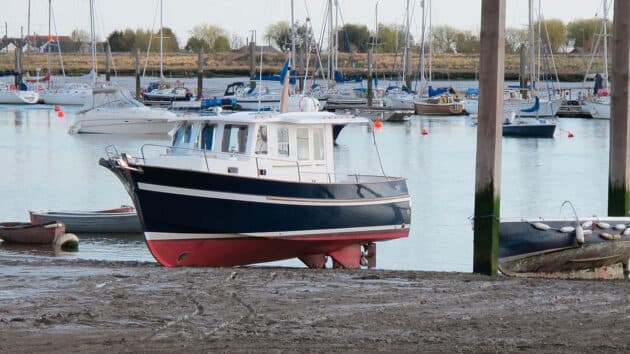
Drying out is one of those seamanship skills that looks risky until you see what it buys you. Done right, it opens tidal anchorages and drying harbours, saves haul-out fees, and lets you work on the boat without paying for a lift every time you want to scrub the bottom or inspect below the waterline.
That is the practical appeal, and it is bigger than convenience. In tidal waters, being able to settle safely on the ground can change the whole cruising plan, especially when deep-water berths are scarce or expensive and spring tides shrink the number of usable all-tide anchorages.
Know what kind of boat you have
Not every hull is meant to sit on the bottom, and that is where most good decisions start. Lifting-keel and centreboard boats are the easiest fit because they are designed for shoal water and often remain stable when they settle. Twin-keeled and bilge-keeled boats are also strong candidates, since their shape was built with drying in mind.
Long-keel boats can work well on soft mud, but hard ground is a different matter. A hard seabed can leave them vulnerable to falling over, which is why legs or mud support matter so much. Fin-keel boats are the least obvious candidates, but they can still dry out safely in the right circumstances, especially against a wall or piles and sometimes with support legs.
The caution flags matter just as much as the green lights. Some racing boats and deeper-fin designs need designer approval before anyone tries this. Yachting Monthly also warns that some boats with bulbed keels are not designed to take much compression load through the keel, so if there is any doubt, check with your surveyor or the manufacturer before you commit the hull to the ground.
Choose the right place and the right tide
The bottom under the boat matters almost as much as the boat itself. Soft mud is usually far kinder than hard sand, broken shell, or an uneven seabed that can twist the hull as the tide falls. If you are drying alongside a wall, piles, or a harbour edge, make sure the berth is known to be suitable for that type of drying and that you understand exactly how the hull will settle.
Tide range is not a detail to skim over. Sailing Today notes that drying against harbour walls in the Solent can mean about 4 metres of tide range on a spring tide, and elsewhere it can be even more. That is why wall-drying needs proper fendering, careful line management, and enough room for the boat to rise and fall without loading the topsides or gear.
Spring tides also narrow the margin for error. Yachting Monthly points out that they can reduce the number of usable all-tide anchorages much more than many sailors expect, which is one reason neaps are often a calmer time to learn the skill. If you are still building confidence, neap tides usually give you a more forgiving setup and less movement when the boat settles.
Set up the boat to take the ground, not fight it
The best drying-out jobs are decided before the keel touches bottom. Practical Boat Owner’s advice is blunt and useful: pay close attention to the weather forecast and be ready to clear out at the first sign of trouble. That means you are not just planning for the tide, but also for wind shift, surge, and any change that could push the boat off balance while she is half supported.
Preparation starts with the hull form, but it ends with the support system. On a fin-keeled boat that dries regularly, a purpose-built cradle is one of the best solutions, and Yachting Monthly points to good examples in Looe Harbour. For other setups, support legs, mud props, or a wall berth may be the difference between a clean, controlled dry-out and a dangerous heel onto the rig or guardrails.
Before the tide drops, make sure the boat is ready to sit still and evenly. Check that fenders, lines, and any shore contact points are arranged for the full range of movement, not just the moment of first contact. If the berth is against a wall, remember that the boat may be upright at one point and heavily loaded at another as the water falls away.
Use the opportunity for real maintenance
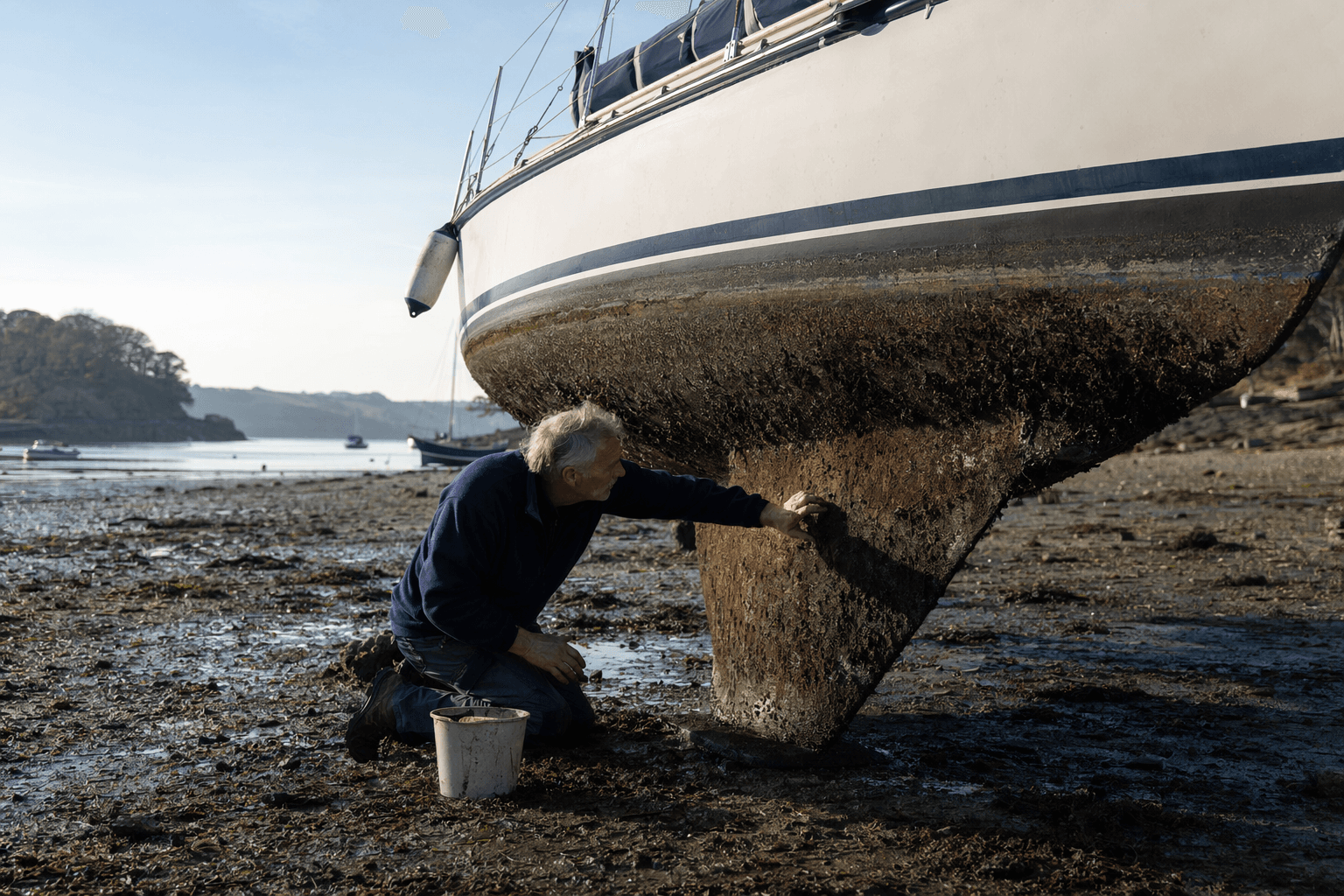
This is where drying out becomes more than a berthing trick. Once the hull is accessible, you can inspect, clean, and service jobs that are far more awkward, and more expensive, afloat. That includes hull cleaning, anode checks, prop clearance, and a proper look at the rudder and keel areas that usually disappear under water.
For many owners, that is the whole point. Drying moorings are often cheaper than deep-water moorings, and a controlled dry-out can save the cost and time of a haul-out when all you need is a quick inspection or a scrub. It is one of the few cruising skills that directly cuts operating costs while also improving your understanding of the boat.
Inspect what takes the loads
Once the boat is out of the water, use the chance to look hard at the structural areas that carry real load. World Sailing says structural inspections should be done by a qualified person with the boat out of the water, and it requires evidence of a structural inspection within 24 months before the start of a race or after a grounding, whichever is later.
US Sailing’s keel and rudder guidance points in the same direction. It tells owners to consult the owner’s manual for the specific keel type and inspect high-load areas such as keel attachment, keel floors, steering systems, and rudders, with special attention to any previous repairs after groundings. That is exactly the kind of detail drying out makes possible, because the important cracks, wear points, and movement often show up best when the boat is resting and unloaded.
For racing boats, that discipline is not optional. For cruisers, it is still a smart habit, because a careful look below the waterline can catch trouble before it becomes a failure at sea.
A skill with old roots and modern value
Drying out may feel like a niche trick, but it has deep roots in British seamanship. Yachting Monthly notes that in the days of working sail, almost all vessels had to take the ground when calling at destinations around Britain because harbour walls often did not extend below low water. Before the Industrial Revolution brought steam dredgers and gated basins, taking the ground was the norm rather than the exception.
That history still explains the modern usefulness of the skill. Tidal rivers, estuaries, drying harbours, and wall berths all reward crews who understand how to let the boat settle safely and what to inspect once she is down. If you know your hull shape, choose the right bottom, plan around the tide, and keep weather and escape options in mind, drying out stops being a gamble and becomes one more way to work on the boat with confidence.
This article was produced by Prism’s automated news system from verified source data, official records, and press releases, then run through automated quality and moderation checks before publishing. The system is built and supervised by the people who set the standards it runs under. Read our full AI policy.
Did this article answer your question?