Fiberglass, Resin, and Core Materials Explained for Confident DIY Boat Repairs
Using the wrong resin on a structural repair can turn a weekend fix into a costly rebuild — here's how to choose the right materials before you open a can.
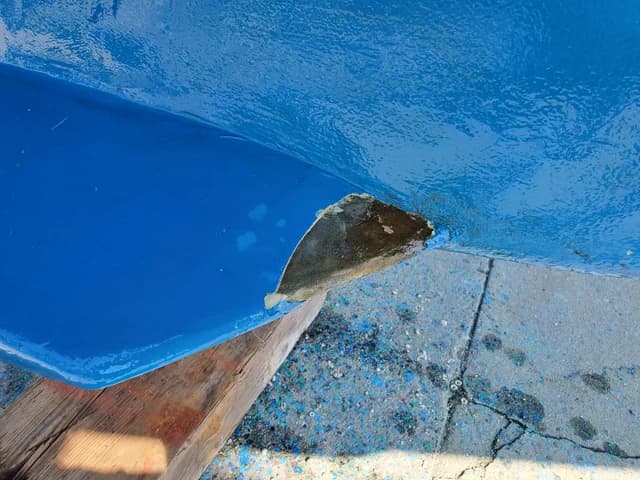
Pick up the wrong resin for a structural repair and you haven't just wasted a Saturday afternoon. You've potentially bonded nothing, trapped moisture inside a cored deck, or left a bulkhead tab that will peel free in the first seaway. The materials used in fiberglass boatbuilding are forgiving in good conditions and unforgiving when mismatched, and the gap between a cosmetic fix and a structural failure often comes down to one decision made at the chandlery counter.
Before ordering anything, understand exactly what you are repairing. That is the one rule that overrides every other variable.
Gelcoat, Laminate, and Core: Know Which Layer You're In
A fiberglass hull or deck is not a single material. It is a system of layers, and each layer demands a different repair approach. The outermost layer is gelcoat: a pigmented, resin-rich surface coating that provides color, UV resistance, and a cosmetic finish. Beneath it sits the structural laminate, built up from layers of fiberglass reinforcement wetted with resin. In most modern production boats, a third layer exists inside that laminate sandwich: a core material (balsa, foam, or plywood) bonded between inner and outer fiberglass skins to add stiffness without adding weight.
Diagnosing how deep damage runs is your first job. A spider crack in gelcoat is a cosmetic issue. A crack that flexes under thumb pressure, sounds hollow when tapped, or shows discoloration around its edges has likely breached the laminate and may have already admitted water to the core. The tap test, running a coin or knuckle across a suspect area and listening for the shift from a sharp ring to a dull thud, is the standard first diagnostic tool. Get this diagnosis wrong and every subsequent material choice is built on a false premise.
Resin Types: The Decision That Drives Everything Else
Three resin systems dominate fiberglass boatbuilding and repair: polyester, vinylester, and epoxy. Each has a legitimate role, and each has a failure mode that costs owners real money.
Polyester is the baseline. The majority of production fiberglass boats built before the 2000s were laminated with polyester resin, and it remains widely used in new construction because it is inexpensive, easy to catalyze, and familiar to production workers. For cosmetic gelcoat repairs and small above-waterline laminate patches on a polyester boat, matched polyester or vinylester resin is entirely appropriate. The catch: polyester resin does not bond effectively to wood. On boats just five or six years old, it is common to find bulkhead tabs built with polyester bonded directly to plywood that have broken away entirely, robbing the hull of transverse strength.
Vinylester sits between polyester and epoxy on virtually every relevant metric: moisture resistance, bonding strength, and cost. It is often the upgrade choice for production builders in areas of higher stress or moisture exposure, and it is a reasonable repair resin for mid-level structural work where epoxy's cost is difficult to justify.
Epoxy is the performance choice, and for three specific repair scenarios, it is not optional. Its moisture vapor transmission rate is significantly lower than both polyester and vinylester, making it the correct barrier resin for underwater laminate work and core repairs. Its secondary bonding strength (its ability to bond to already-cured materials) is substantially higher than polyester. And critically, it bonds to wood. West System Epoxy entered the marine repair market in the mid-1980s and effectively changed the standard of care for structural fiberglass work. For core replacement, keel attachments, and hardware backing plates under compression loads, epoxy is the right tool.
The compatibility rule that causes the most expensive failures: you can apply epoxy over a properly prepared polyester laminate, but the reverse is not reliably true. Polyester resin applied over cured epoxy will not achieve a proper chemical bond. This distinction matters most when a repair spans an original polyester laminate and new material. Surface preparation (sanding to 80 grit minimum, removing all contamination) is always required for secondary bonds regardless of resin type.
Fabric Selection: Matching Reinforcement to the Job
Resin is only half of a laminate. The reinforcement fabric determines stiffness, strength direction, and how well a repair integrates with the surrounding structure.
Chopped strand mat (CSM) is the most common fabric in production boatbuilding because it is cheap, conforms easily to curves, and builds thickness quickly. It is almost universally used with polyester or vinylester resin because its fibers are held together by a styrene-soluble binder. That same binder dissolves poorly or incompletely in epoxy systems, which degrades bond quality. If you are doing an epoxy repair and need a mat-type fabric, use a stitched mat (where fibers are held by stitching rather than binder) rather than traditional CSM.
Woven roving is the primary strength fabric in marine laminates. At 24 oz per square yard in its common marine form, it adds flexural and impact resistance when used in alternating layers with mat. Fiber orientation matters here: woven roving laid at 0/90 degrees carries load efficiently in those two axes but is relatively weak in shear at 45 degrees. Biaxial or triaxial fabrics (with fibers running at plus and minus 45 degrees, or in three directions simultaneously) address this, and for core repairs and structural patches, a biaxial fabric provides more balanced stiffness across the repair area.
Unidirectional cloth, with all fibers running in a single direction, is used in specific high-load applications where the stress axis is known: along a keel stub, for example, or parallel to a stringer. Using it without understanding the load path is how repairs introduce stress concentrations rather than resolve them.
The Three Repairs: A Material Playbook
Small fiberglass laminate damage (impact cracks, drilled holes, through-hull removals): If the damage is above the waterline on a polyester boat, matched polyester or vinylester resin with CSM and woven roving layers is appropriate and economical. Below the waterline or at any fitting penetration, epoxy is worth the premium for its moisture resistance. Taper the repair margins at roughly 12:1 (twelve parts of feathered overlap for every one part of laminate thickness) for maximum bond area.
Deck core rot is the most underestimated repair in DIY boatbuilding. The failure mode is moisture in the core, typically balsa, which has only mild rot resistance despite being used in millions of production decks. Once water enters through a poorly bedded deck fitting, balsa absorbs it like a sponge and the compression strength of the core collapses. The repair protocol is non-negotiable: cut out the damaged skin, remove all wet or degraded core material, and allow the cavity to dry completely before proceeding. Epoxy requires less than 12 percent moisture content in wood to cure and bond properly. In humid conditions that drying window can take days, not hours. Glassing over wet core is the single most expensive mistake in this category because it guarantees delamination and continued moisture migration. Replace balsa with closed-cell foam (Divinycell or equivalent) if moisture intrusion was the original failure mode; foam does not absorb water and will not repeat the failure. Laminate new skins using epoxy and biaxial fabric, stepping each layer beyond the previous one to distribute stress across the repair boundary.
Tabbing and bulkhead bonding is where the polyester-over-wood failure is most consequential. Plywood bulkheads are laminated to the hull using tabbing strips because they provide the transverse rigidity that keeps a production hull from racking under load. When those tabs fail, which happens routinely on older boats, the correct repair is to remove the remnants of the original tab, prepare both the hull laminate and the plywood faces (sand, clean, remove all contamination), and re-tab using epoxy-wet biaxial cloth. Critically, the edges of each tabbing layer must be stepped outward from the joint; ending multiple fabric layers at the same point creates a stress concentration that will initiate the next failure. Work in a well-ventilated space: epoxy in enclosed bilge compartments generates fumes that accumulate fast, and a respirator rated for organic vapors is not optional.
Temperature, Working Time, and When Not to Start
All three resin systems are sensitive to temperature. Below roughly 60°F (15°C), polyester and vinylester catalysis slows dramatically and cure may be incomplete. Epoxy hardener selection drives working time more than any other variable; slow hardeners in 85°F (29°C) conditions and fast hardeners in a 55°F (13°C) spring boatyard are both invitations to a failed repair. Mixing too large a batch of any resin at once generates an exothermic reaction that shortens pot life unpredictably, wastes material, and, in the worst cases, causes smoking. Mix in small batches and pour into a roller tray to dissipate heat and extend working time.
The cost of getting material choices right on a structural repair is trivial compared to the cost of repeating the job. A quart of epoxy runs three to five times the price of polyester, which is a meaningful number on a large laminate job, but immaterial against a second haul-out. Use the cheaper resin where it is appropriate. Use the right resin where it matters. The boat will not forgive the difference.
This article was produced by Prism’s automated news system from verified source data, official records, and press releases, then run through automated quality and moderation checks before publishing. The system is built and supervised by the people who set the standards it runs under. Read our full AI policy.
Did this article answer your question?