Fiberglass Yarn Market Growth Could Reshape DIY Boat Repair Costs
Global fiberglass yarn demand is shifting toward precision-grade materials, and that reallocation could tighten commodity cloth supply just as spring refit season hits.

The roll of 170 g/m² woven roving you've been counting on for that hull patch this spring may cost more by the time you actually need it, and a market forecast published March 31 explains why.
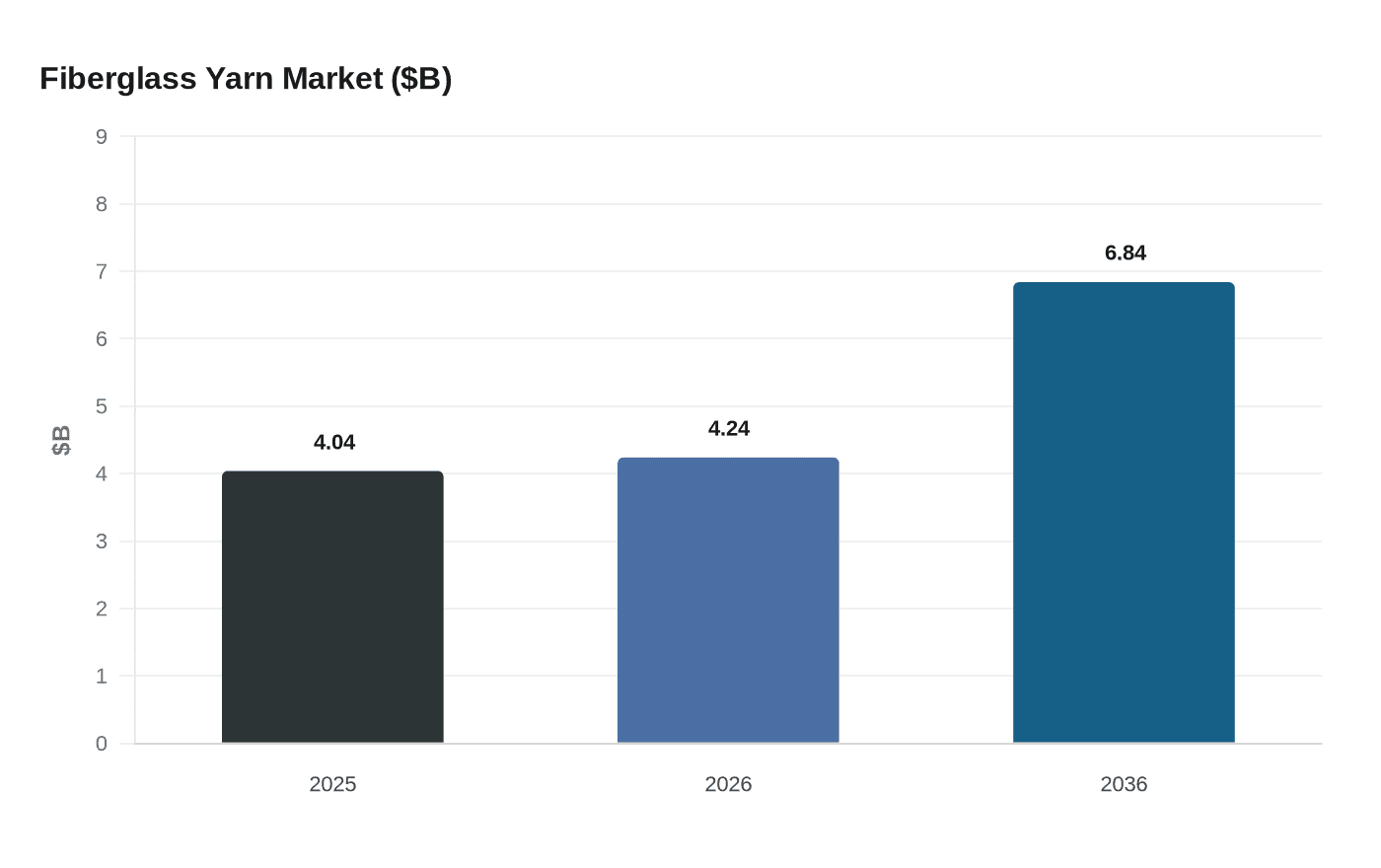
The global fiberglass yarn market was valued at roughly $4.04 billion in 2025 and is projected to reach approximately $4.24 billion in 2026. The longer-range number is what matters more for procurement planning: analysts project the market growing to around $6.84 billion by 2036, a compound annual growth rate in the mid-single digits across the forecast period.
The companies scaling fastest are Owens Corning, Jushi Group, and Saint-Gobain, each investing in expanded production capacity concentrated primarily in China and India. That sounds like good news for supply, and at the commodity level it might be, except that the demand side is shifting in ways that cut against marine hobbyists and small refit shops.

Manufacturers are moving their highest-capacity lines toward precision-grade yarns, including ultra-fine yarn and S-glass, driven by 5G infrastructure buildout, aerospace programs, and other high-performance sectors that pay more per kilogram than boatbuilding ever will. When production capacity chases those margins, commodity-grade reinforcement, the kind you buy by the roll for hull repairs, stringer work, and patch laminations, becomes a secondary market. Supply gets tighter and prices become harder to predict.
The practical effect for anyone planning a spring refit is straightforward. Per-roll prices for common woven roving and biaxial cloth can climb. Lead times for specific weights can stretch. A shop that normally carries a half-dozen cloth weights in stock may find gaps in their inventory, particularly in the heavier structural weights that aren't easily substituted.
One substitution that does work: doubled lighter cloth in place of a single heavier roll. If your repair schedule calls for a single layer of 450 g/m² woven roving and that weight is backordered or priced out of your budget, two layers of 225 g/m² can achieve comparable laminate properties depending on the resin system and layup sequence. It's a longer job, but it keeps the work moving.
The more important move right now is procurement timing. Spring and early summer are peak refit months, which means distributor shelves thin out just as demand peaks. If you have a hull repair, a stringer reinforcement, or a blister repair cycle on the agenda for this season, confirm supplier stock and lead times before you commit to the job. The same logic applies to resin, fillers, and gelcoat: when the reinforcement market tightens, the composite supply chain tends to move in the same direction.
This is a macro story, and regional pricing will diverge depending on whether your supplier sources domestically or imports from Asia. But the direction of travel is clear enough that getting your cloth order in early is the lower-risk position heading into the season.
This article was produced by Prism’s automated news system from verified source data, official records, and press releases, then run through automated quality and moderation checks before publishing. The system is built and supervised by the people who set the standards it runs under. Read our full AI policy.
Did this article answer your question?