Five Oil Extraction Pumps for Clean, DIY Engine Oil Changes on Small Boats
Ditch the drain pan: five extraction pumps that let you change engine oil topside, no crawling under the hull required.
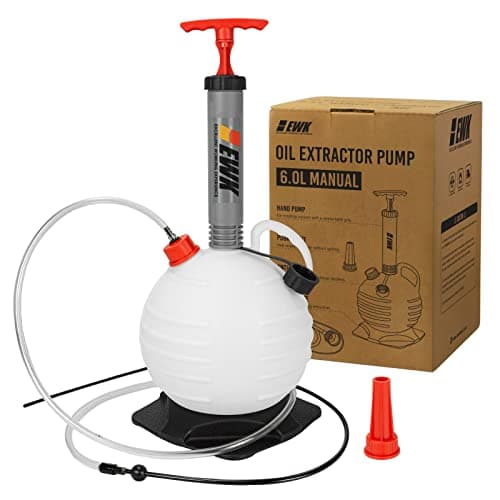
Crawling under a boat to wrestle with a drain plug is one of those jobs that sounds straightforward until you're lying in a bilge with hot oil running down your arm. Oil extraction pumps solve that problem by pulling used oil up through the dipstick tube, keeping your hands cleaner, your floor drier, and your back happier. The method is well-documented: Family Handyman specifically notes that extractor pumps are useful for removing oil through the dipstick tube, and iFixit provides a full step-by-step guide for using an oil extractor in a standard oil-change workflow. For small-boat owners doing seasonal maintenance on outboard or inboard engines, the practical benefits are hard to argue with: no ramps or jack stands in some cases, cleaner hands and cleaner floor, easier maintenance on boats and seasonal equipment, less wrestling with drain pans, and more control in tight spaces.
The five pumps below represent the category as evaluated across multiple buyer resources, including a practical guide aimed at DIY boat owners. Here's how they stack up.
1. OEMTOOLS Manual Fluid Extractor
The OEMTOOLS manual extractor earns the top spot because it combines the two things small-boat owners need most: a compact footprint and dead-simple operation. At 5.3 liters capacity, it sits in the practical sweet spot for most single-engine outboards and small inboards. The compact upright design lets you operate it entirely from above the engine bay: insert the tube into the dipstick port, give a few pumps, and let the vacuum pull out used oil or transmission fluid. No need to touch the drain plug at all. A built-in overflow prevention mechanism keeps the mess contained, a wide base prevents tipping on an uneven dock or cabin sole, and a transparent container lets you monitor fluid level without guessing. The pump has earned a reputation as "a staple for DIY oil changers and even professional mechanics," which tells you something about its durability across real-world use cycles.
2. Four Uncles 6.5L Manual/Pneumatic Oil Extractor
The Four Uncles unit steps up both in capacity and versatility by offering manual or pneumatic operation, which matters if you have a shop compressor aboard or at the dock. At 6.5 liters, it handles the gear lube and engine oil volumes typical of mid-size four-stroke outboards in a single pull. The pro-series feature set for this class of mid-size manual/pneumatic extractors includes extra-long 48-inch hoses with fittings for almost any extraction application, a newly designed decompression valve to release negative pressure, a see-through container for quick visual reference, a convenient footboard for stability while pumping, and a pour spout for no-mess fluid disposal. Heavy-duty construction makes it suitable for shop use or mobile service work, and the no-spark hand operation is a deliberate safety design. One firm caution applies across this category: these pumps are NOT FOR USE WITH FLAMMABLE OR CORROSIVE PRODUCTS, so keep them away from gasoline and solvents and stick to engine oil, gear lube, brake fluid, coolant, and water.
3. VEVOR Fluid Extractor Pump
VEVOR has built a strong reputation in the marine DIY space for producing capable tools at accessible price points, and its fluid extractor pump appears consistently in top-five roundups for good reason. The pump rounds out the manual extractor tier before the list moves into electric territory, and it earns its place as a solid mid-field option for boat owners who want a recognizable brand with wide parts and accessory availability. Full technical specifications including capacity, hose length, and material details were not confirmed in the available source documentation, so if those numbers are critical to your buying decision, pull the current Amazon listing before purchasing. What is documented is its consistent presence alongside the OEMTOOLS and Four Uncles units in buyer guides targeting DIY marine maintenance, which reflects real-world usage patterns in the community.
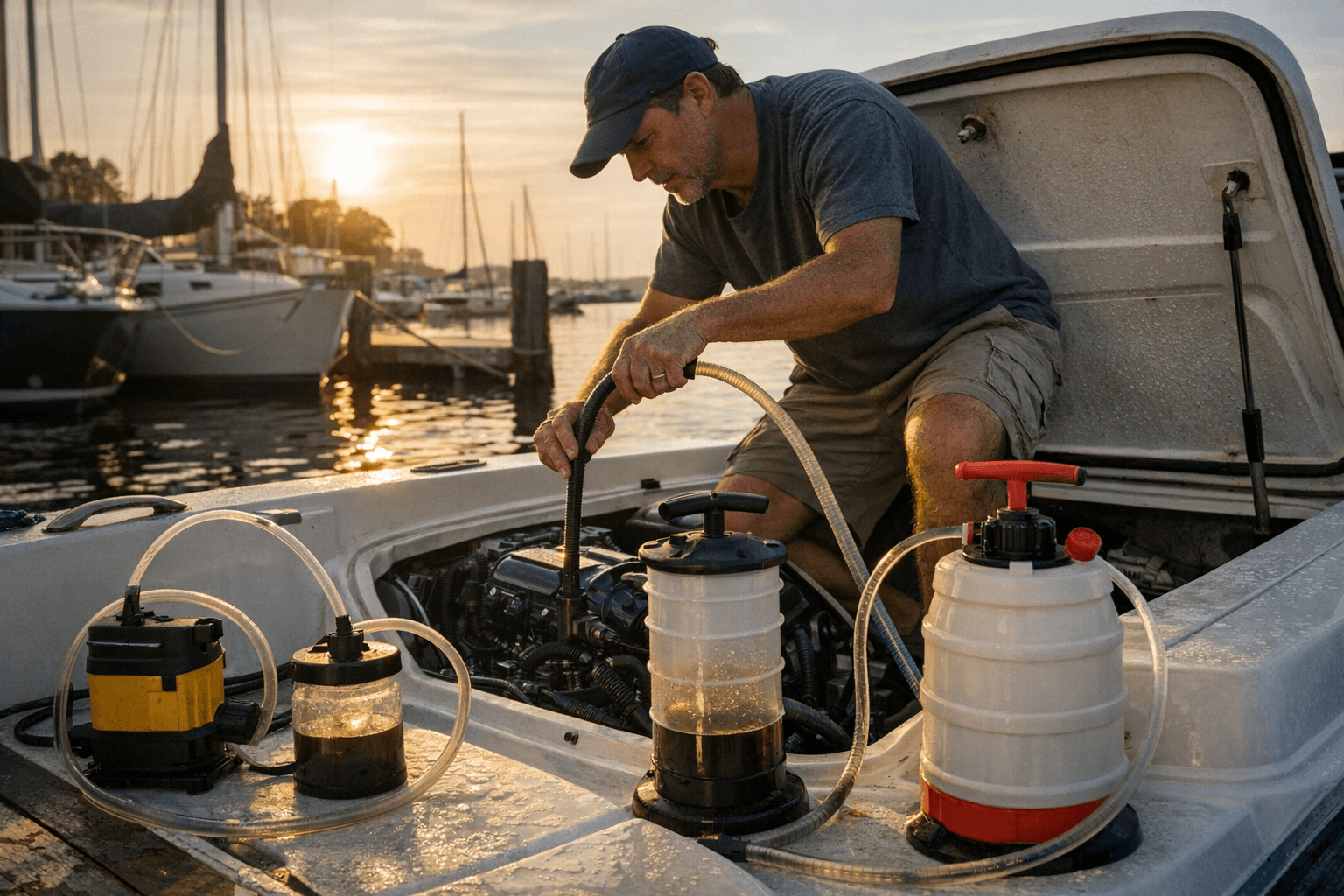
4. Faitio Electric Oil Extractor Pump
If pumping by hand is a dealbreaker, the Faitio electric unit is where this list pivots. Electric extractors occupy a distinct niche: the tradeoff assessments across multiple sources are consistent on this point. "If your top priority is speed and minimal manual effort, then an electric oil extractor pump may still be the better fit." That accurately describes the Faitio's audience: sailors or powerboaters who do frequent oil changes, have reliable power access at the dock, and want the fastest possible service time without manual vacuum effort. The electric classification is confirmed; specific electrical specs including whether it runs on battery or shore power, flow rate, and capacity were not detailed in the available source material, so check current product listings for those figures. What the Faitio does do is represent the electric option in a category that is otherwise dominated by manual pumps, giving buyers a legitimate choice based on their actual workflow.
5. Amarine Made Oil Extractor Pump
Amarine Made has carved out a niche in marine-specific accessories, and its oil extractor pump rounds out this list as the brand most purpose-built for the boating context. The name itself signals the target audience, and the pump appears in buyer resources specifically aimed at DIY boat maintenance rather than general automotive use. Detailed specifications including capacity, hose length, and SKU were not confirmed in the source documentation available at publication, so treat this as a strong candidate to research further rather than a closed recommendation. That said, its consistent appearance in marine-focused guides alongside the other four pumps on this list reflects the community's practical experience with it, which carries weight beyond spec sheets.
A note on capacity and use case: Panther Marine Products offers a useful reference frame for sizing these tools to your engine. Their DIY Series Model 75-6025 is a 2.5-liter unit described as "perfect for four-strokes up to 50hp and sailboats with small engines," while the 6-liter Model 75-6060 covers most larger boating applications. The Pro Series scales further, with a 6.5-liter SKU 756065 suited for tighter spaces and shop use, and a 15-liter SKU 756015 for larger four-stroke engines. Panther's DIY series pumps also claim to prime in under 10 seconds and use non-kinking, flexible metallic extractor tubes, which matters when you're threading a hose through a cramped engine compartment. These specs provide a useful benchmark when evaluating any pump's suitability for your specific engine size.
The broader consensus across buyer guides is worth internalizing before you decide: "A well-designed large-capacity manual extractor remains one of the smartest buys in the category because it combines portability, simplicity, and enough capacity for real oil-change work." For most small-boat DIYers, that means the OEMTOOLS or Four Uncles units will cover the majority of seasonal maintenance scenarios without needing shore power or a compressor. The electric Faitio earns its place for speed-focused use cases. And regardless of which pump you choose, the method itself delivers: cleaner hands, a cleaner bilge, and one less reason to dread the annual oil change.
This article was produced by Prism’s automated news system from verified source data, official records, and press releases, then run through automated quality and moderation checks before publishing. The system is built and supervised by the people who set the standards it runs under. Read our full AI policy.
Did this article answer your question?


